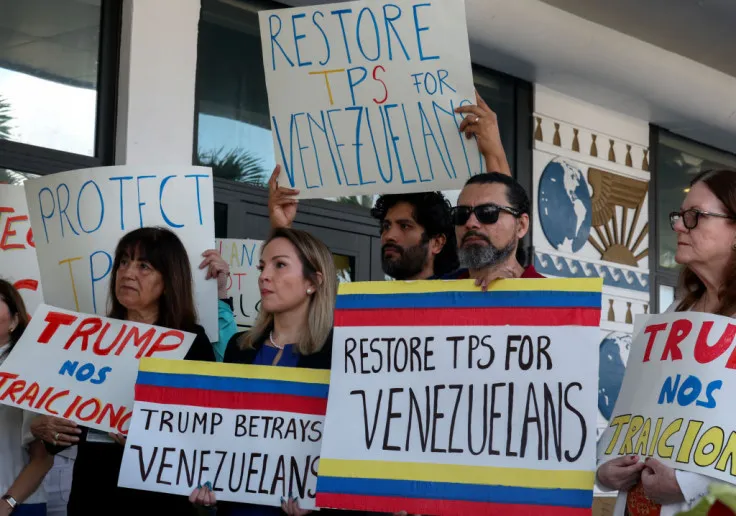

As the Trump administration moves forward with plans to phase out temporary immigration protections, economists are warning the United States could face steep economic losses—amounting to billions of dollars annually.
According to a new analysis by FWD.us, a bipartisan policy group focused on immigration and criminal justice reform, the rollback of protections such as Temporary Protected Status (TPS) and Deferred Action for Childhood Arrivals (DACA) could drain $13.4 billion in annual economic activity due to reduced consumer spending by immigrants.
In addition, the federal, state, and local governments could lose out on more than $3.2 billion in combined tax revenue each year from immigrants who will lose legal work authorization starting this September.
“This isn’t just a humanitarian crisis—it’s a serious economic one,” the organization said in a statement. “The ripple effect will be felt in industries across the country.”
The report identifies sectors that will be hardest hit by the policy shift. Leading the list is the leisure and hospitality industry, which stands to lose about 73,000 workers currently protected under temporary immigration programs. The construction sector could lose around 60,000 workers, followed by manufacturing (46,000), healthcare services (44,000), wholesale and retail trade (36,000), and business services (34,000).
Temporary protections cover a wide range of programs, including TPS, DACA, humanitarian parole, Special Immigrant Juvenile Status (SIJS), and pending asylum claims. As of January 2025, around 6.4 million immigrants in the U.S. had some form of temporary protection. By September, roughly 928,000 are projected to lose those protections, leaving 5.5 million with limited legal status.
The largest declines will be among nationals from Afghanistan, Cameroon, Haiti, Honduras, Nepal, Nicaragua, and Venezuela—countries previously designated for TPS due to armed conflict, natural disasters, or widespread instability.
Homeland Security Secretary Kristi Noem defended the decision to end TPS for several of these countries, stating the circumstances that led to their designations have “significantly improved.”
“Temporary Protected Status was designed to be just that—temporary,” Noem said in a press release about the end of TPS for Honduran nationals. “It was never intended to last decades.”
The Department of Homeland Security has encouraged affected migrants to leave voluntarily, offering a controversial “self-deportation” package that includes a free plane ticket, a $1,000 relocation bonus, and a promise of possible reentry through legal immigration channels in the future.
“Take advantage of a safe, secure way to return home,” DHS said in a July statement. “This is an opportunity to reset and explore legal pathways to return.”
Critics say the economic fallout—alongside the personal toll on families and communities—will be severe. Business leaders in multiple industries have urged the administration to reconsider, warning that labor shortages and supply chain disruptions could worsen as hundreds of thousands lose the ability to work legally.