
The Federal Emergency Management Agency (FEMA) is preparing to distribute more than $600 million in funding to help states build and operate temporary immigration detention centers, part of the Trump administration’s broader push to expand migrant detention and deportation efforts.
Although FEMA’s primary role is disaster response and recovery, the agency recently introduced a new “Detention Support Grant Program” aimed at easing overcrowding in U.S. Customs and Border Protection (CBP) holding facilities. The program’s official notice, briefly posted on FEMA’s website before being removed, outlined how states can apply for funding by August 8.
The initiative will be carried out in coordination with CBP and the Department of Homeland Security (DHS). “This will relieve overcrowding in CBP’s short-term holding facilities and further the Department’s immigration enforcement plans,” the since-removed notice stated.
According to The Miami Herald, the funding may not be used to build permanent detention centers or for transporting detainees between facilities. It is strictly designated for “sheltering aliens in a detained environment.”
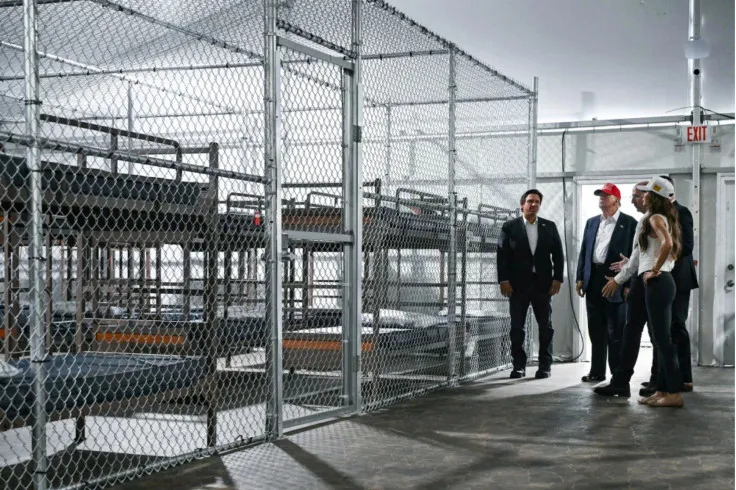
Florida Governor Ron DeSantis has already indicated the state will seek reimbursement under the program for costs tied to “Alligator Alcatraz,” a newly opened detention center capable of housing thousands. The facility, located in South Florida, has been the subject of mounting criticism over allegations of abuse, unsanitary conditions, and denial of due process rights.
Despite those concerns, DeSantis has praised the center as a model for future operations and signaled interest in replicating the facility elsewhere in the state.
Homeland Security Secretary Kristi Noem confirmed that funding will come from FEMA’s $650 million Shelter and Services Program. However, it remains unclear whether any limits will be placed on how much each state can receive.
The Florida Division of Emergency Management declined to comment on whether the state has already submitted a funding request or intends to do so.
Since Alligator Alcatraz opened on July 1, immigrant rights groups and legal advocates have reported troubling conditions. The Latin Times cited detainees who described unsanitary facilities and degrading treatment. More recently, advocates have claimed some detainees are being denied access to attorneys, held without formal charges, and blocked from attending bond hearings following canceled immigration court proceedings.
Despite growing backlash, the Trump administration continues to frame the expansion of detention centers as a necessary step toward restoring immigration enforcement capacity.