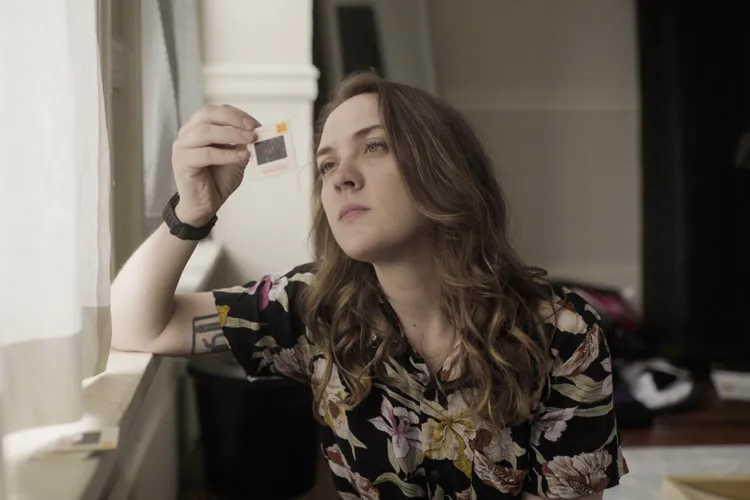

Amanda Mustard spent eight years making a documentary about her grandfather, Dr. William Flickinger, who sexually abused some members of her family as well as children.
In a video op-ed published by The New York Times on Jan. 8, Mustard — whose HBO documentary Great Photo, Lovely Life was released in 2023 — said she has been told she “should have killed” him.
But, she explained, living with the aftermath of sexual abuse — especially when the perpetrator is someone close — rarely fits into simple answers or clean storylines.
“Nothing provokes us like child sexual abuse, and I get it,” Mustard said. “That rage is totally valid. But my story has taught me that if we really want to protect kids, then we need to confront a painful truth.”
“In my family, that monster was Grandpa. Dad,” she continued. “How amazing would it be if you could just throw Grandpa in a wood chipper? But it’s not that simple when it’s somebody close.”
Mustard said she began pursuing the film after her grandmother, Salesta, died. She then traveled to Florida with her mother to visit Flickinger — a former Pennsylvania chiropractor. Mustard described his known trail of abuse as including assaults against toddlers and adult women, beginning in the 1970s.
:max_bytes(150000):strip_icc():focal(730x0:732x2):format(webp)/great-photo-lovely-life-121523-debeb1fcf0a74bbfb87e95748108212c.jpg)
“My family’s story might seem extreme, but child s***** abuse is way more common than we think,” she said. “15 percent of American adults today are child s****abuse survivors, and 90 percent of them were abused by someone they know, maybe someone they loved.”
“You’re probably not going to like it, but these aren’t monsters,” she added. “They’re humans that have done monstrous things. And if we can accept that, we can actually start to prevent this and stop more kids from getting abused.”
During interviews at the Florida retirement facility where Flickinger was living, Mustard recalled asking him whether he ever felt he could have spoken to anyone about what he was doing.
“Did you ever open up?” Mustard asked.
“I wished I could have,” he responded, Mustard recalled. “I wanted to talk to somebody, but I didn’t know who I could really talk to.”
Mustard said that moment led her to wonder what might have changed if intervention had been possible earlier. “What if there had been somebody he could talk to? Imagine how different things could have been for my family,” she said, pointing to what she described as an imbalance in spending: “In the U.S., we spend $5.4 billion a year on locking child abusers up and only $3 million on child s***** abuse prevention research.”
“I’m not asking you to have sympathy for sexual predators,” she said. “Of course, we need to hold perpetrators criminally accountable, but my grandpa went to prison and nothing changed. He continued to abuse after he was released.”
Flickinger eventually lost his chiropractic license in Pennsylvania and moved to Florida, where he was convicted in 1992 of lewd and lascivious acts against a child. He spent two years in prison and was required to register as a sex offender.
Mustard argued that people at risk of abusing children should be given “every opportunity to prevent them from hurting kids.”
She pointed to post-prison reentry efforts shown to reduce repeat offending, as well as programs designed to prevent abuse before it begins — but said both need more funding and more research.
:max_bytes(150000):strip_icc():focal(793x247:795x249):format(webp)/amanda-mustard-sxsw-1926-882a06d790cc4cd0bb2b7ef6017220fb.jpg)
“So, as uncomfortable as it was, instead of killing Grandpa, I talked to him,” she said. “It was terrifying, but it made me realize that nothing is going to change unless we confront this reality head on.”
In her view, labeling abusers as monsters can push the public conversation toward humiliation and punishment rather than prevention and treatment — and that, she said, does not keep children safer. It can also flatten what survivors experience, she added, making it harder to truly hear what they need.
She has also said the film was made for survivors who live with the messiness and complexity of incest and child sexual abuse — not for audiences looking for a simple “bad guy vs. good guy” narrative.
Flickinger died alone in March 2019. He was 86.