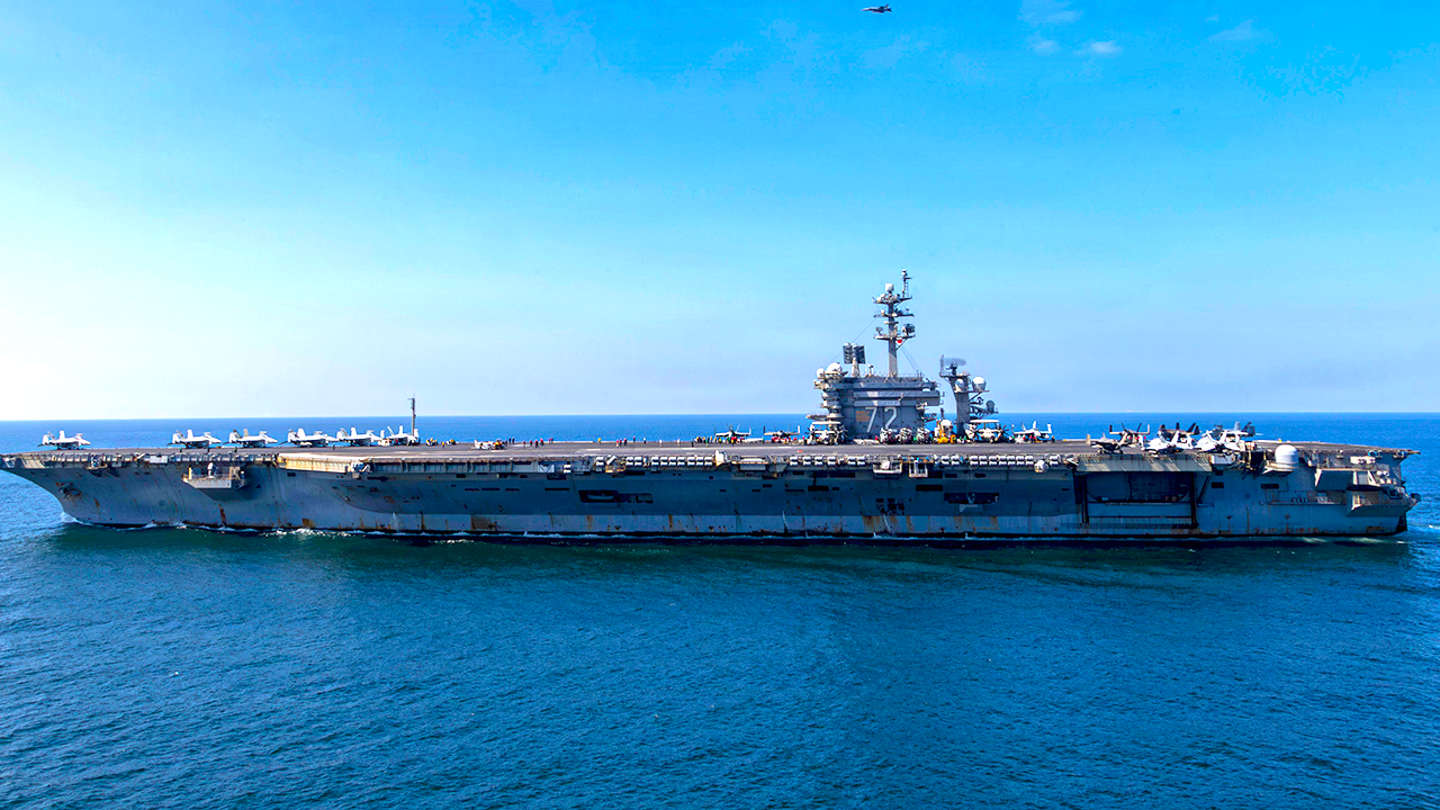

The indirect role of the People’s Republic of China in the escalating conflict between the United States and Iran has come into sharper focus following reports that advanced supersonic missiles targeting U.S. naval assets are of Chinese origin.
Gordon Chang, a senior fellow at the Gatestone Institute and prominent security analyst, warned Thursday that the use of Beijing-linked weaponry against the USS Abraham Lincoln (CVN-72) represents a fundamental shift in the geopolitical landscape. Speaking on FOX Business’ Mornings with Maria, Chang asserted that a direct hit on an American vessel would transform the U.S.-China relationship “overnight,” potentially elevating Beijing from a strategic competitor to an “enemy combatant.”
The ‘Abraham Lincoln’ Incident
The warning follows a series of maritime skirmishes in the Arabian Sea and the Strait of Hormuz during Operation Epic Fury, the U.S.-led military campaign against the Iranian regime that began on February 28, 2026.
- Weaponry Identified: Chang identified the supersonic missiles launched by Iranian forces at the USS Abraham Lincoln strike group as Chinese-manufactured.
- Tactical Proximity: While U.S. Central Command (CENTCOM) confirmed the carrier was not struck, stating the missiles “did not even come close,” the presence of such high-tier technology in the hands of the Islamic Revolutionary Guard Corps (IRGC) suggests a deeper level of military integration between Beijing and Tehran.
- The Risk: Chang emphasized that Iran likely possesses a significant stockpile of these advanced systems, which are designed to overwhelm traditional carrier strike group defenses through speed and maneuverability.
China as an ‘Enemy Combatant’
The investigation into Iran’s arsenal reveals a pattern of “across the board” support from China that stops just short of deploying combat troops. This support includes:
- Dual-Use Supplies: Recent intelligence reports indicate Chinese state-owned vessels have transported sodium perchlorate—a key precursor for solid rocket fuel—to Iranian ports.
- Intelligence Cooperation: Analysts suggest China may be providing satellite data and electronic warfare expertise to enhance the accuracy of Iranian strikes.
- Sanction Evasion: Beijing continues to facilitate the “shadow fleet” of tankers that bankrolls the Iranian military through illicit oil sales.
“We should consider China an enemy combatant,” Chang stated, arguing that Beijing benefits from the regional chaos while avoiding direct accountability.
Operation Epic Fury: A Growing Toll
As the war enters its fourth week, the stakes for the U.S. Navy have reached a critical juncture. While Defense Secretary Pete Hegseth has described the mission as a “surgical and decisive” effort to eliminate Iran’s nuclear and missile infrastructure, the introduction of Chinese-made supersonic threats complicates the mission.
“God forbid, if one of those missiles hit an American ship… our relationship with China changes overnight,” Chang warned.
CENTCOM reports that while the USS Abraham Lincoln continues to conduct air operations, the U.S. has already expended a significant volume of high-demand munitions, including Tomahawk cruise missiles and Patriot interceptors. The military has also seen the combat debut of the Precision Strike Missile (PrSM) to counter Iranian coastal batteries.
Geopolitical Fallout
Beijing has officially called for an immediate cessation of hostilities, citing concerns over global energy security and the stability of the Strait of Hormuz. However, critics argue this diplomatic posturing masks a calculated effort to deplete American military resources and test U.S. defense systems in a live-fire environment.
If the verification of Chinese-made missiles being used against U.S. sailors is confirmed by the Pentagon, the Biden-Trump administration may face bipartisan pressure to impose unprecedented secondary sanctions on Chinese entities or re-evaluate the U.S. military posture in the Indo-Pacific.