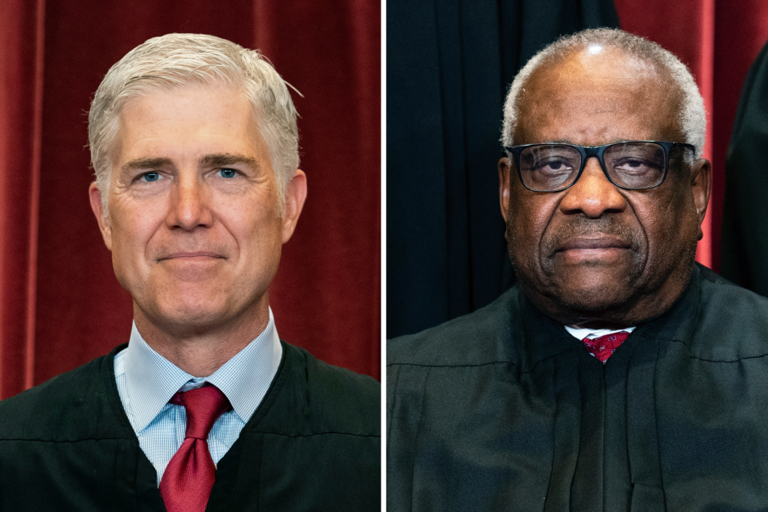

Supreme Court Justice Neil Gorsuch, joined by Justice Clarence Thomas, argued in a new dissent that the Court should reconsider — and potentially overturn — an 1886 decision that underpins broad federal authority over the internal affairs of Native American tribes.
On Monday, the Supreme Court declined to hear Quentin Veneno, Jr. v. United States. Veneno, a member of the Jicarilla Apache Nation, was convicted in federal court of domestic assault against another tribal member. His attorney contended that Congress lacks constitutional authority to criminalize intratribal conduct committed by Native Americans on tribal land and asked the Court to overrule United States v. Kagama.
Why it matters
Kagama arose after a Native American man known as Kagama (also called Pactah Billy) was indicted for murdering another Native American on reservation land. The Court’s ruling upheld the Major Crimes Act of 1885, which placed certain serious offenses committed by Native Americans in Indian country under federal jurisdiction. That decision has served as a foundation for what later became known as the federal government’s “plenary power” over tribal affairs.
What to know
Gorsuch wrote that Kagama effectively created the theory that the federal government holds sweeping, overarching power over tribal internal matters — a doctrine he views as constitutionally indefensible.
“It is a theory that should make this Court blush,” Gorsuch said. He argued that the idea has no basis in the Constitution and instead grew out of outdated and prejudicial assumptions. In his view, because the Court authored Kagama, it also bears responsibility for correcting it.
He added that the Court must be willing to revisit decisions that “cannot be explained by the Constitution, but only by the atmosphere of their times.”
Gorsuch suggested that overturning Kagama would restore a crucial element of tribal sovereignty, allowing tribes to prosecute “major” crimes among their own members without federal oversight. He criticized the historical logic of Kagama, which implied tribes were too “inferior” or “weak” to handle such cases independently.
What people are saying
Gorsuch, in his dissent joined by Thomas: “I regret that the Court declines to take up that challenge today. But whether the day of reckoning for the plenary power theory comes sooner or later, it must come.”
Federal government attorneys wrote in a November 2024 brief that accepting Veneno’s argument would require more than reversing Kagama — it would upend a long line of precedent recognizing Congress’s broad authority over crimes involving Native Americans in Indian country.
What happens next
Because the Supreme Court denied review, the lower-court decision remains in place. The Tenth Circuit Court of Appeals had rejected Veneno’s claim that federal prosecution of intratribal conduct is unconstitutional, so his convictions stand.