
A senior Hamas security officer has told the BBC that the group has lost roughly 80% of its control over the Gaza Strip, with armed local clans and gangs rapidly filling the power vacuum left behind.
Speaking anonymously through voice messages, the wounded lieutenant colonel described the near-total collapse of Hamas’s political, military, and security leadership, following months of devastating Israeli airstrikes. He said the group’s command structure is effectively nonfunctional.
“Let’s be realistic — there’s barely anything left of our security apparatus,” he said. “About 95% of our leadership has been killed. The rest are in hiding. What’s stopping Israel from finishing this war now?”
The officer, who was injured in the war’s first week after Hamas’s October 7, 2023, assault on Israel, no longer serves in an active role. His candid remarks paint a grim picture of the current situation in Gaza, where security has reportedly disintegrated and lawlessness is rampant.
‘No Control, No Command, No Communication’
In his messages, the officer said Hamas tried to regroup during a 57-day ceasefire earlier this year, attempting to reestablish its military and political leadership. But once Israel resumed its campaign in March, the remaining leadership was again targeted.
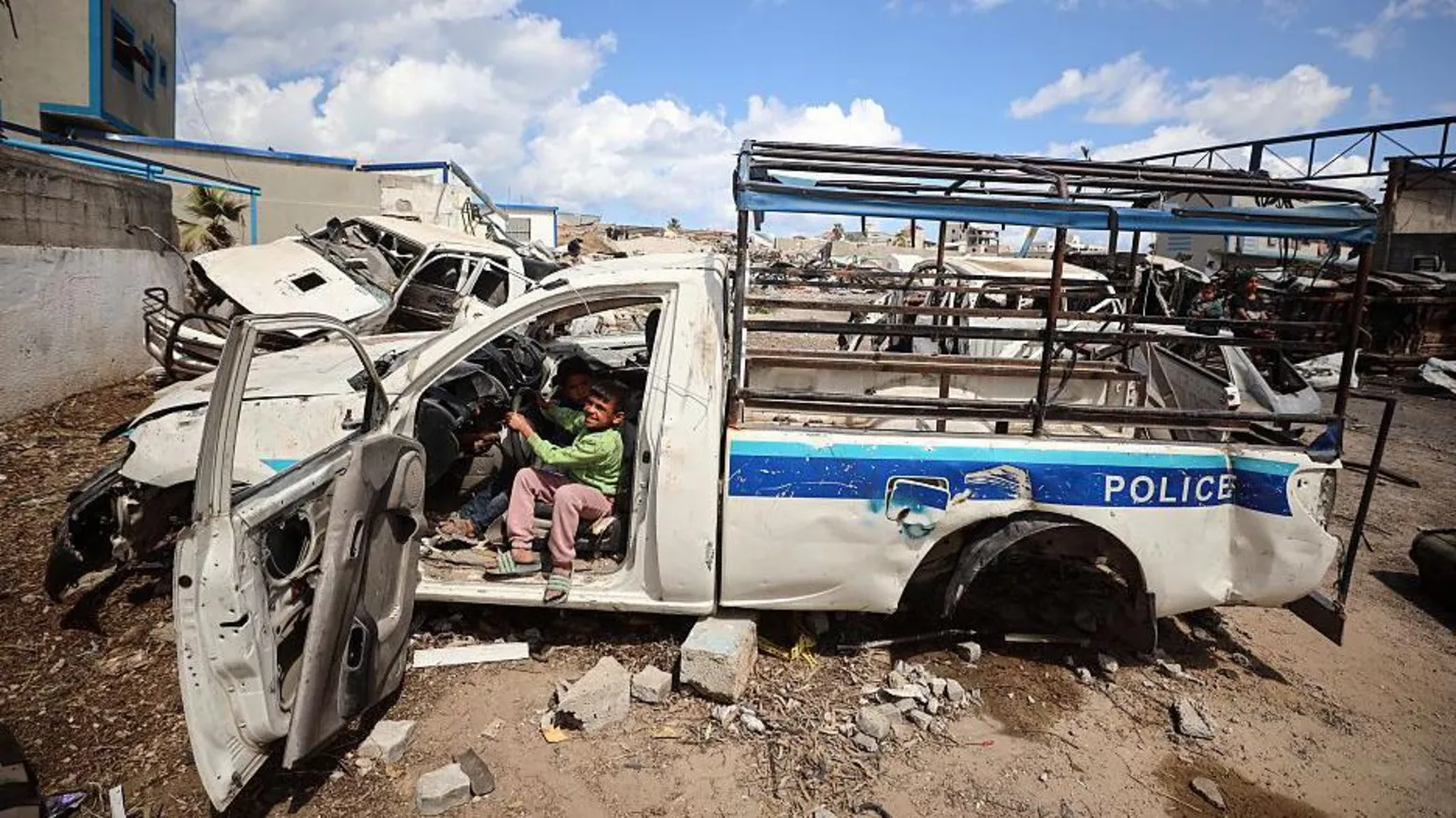
“Security is completely gone,” he said. “We’ve lost control. Looters ransacked the Ansar complex, Hamas’s main security headquarters — even took the zinc panels off the walls — and no one intervened. No police, no fighters. Nothing.”
He added that the group’s communication systems are down, salaries are barely paid, and anyone who tries to organize resistance — even against local criminals — risks being bombed by Israeli drones.
Hamas Police Targeted in Israeli Strike
On June 26, Israeli forces struck a Hamas police unit in Deir al-Balah that was attempting to crack down on black market vendors accused of price gouging and selling looted aid. Eighteen people were killed. Witnesses say the unit was unarmed and operating in plain clothes.
The Israeli military said it targeted “armed terrorists” from Hamas’s Internal Security Forces.
The officer said such strikes make it virtually impossible for Hamas to restore any order, allowing heavily armed gangs and clans to take over neighborhoods.
Rise of Clan Militias
According to the officer, at least six well-funded and well-armed clan militias have emerged across Gaza, mostly in the south. One of the most prominent is led by Yasser Abu Shabab, a figure who has drawn the attention of the Palestinian Authority and Israel alike.
Israel confirmed last month that it is providing Abu Shabab’s group with weapons — a clear indication that Tel Aviv sees him as a useful counterweight to Hamas.
Hamas, on the other hand, views Abu Shabab as a dangerous rival. The officer revealed that the group has placed a high-value bounty on his head.
“They won’t go after petty thieves,” he said. “But if fighters come across Abu Shabab, they may choose to target him before they even bother with the Israeli tanks.”
A New Power Struggle in Gaza
Sources told the BBC that Abu Shabab is working to build a coalition of clans and armed groups aimed at dismantling what’s left of Hamas’s rule. Armed members of his group were seen escorting UN aid convoys last month to prevent looting — further boosting his public image.
A retired Palestinian security official in Cairo said Abu Shabab is increasingly being seen as a potential unifying figure for Hamas’s many enemies.
“He’s like an orphan everyone wants to adopt if he can break Hamas’s grip,” the official said. “He’s been in touch with Palestinian intelligence and even sent messages to Egypt through family in Sinai.”
He also claimed that Abu Shabab maintains ties with exiled former Gaza security chief Mohammad Dahlan — a long-time rival of Hamas.
Hamas’s Diminishing Grip
As lawlessness spreads and Gaza slips into factional chaos, Hamas is facing internal collapse alongside external military pressure. The officer warned that the group’s enemies — once scattered and weak — are beginning to coalesce.
“For 17 years, we made enemies everywhere,” he said. “If someone like Abu Shabab can bring them all together, it could be the end for us.”
With no functioning leadership, no clear chain of command, and its fighters increasingly hunted or disillusioned, Hamas is not just fighting Israel — it’s fighting for its own survival amid a growing insurgency from within.