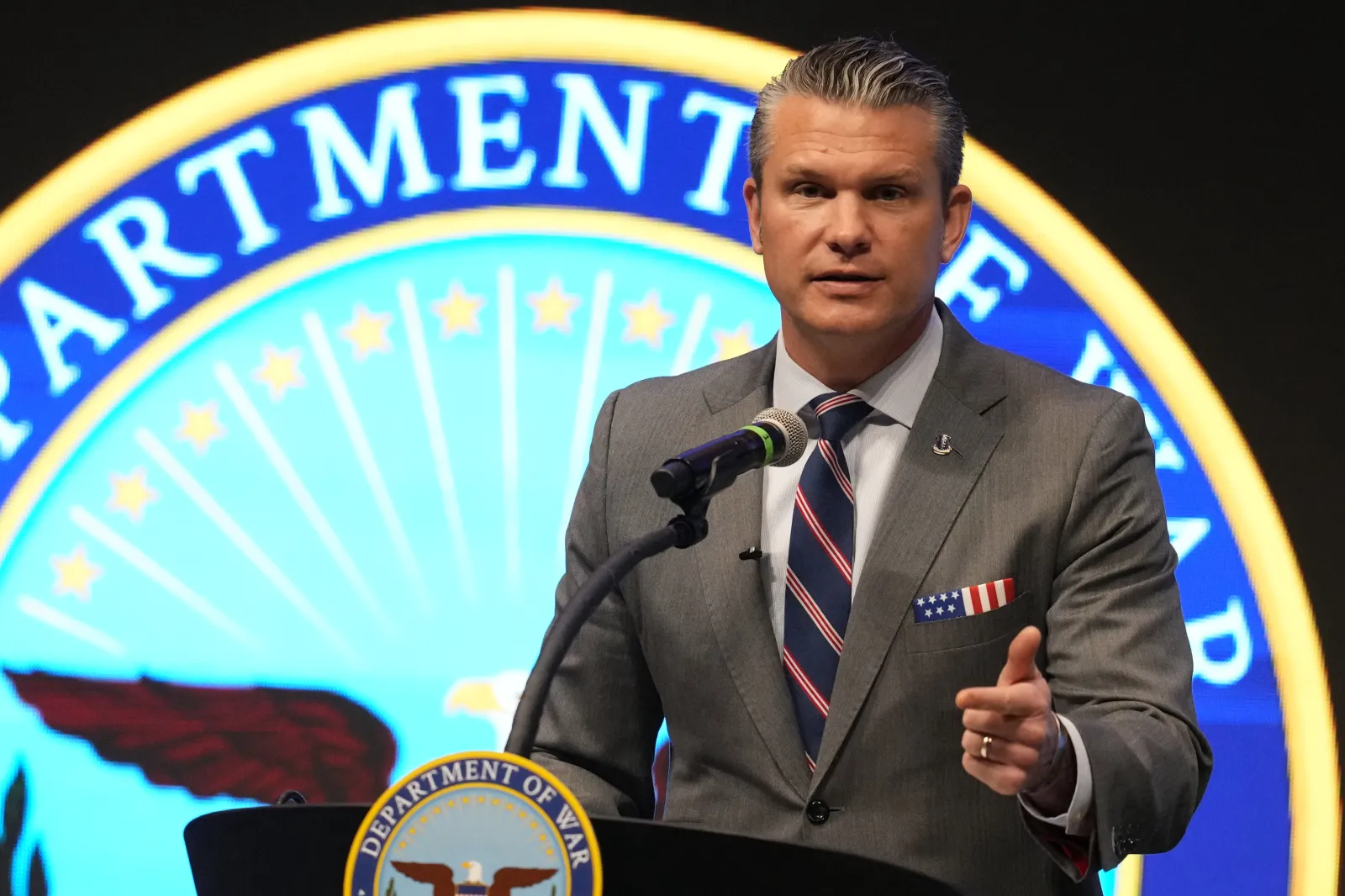

Defense Secretary Pete Hegseth on Monday strongly defended Navy Admiral Mitch Bradley, calling him “an American hero” as questions mount over Bradley’s decision to authorize a follow-up boat strike during a recent mission in the Caribbean Sea.
Hegseth said he fully supports Bradley’s combat judgment, including the choices made during the September 2 operation, and stressed that Pentagon leadership stands firmly behind its commanders in the field. He added that the country is “fortunate” to have leaders like Bradley and vowed that the department will continue to back U.S. service members carrying out missions overseas.
Why This Matters
The White House also weighed in Monday, defending the Navy admiral’s actions and saying he operated “within his authority and the law” during the September 2 strike, which is now facing bipartisan scrutiny on Capitol Hill.
Lawmakers are pressing for a closer look at U.S. maritime counter-narcotics missions in the Caribbean and eastern Pacific after reports that survivors of an initial strike on a suspected drug-smuggling vessel were later killed in a follow-up attack. The Washington Post reported last week that Hegseth had personally given a verbal order for the second strike, a claim he has rejected.
Key Background
Press secretary Karoline Leavitt addressed the incident as members of both parties called for a formal review of the mission. She did not dispute that two survivors remained after the first strike but said the operation followed proper authorization channels.
According to Leavitt, Hegseth had empowered Bradley—then leading Joint Special Operations Command—to ensure the vessel was destroyed and any lingering threat eliminated. Her remarks came a day after President Donald Trump said he “wouldn’t have wanted” a second strike, while also saying he believes Hegseth’s denial that he ordered it directly. Leavitt said Hegseth spoke with concerned members of Congress over the weekend.
Senior Pentagon leaders also moved to reassure lawmakers. Gen. Dan Caine, chairman of the Joint Chiefs of Staff, held calls with the heads of the House and Senate Armed Services Committees, reaffirming his confidence in U.S. commanders and underscoring that the missions were aimed at disrupting drug-trafficking networks threatening security in the Western Hemisphere.
Congress’ top defense lawmakers signaled they will gather facts before issuing judgments. Senate Majority Leader John Thune defended the broader anti-smuggling campaign, arguing such operations are essential to reducing narcotics flows into the United States.
The coverage in The Washington Post prompted Hegseth to accuse the media of spreading falsehoods and insist that all U.S. actions were lawful and reviewed by both military and civilian attorneys. Those comments quickly drew criticism from Democrats, including Senate Majority Leader Chuck Schumer, who labeled Hegseth a “national embarrassment” and urged committee chairs to demand unredacted video of the strike.
Sen. Jack Reed, the top Democrat on the Senate Armed Services Committee, said the panel would begin by seeking briefings from directly involved officials and echoed calls for the administration to release the footage if it has “nothing to hide.” Sen. Roger Wicker, the committee’s Republican chair, pledged that his panel would proceed “by the numbers” to determine the “ground truth.”
The September 2 action is one of dozens of strikes carried out in recent months as the United States has expanded naval operations in the region, including the deployment of its largest aircraft carrier. More than 80 people have been killed in these boat strikes, which U.S. officials characterize as legitimate operations against vessels they say are used by drug cartels.
In Venezuela, the National Assembly announced Sunday that it will investigate the deaths, marking the first time a senior Maduro-aligned official has publicly acknowledged that Venezuelans were among those killed. Assembly president Jorge Rodríguez said lawmakers will examine “the serious events that led to the murder of Venezuelans in the waters of the Caribbean Sea,” setting up a parallel inquiry to the ones now forming in Washington.
Trump confirmed he recently spoke by phone with Venezuelan President Nicolás Maduro but declined to share details. Speaking later in Caracas, Maduro accused the United States of subjecting Venezuela to “psychological terrorism” for more than 20 weeks while insisting the country remains ready to defend itself.
How Lawmakers and Officials Are Responding
Republican Sen. Thom Tillis said that whoever ordered a second strike on survivors of the Pentagon’s boat attack “if substantiated” needs “to get the hell out of Washington.”
Tillis, who represents North Carolina, added that “we still need to get to the bottom” of the mission, but said that if the allegations are true, it would constitute “a violation of an ethical, moral or legal code.”
Hegseth reiterated his support for Bradley in a post on X on Monday night, writing:
“Let’s make one thing crystal clear: Admiral Mitch Bradley is an American hero, a true professional, and has my 100% support. I stand by him and the combat decisions he has made — on the September 2 mission and all others since. America is fortunate to have such men protecting us. When this @DeptofWar says we have the back of our warriors — we mean it.”
Leavitt also underscored the administration’s position, saying Monday: “Secretary Hegseth authorized Admiral Bradley to conduct these kinetic strikes. Admiral Bradley worked well within his authority and the law, directing the engagement to ensure the boat was destroyed and the threat to the United States of America was eliminated.”
What Comes Next
The growing controversy is unfolding as Trump ramps up pressure on Venezuela and considers additional military options. The president met Monday with his national security team to review ongoing interdiction missions and potential next steps targeting Venezuelan networks that U.S. officials say are linked to drug-trafficking groups.
Congressional inquiries in both the United States and Venezuela are expected to shape how future counter-narcotics missions in the region are conducted—and how far commanders can go when a threat appears to linger after an initial strike.