
For more than 40 years, the Soviet Union pursued one overriding strategic goal in the West: fracture the Atlantic Alliance by turning the United States and Europe against each other. Crisis after crisis was engineered to pry open divisions inside Nato—and to make those divisions permanent.
West Berlin was the pressure point of choice. From the 1958 Soviet ultimatum demanding the West withdraw, to the Wall’s construction in 1961, the aim was to expose cracks in allied resolve. Nikita Khrushchev captured the logic bluntly in 1959: “To make the West scream, I squeeze on Berlin.”
Leonid Brezhnev followed the same playbook with different tools, deploying SS20 nuclear missiles across Soviet satellite states in central Europe to split the West over how to respond.
It never worked. The allies argued, negotiated, and disagreed—but they didn’t break. Washington and European capitals understood what Moscow was trying to do, and they refused to hand the Kremlin the spectacle it craved.
Now, Vladimir Putin is getting it anyway.
For 25 years, Putin has revived the same strategy: weaken the West by driving wedges inside it. He has repeatedly condemned Nato as an “encircling” force and framed the alliance’s existence as a provocation—as though sovereign countries freely choosing to join could justify Russian aggression.
But the most consequential opening he has ever seen isn’t coming from Moscow. It’s coming from Washington.
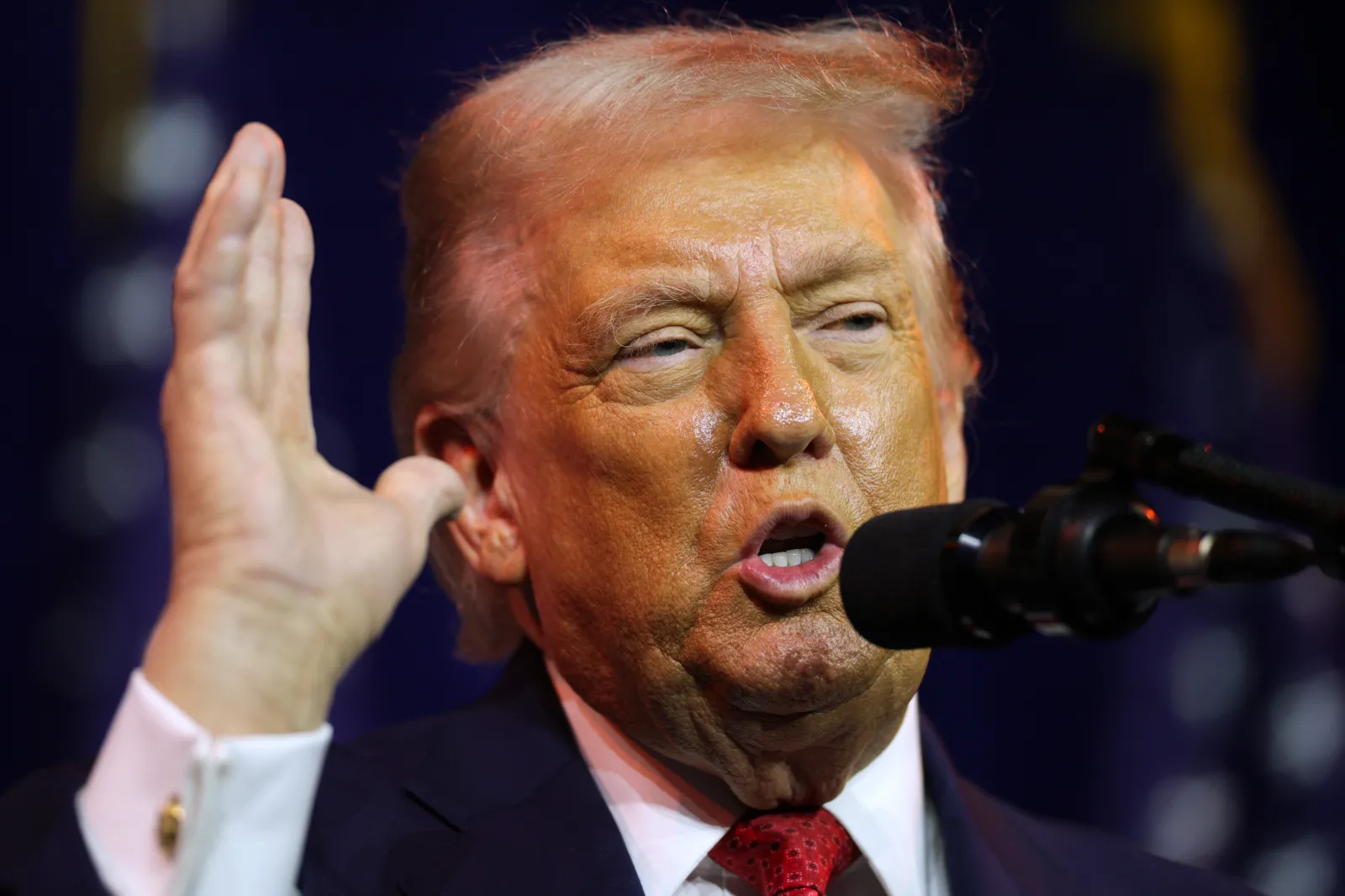
The United States president has publicly laid claim to the sovereign territory of a Nato ally—Denmark—and has threatened force to achieve that goal. On Saturday, Donald Trump escalated the confrontation further, ordering punitive tariffs against eight allies, including Britain, for expressing what should be a basic democratic principle: Greenland’s status is a matter for Greenlanders and the Danish government.
On Monday, Trump pushed the threats beyond Denmark. In a leaked letter to Norwegian prime minister Jonas Store, he wrote that after being denied the Nobel Peace Prize he “no longer feel[s] an obligation to think purely of peace, although it will always be predominant.” He added that Denmark had no “right of ownership” over Greenland and that America’s “Complete and Total control” of the island was essential for global security.
Europe is now preparing to respond in kind. With American tariffs looming and threats mounting, the EU is reportedly weighing retaliation using its “anti-coercion instrument,” targeting €93bn (£80.6bn) of US exports. A measure designed for adversaries may be deployed against the superpower that has underwritten Europe’s security for nearly 80 years.
Sir Keir Starmer has so far avoided announcing additional British tariffs, but the direction of travel is unmistakable: both sides are increasingly acting as though damaging the other is acceptable collateral.
From Putin’s vantage point, this is the prize. Even if the dispute is eventually patched up through some negotiated settlement over Greenland—and despite the sound and fury, that remains plausible—the damage doesn’t simply disappear. The more fundamental question lingers: who, after this, can confidently trust the United States to honor Nato’s promise to defend European allies?
As the Prime Minister said in Downing Street on Monday: “Alliances endure because they are built on respect and partnership, not pressure. The use of tariffs against allies is completely wrong.”
Pressure is precisely what Trump is applying—loudly and publicly—against partners rather than rivals. And in doing so, he is weakening the core belief that has kept the peace: that an attack on any Nato ally would mean a war with America, a war an aggressor could not win.
Soviet leaders understood that reality. It was a deterrent strong enough to prevent catastrophe.
Why should Putin be certain it still holds?