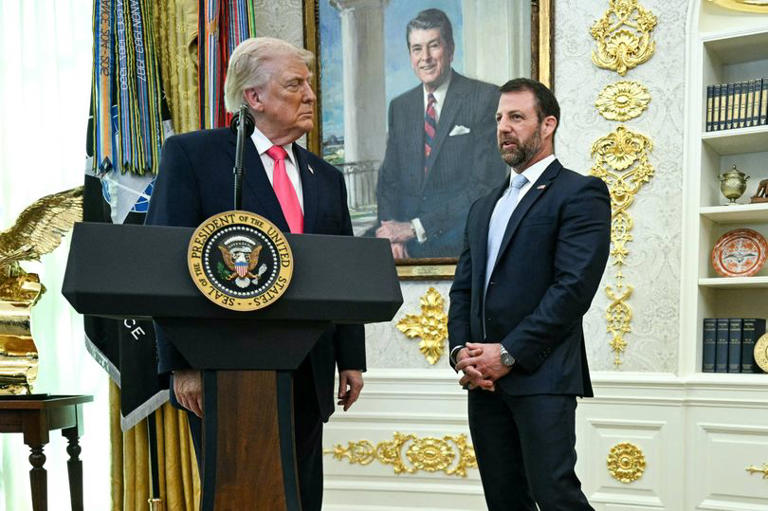

President Donald Trump officially swore in Republican Senator Markwayne Mullin as the Secretary of the Department of Homeland Security (DHS) this week, following a swift Senate confirmation. The transition places a prominent Cherokee Nation member at the helm of the nation’s domestic security and immigration enforcement at a time of heightened tribal and international tension.
A Surprising Reveal at the Podium
During the formal ceremony, President Trump appeared visibly caught off guard while reading a briefing on Mullin’s background. The President paused mid-sentence when the text highlighted Mullin’s status as the only Native American currently serving in the U.S. Senate.
“I didn’t know that,” Trump remarked, sounding surprised. After pausing to observe the new Secretary, he added, “He’s got great quality, I can tell you.”
Mullin, a registered member of the Cherokee Nation, corrected the President’s inquiry regarding historical representation, noting that he is only the fourth Native American to serve in the Senate. He follows in the footsteps of Robert L. Owen, Charles Curtis, and Ben N. Campbell.
Friction Between DHS and Tribal Nations
Mullin’s appointment comes as the DHS faces a fractured relationship with indigenous communities. The Cherokee Nation and several other Oklahoma-based tribes have been vocal critics of Immigration and Customs Enforcement (ICE), an agency Mullin will now oversee.
Recent reports of Native individuals being targeted during ICE operations—specifically in Minnesota—have led several tribal leaders to impose strict bans on federal agents entering their territories. Mullin now faces the complex task of reconciling his heritage with the administration’s aggressive immigration mandates.
A Combative Path Forward
The transition from former Secretary Kristi Noem to Mullin has been met with significant scrutiny. Critics point to Mullin’s “combative persona” as a potential liability for a role requiring diplomatic precision. Mullin previously made headlines for nearly instigating a physical altercation during a Senate hearing, raising concerns about his temperament in managing a department of over 240,000 employees.
His leadership begins during a period of intense national security focus. The swearing-in occurred as the administration maintains a five-day suspension of planned strikes on Iranian energy facilities, a move designed to pressure Tehran into reopening the Strait of Hormuz.
The Road Ahead
As Mullin takes the lead at DHS, the administration continues to navigate internal concerns regarding the President’s health and the fallout from recent controversial remarks concerning religious holidays. Whether Mullin’s background will bridge the gap between the federal government and tribal nations—or if his confrontational style will deepen existing divides—remains the central question of his early tenure.