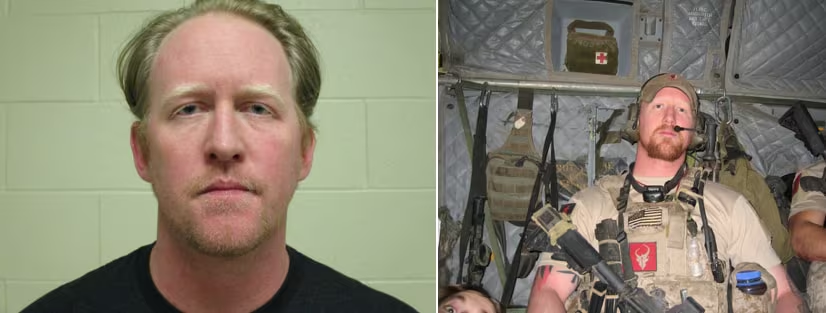

Former U.S. Navy SEAL Robert J. O’Neill, who says he fired the shot that killed Osama bin Laden, is publicly criticizing recent Iran-related social media posts by former President Donald Trump—calling the language inappropriate for a commander-in-chief.
Speaking on Piers Morgan Uncensored, O’Neill said he was taken aback by Trump’s posts on Truth Social, where the former president reportedly used aggressive language toward Iran, including threats that critics say could be interpreted as targeting civilians.
“I didn’t think it was presidential,” O’Neill said during the April 7 interview, adding that he initially questioned whether the posts were authentic. He noted that while he has supported Trump in the past and knows him personally, “someone should step up” when rhetoric crosses a line.
O’Neill emphasized that the tone and content of such statements carry significant weight, particularly coming from a figure who has served as commander-in-chief. “The optics are very important,” he said, warning that language suggesting the destruction of an entire civilization is not only inappropriate but potentially dangerous.
The former SEAL also raised concerns about international law, referencing the Geneva Conventions. He suggested that rhetoric implying attacks on civilian infrastructure could conflict with established wartime legal standards.
“You really can’t say you’re going to wipe out an entire civilization,” O’Neill said. “Some things just shouldn’t be said—even if you want to.”
He added that Trump’s frustration with allies, including tensions with NATO, may be influencing his tone. Still, O’Neill argued that leadership requires restraint, especially in public communications.
While acknowledging that he himself has posted remarks online that he later regretted, O’Neill drew a clear distinction between private individuals and those in positions of power. “As the top boss of the military,” he said, such statements are “inappropriate.”
The comments mark a notable moment of criticism from a figure who has previously aligned with Trump, underscoring ongoing concerns among some current and former military voices about the impact of political rhetoric on global stability.