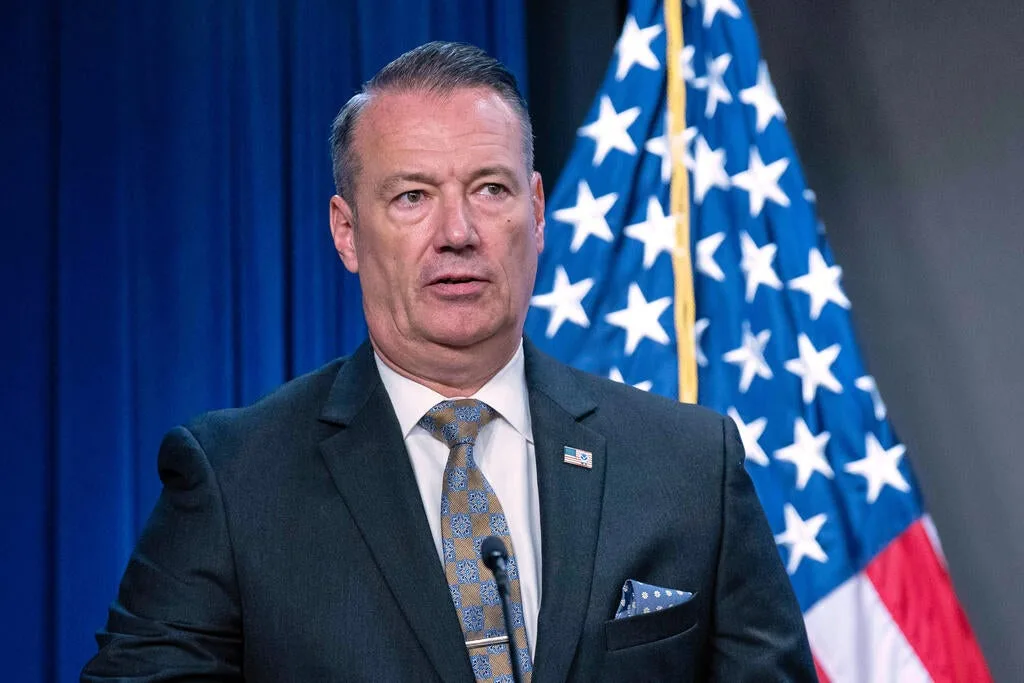

WASHINGTON — The acting head of U.S. Immigration and Customs Enforcement (ICE), Todd Lyons, said in a new interview that his agency will detain any individual found living in the U.S. illegally — regardless of criminal history — while also targeting employers who knowingly hire undocumented workers.
In an exclusive conversation with CBS News’ Face the Nation, Lyons said ICE will continue to prioritize those with serious criminal convictions but will not exempt others who lack legal immigration status. The agency, he said, has been forced to expand its scope due to “sanctuary” policies in states and cities that limit cooperation with ICE.
“We’d prefer to focus on those with serious charges who are already in jail,” Lyons said, “but when local law enforcement won’t turn them over, our agents have to go out into communities and make arrests.”
That shift has led to a rise in so-called “collateral” arrests — individuals who are not the initial targets of an operation but are found to be undocumented during enforcement actions.
“If someone is in this country illegally and we encounter them, we will take them into custody,” Lyons declared.
“We’ve Opened Up the Whole Aperture”
Under the Biden administration, ICE agents were instructed to prioritize national security threats, recent border-crossers, and those with serious criminal convictions. That policy was reversed in January when President Trump returned to office, restoring a much broader enforcement mandate.
Now, ICE is under pressure to significantly ramp up deportations. The White House — led by senior adviser Stephen Miller — has reportedly set an ambitious goal of 3,000 arrests per day. While the agency has not reached that figure, a massive new funding package from Congress is expected to dramatically accelerate operations.
Lyons said it’s “possible” to reach Trump’s target of 1 million deportations per year. Internal ICE data obtained by CBS shows nearly 150,000 deportations have already occurred in Trump’s first six months back in office, including around 70,000 individuals with criminal convictions — many for immigration-related or traffic offenses.
Despite emphasizing arrests of those convicted of violent crimes, ICE has come under fire for aggressive tactics, including agents wearing masks, detaining asylum-seekers at court appearances, and conducting raids at sensitive locations.
“ICE is always focused on the worst of the worst,” Lyons said. “But under this administration, we’ve opened up the whole aperture.”
Employers in the Crosshairs
In addition to expanding arrests, ICE is reviving large-scale immigration raids at workplaces — a practice that had been paused under President Biden.
Recent operations have included hundreds of arrests at a Nebraska meatpacking facility, a Louisiana horse racetrack, and cannabis farms in California, where over 300 undocumented workers, including 10 minors, were taken into custody.
Industry groups raised alarms that the crackdown was harming agricultural and hospitality sectors. ICE briefly paused farm and restaurant raids in June, but the moratorium lasted only a few days. President Trump later suggested that farmers employing undocumented workers might be given a “pass,” though no official guidance has been issued.
Lyons insisted that both workers and employers will be held accountable, emphasizing that workplace enforcement isn’t just about immigration status but often uncovers forced labor and human trafficking.
“This is not a victimless crime,” Lyons said. “We are going after employers who exploit vulnerable people.”
Asked if ICE would pursue criminal charges against business owners who knowingly hire undocumented workers, Lyons responded unequivocally:
“One hundred percent.”