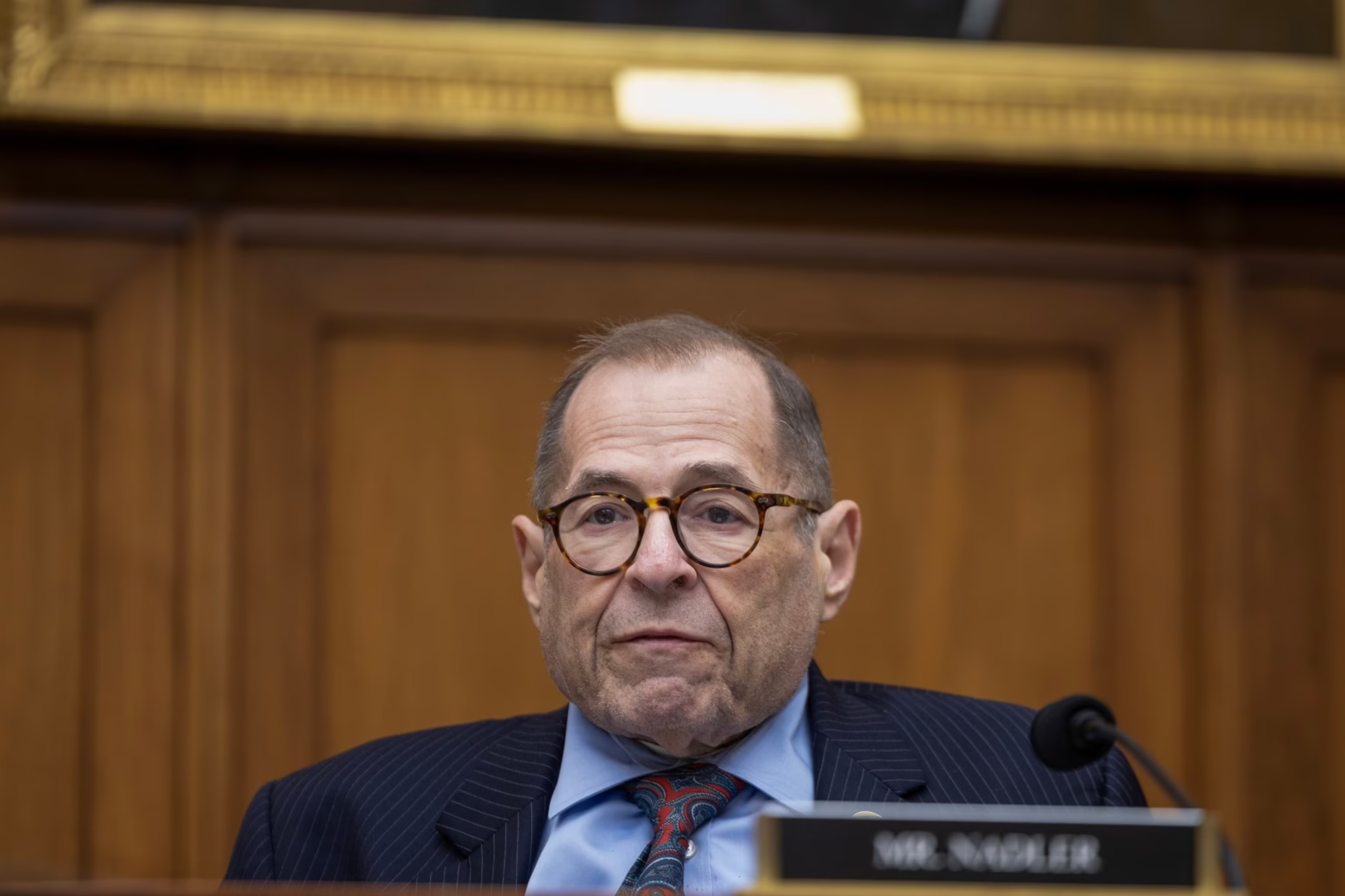

Rep. Jerry Nadler delivered a blistering rebuke of the Trump administration and federal immigration enforcement on the House floor, warning that the country is sliding into what he called “fascism in our streets” as anger mounts over the fatal shooting of a U.S. citizen in Minneapolis.
Speaking during debate on a budget-related amendment, Nadler waved off the fiscal argument as a sideshow compared to what he portrayed as a deepening threat to civil liberties and democratic norms. If lawmakers truly want to address deficits, he argued, they could start by reversing tax cuts that benefit wealthy Americans. But, he said, the more urgent issue is how federal power is being exercised—both in enforcement actions and in the administration’s posture toward elections.
“What is really the major problem in this country today is the fascism in our streets,” Nadler said, focusing on the use of masked agents in enforcement operations. He argued that when unidentified, masked individuals confront civilians, those encounters can reasonably feel like kidnappings. “If you were attacked by a masked person, you might think you were being kidnapped,” he said. “You would be justified in shooting the person to protect yourself,” adding that Americans are now being shot “for what? For driving a car.”
Nadler accused Immigration and Customs Enforcement of repeatedly overstepping its authority, describing alleged incidents in which agents entered homes without warrants and detained U.S. citizens. He painted a picture of intimidation and disorder—people pulled from their homes, he said, without basic allowances such as getting properly dressed.
His remarks followed the killing of 37-year-old Alex Pretti, a U.S. citizen and intensive care nurse, who was shot by federal immigration agents during a protest in Minneapolis. The Department of Homeland Security has said a Border Patrol agent fired in self-defense after Pretti approached officers with a handgun and resisted efforts to disarm him.
The shooting set off major protests in Minneapolis and demonstrations in other cities, including New York, Washington, D.C., and San Francisco. It also deepened friction between state and federal officials, especially after another U.S. citizen, Renee Good, was fatally shot by immigration agents earlier this month.
Nadler’s blunt framing—suggesting that lethal self-defense could be justified when masked agents confront civilians—has since triggered fierce political backlash and debate across party lines, with critics calling it reckless and supporters arguing he was underscoring the dangers of unidentified law enforcement tactics.