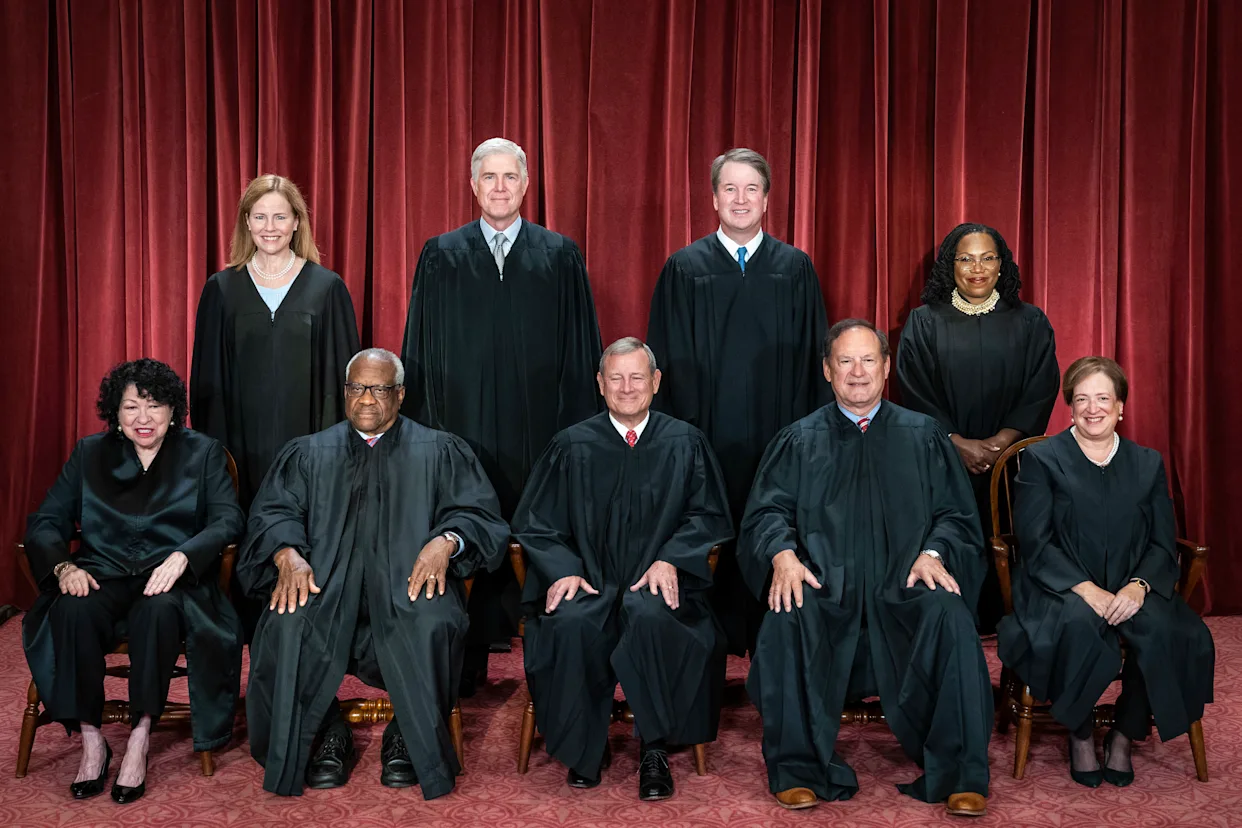

In remote villages across Alaska, where ballots travel by plane and storms can halt delivery for days, a pending U.S. Supreme Court decision could fundamentally disrupt how votes are counted—just months before a pivotal Senate election.
At issue is whether states can continue counting mail ballots that arrive after Election Day but are postmarked on time. Alaska currently allows a 10-day window, a policy designed to accommodate its vast geography and limited infrastructure. A majority of justices, however, appear inclined to prohibit such late-arriving ballots, a move that could invalidate thousands of votes in rural regions.
Local officials warn the consequences would be immediate and severe. In areas like Kodiak Island, where there are no road connections and air travel is unreliable, absentee voting is not optional—it is essential.
“This isn’t about convenience,” said Kodiak Island Borough Mayor Jared Griffin. “It’s about whether people can vote at all.”
The burden would fall heaviest on Alaska Native communities, which make up roughly 20% of the state’s electorate and are more likely to rely on mail voting. Data submitted to the court shows ballots from rural areas arrive late at rates two to three times higher than those from urban centers. In some districts, nearly 80% of absentee ballots are received after Election Day.
Voting advocates argue that eliminating the grace period would effectively disenfranchise these voters, exacerbating existing barriers such as limited polling access and unreliable mail service.
The timing of the case is critical. Alaska’s Senate race between Democratic former Rep. Mary Peltola and Republican Sen. Dan Sullivan is emerging as one of the most competitive contests in the country—and could help determine control of the chamber.
Peltola, the first Alaska Native woman elected to Congress, has drawn strong support from rural and Indigenous communities. Democrats fear that stricter ballot deadlines would disproportionately affect her base.
Republicans, while backing election integrity measures nationally, have shown some division in Alaska. Sen. Sullivan has stated that ballots cast by Election Day should be counted, regardless of arrival time. Meanwhile, Sen. Lisa Murkowski has openly criticized efforts to restrict mail voting, calling them potentially harmful to her state.
Alaska’s Republican attorney general has urged the Supreme Court to provide clear guidance, citing the state’s “unique challenges.” A ruling is expected this summer—potentially just weeks before primary elections—raising concerns about administrative chaos.
Election officials may be forced to rapidly overhaul procedures, while voters in remote areas could face tighter deadlines without improved access to mail or in-person voting.
The case extends beyond Alaska. More than a dozen states currently allow some form of postmarked ballot grace period. A nationwide ban would standardize Election Day deadlines but could disproportionately impact rural voters across the country.
For Alaska, the outcome could reshape not only election logistics but also political representation—testing whether a uniform voting rule can accommodate one of the most geographically challenging states in the U.S.