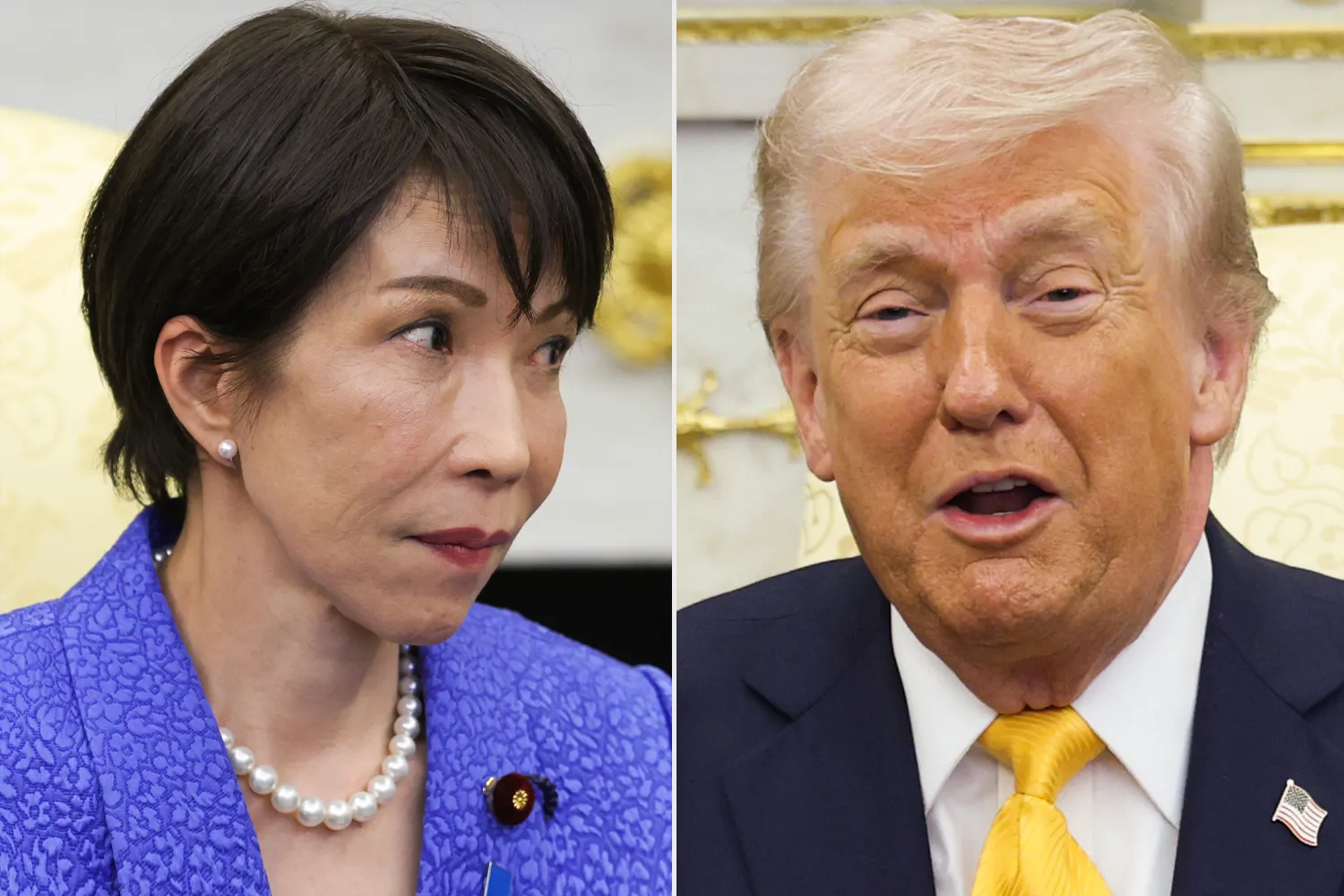

President Donald Trump sparked a visible diplomatic chill in the Oval Office on Thursday after invoking the 1941 attack on Pearl Harbor during a high-stakes meeting with Japanese Prime Minister Sanae Takaichi. The comment came as the U.S. commander-in-chief seeks Tokyo’s military and logistical support for the escalating conflict involving the U.S., Israel, and Iran.
The exchange occurred during a joint press pool following discussions centered on the Strait of Hormuz, a vital global energy artery currently under threat from Iranian retaliatory strikes.
A “Surprise” Reference Strains Diplomacy
The tension surfaced when a Japanese correspondent questioned why the Trump administration failed to consult or notify Pacific allies before the Feb. 28 strike on Iran, the kinetic action that effectively initiated the current state of war.
“We didn’t tell anyone about it, because we wanted surprise,” President Trump, 79, replied. He then pivoted to a historical comparison that appeared to catch the Japanese delegation off guard. “Who knows better about surprise than Japan? Okay, why didn’t you tell me about Pearl Harbor?”
Prime Minister Takaichi, 65, Japan’s first female head of government, met the remark with a sharp drop in expression and a measured, deep breath. While some members of the press corps laughed, the Prime Minister remained silent as Trump added, “You believe in surprise, I think, much more so than us.”
:max_bytes(150000):strip_icc():focal(930x450:932x452):format(webp)/Sanae-Takaich-donald-trump-oval-office-31926-4fe4bbeb083a4f6dba850ef798d8f2da.jpg)
Historical Context and Strategic Irony
The President’s reference to the Dec. 7, 1941, attack on the U.S. Pacific Fleet at Oahu remains a sensitive touchstone in transpacific relations. According to the U.S. Department of Defense, the Imperial Japanese Navy’s strike was a preemptive move to prevent American interference with Japan’s expansion into Southeast Asia after Washington halted oil exports to Tokyo.
The irony of the comparison was not lost on observers: Trump is currently pressuring Japan to help secure oil transit in the Middle East, yet invoked the very conflict that began over an oil embargo.
The Mission: Securing the Strait of Hormuz
Despite the awkward rhetorical turn, the primary objective of the summit remains the expansion of the U.S.-Israel coalition against Iran. The conflict has widened significantly in recent weeks following Iranian counter-strikes across the region.
Trump expressed public confidence that Tokyo would contribute to the effort, citing the strength of the bilateral relationship.
“I expect Japan to step up, you know, because we have that kind of relationship,” Trump stated, describing Takaichi as a “popular, powerful woman.”
Takaichi, for her part, maintained a diplomatic posture, telling the President, “I firmly believe that it is only you, Donald, who can achieve peace across the world.”
Domestic Resistance in Tokyo
While Takaichi’s public comments in the Oval Office were complimentary, she faces a political minefield at home.
- Public Opinion: Recent polling indicates that 82% of Japanese voters oppose U.S. military actions against Iran.
- Legal Constraints: Japan’s pacifist constitution and post-war laws strictly limit the scope of its military operations abroad.
Before departing for Washington, Takaichi told the Japanese Parliament she anticipated a “very difficult” visit. She emphasized that any Japanese involvement would be strictly governed by national law—a point she reiterated would be made clear to the White House.
What’s Next?
The administration is expected to continue pressuring G7 allies for naval contributions to the Strait of Hormuz. Whether Takaichi can bridge the gap between Trump’s demands and Japan’s constitutional limitations remains the defining question of her premiership.