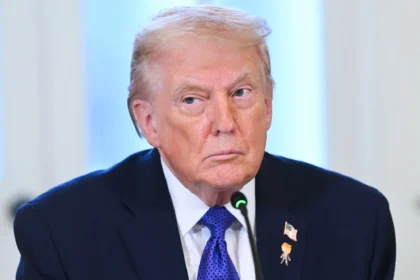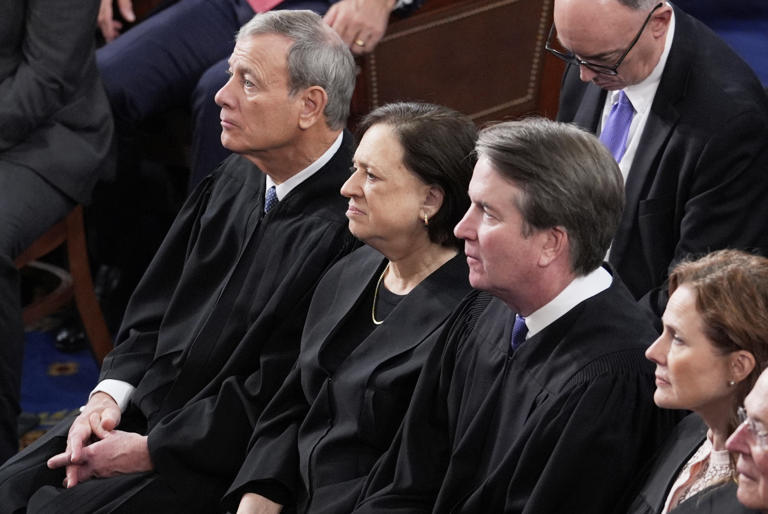

The Supreme Court on Thursday cleared the way for the Trump administration to move forward with cutting hundreds of millions of dollars in federal research funding tied to diversity, equity and inclusion (DEI) programs.
In a 5-4 ruling, the justices lifted a lower court order that had blocked $783 million in cuts made by the National Institutes of Health (NIH). The unsigned majority opinion allows the administration to cancel targeted grants, though limits remain on how it can shape future funding decisions.
Chief Justice John Roberts sided with the court’s three liberal justices in dissent, arguing the freeze should have stayed in place while legal challenges continue.
Why it matters
The decision is another legal win for President Donald Trump, enabling his administration to accelerate the cancellation of existing NIH grants while broader litigation works its way through lower courts.
Earlier this summer, U.S. District Judge William Young in Massachusetts ruled in favor of challengers, calling the abrupt cancellations discriminatory and arbitrary. Young, a Reagan appointee, expressed outrage at the government’s actions, saying: “I’ve never seen government racial discrimination like this… Have we no shame.”
An appeals court upheld his order, but the Trump administration quickly escalated the case to the Supreme Court.
What to know
The lawsuit was brought by 16 Democratic state attorneys general and several public health advocacy groups. They argue the NIH cuts will cause “incalculable losses in public health and human life,” halting studies on cancer, infectious diseases, and maternal health.
The Justice Department defended the administration’s authority, saying funding decisions fall within executive power and should not be “subject to judicial second-guessing.” Officials also claimed some DEI initiatives may disguise racial discrimination, reflecting a broader Republican effort to dismantle such programs across government and private institutions.
At stake is a portion of the $12 billion in NIH funding already cut under Trump’s orders. The administration also wants the Supreme Court to overturn nearly two dozen other rulings blocking similar cuts in related cases. Solicitor General D. John Sauer argued that federal judges should not hear these disputes, pointing to an earlier ruling involving teacher-training programs.
The plaintiffs counter that research grants are not the same as contracts and cannot be terminated midstream without devastating effects—wasting years of work, disrupting scientific careers, and corrupting the integrity of collected data.
“Halting studies midway can also ruin the data already collected and ultimately harm the country’s potential for scientific breakthroughs,” they told the court.
What people are saying
Justice Neil Gorsuch criticized lower courts for ignoring prior Supreme Court directives, writing: “All these interventions should have been unnecessary.”
Justice Ketanji Brown Jackson, in a lengthy dissent, condemned the ruling and the court’s reliance on emergency procedures: “A half paragraph of reasoning (issued without full briefing or any oral argument) thus suffices here to partially sustain the government’s abrupt cancellation of hundreds of millions of dollars allocated to support life-saving biomedical research.”
What happens next
Although Thursday’s decision is a major procedural victory for the administration, the broader lawsuit remains unresolved. Its outcome could redefine the federal government’s authority over research funding and determine whether DEI-related public health programs survive the Trump administration’s rollback.