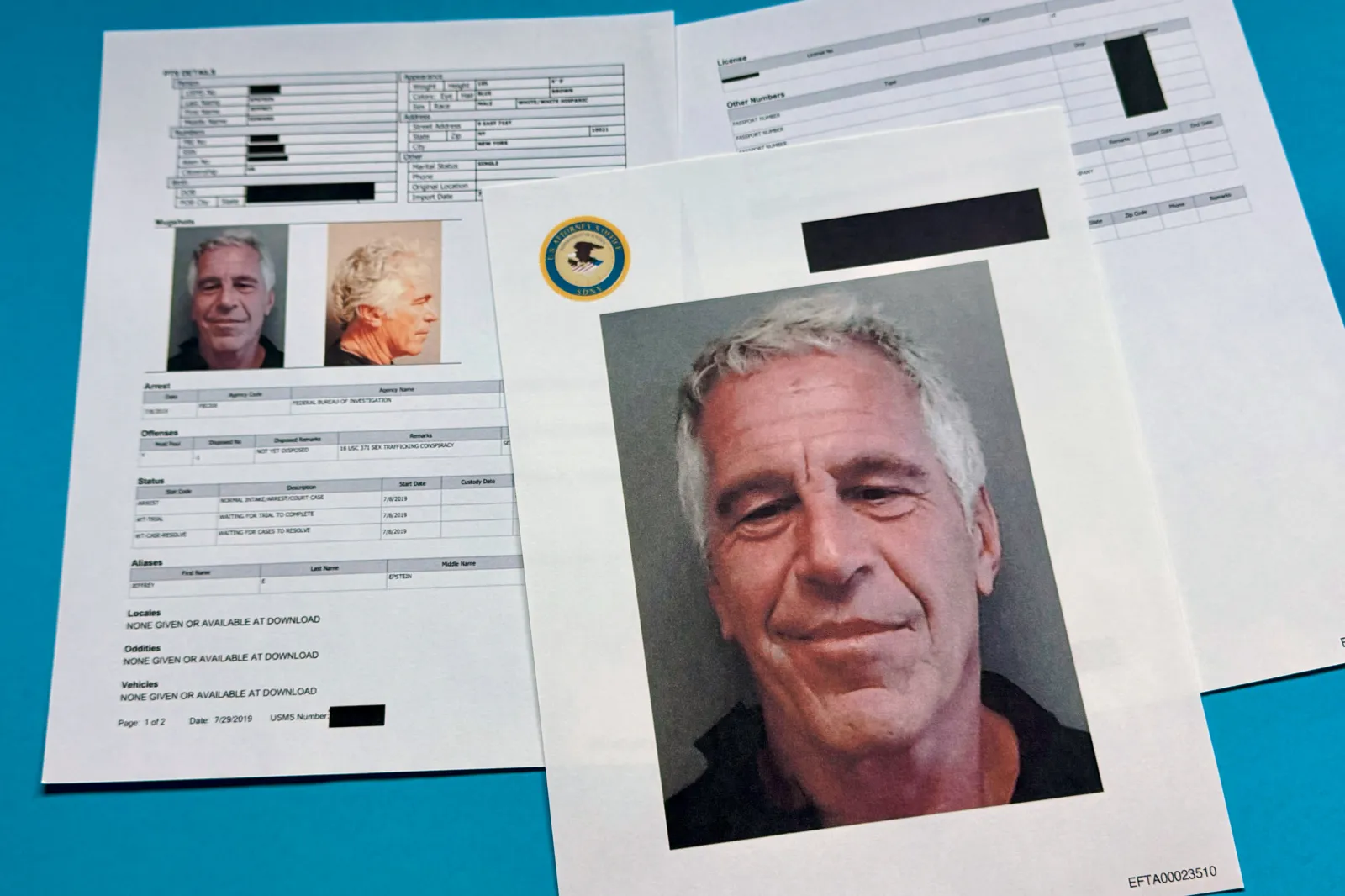

A federal judge overseeing Ghislaine Maxwell’s criminal case ruled Wednesday that two lawmakers who helped pass a new transparency law cannot intervene in her prosecution to speed the release of Justice Department records tied to Jeffrey Epstein.
U.S. District Judge Paul A. Engelmayer turned away a request from Reps. Ro Khanna (D-Calif.) and Thomas Massie (R-Ky.) seeking a court-appointed monitor who would oversee the disclosure of millions of documents connected to Epstein and Maxwell. The pair attempted to attach their request to Maxwell’s long-running sex-trafficking case, but the judge said that wasn’t the proper legal path.
Judge: Court Can’t Enforce the Transparency Law Through Maxwell’s Case
Engelmayer agreed with the Justice Department that, as the judge assigned to Maxwell’s criminal prosecution, he has no authority to supervise compliance with the Epstein Files Transparency Act. The law, signed by President Donald Trump in November, requires the public release of investigative records related to Epstein and Maxwell—but does not include an enforcement mechanism or penalties for delays.
He also ruled that Khanna and Massie lack legal standing to intervene in Maxwell’s criminal matter.
“The Court has no authority to grant the relief sought in this posture,” Engelmayer wrote, adding that while the lawmakers raised serious issues, their approach was procedurally improper.
Lawmakers Can Still Push Through Other Channels
Although he denied the request, Engelmayer said the lawmakers are free to pursue other routes—such as filing a separate civil lawsuit or using congressional oversight tools to pressure the Justice Department.
Khanna and Massie argued that the slow pace of disclosure violates the law and retraumatizes survivors. They asked the court to appoint an independent observer to ensure the immediate release of more than 2 million documents the government has identified as responsive to the statute.
Khanna said in a statement that he respected the ruling but planned to keep pressing for transparency.
“He said that we raised ‘legitimate concerns’ about whether DOJ is complying with the law,” Khanna said. “We will continue to use every legal option to ensure the files are released and the survivors see justice.”
How Much Has DOJ Released So Far?
The Epstein Files Transparency Act set a Dec. 19, 2025, deadline for the Justice Department to make covered materials public. More than a month later, DOJ has released roughly 12,000 documents—only a small portion of what remains.
Justice Department officials say hundreds of lawyers are reviewing the rest to determine what must be redacted to protect sexual-abuse victims and other sensitive information. The department has cited privacy and safety concerns as reasons for the delay.
Engelmayer called the lawmakers’ concerns “undeniably important and timely,” but said the court cannot compel action by piggybacking on Maxwell’s criminal case.
Survivors Urge Oversight as Questions Persist
Engelmayer said he has received letters and emails from Epstein abuse survivors who supported the lawmakers’ request for a neutral overseer.
“These express concern that DOJ otherwise will not comply with the Act,” wrote Engelmayer, who was nominated to the bench by President Barack Obama.
According to the judge, survivors accused the department of paying “lip service” to victims and failing to treat them “with the solicitude” they deserve.
Maxwell’s Sentence, the Epstein Case, and the Unanswered Timeline
Maxwell is serving a 20-year federal prison sentence after her December 2021 conviction on sex-trafficking charges. Prosecutors said she helped recruit and groom underage girls for Epstein for more than two decades and participated in some of the abuse.
She has recently petitioned for release, arguing that new information warrants reconsideration of her conviction. Separately, Rep. James Comer said Wednesday that House Oversight is set to depose Maxwell on Feb. 9 as part of its investigation.
Epstein died in a federal jail in New York in August 2019 while awaiting trial on sex-trafficking charges. His death was ruled a suicide.
Wednesday’s decision leaves unresolved the central question: when the remaining Epstein files will be released—an issue still drawing scrutiny from lawmakers, survivors, and the public.
Meanwhile, a Republican-led House committee advanced resolutions in a bipartisan vote to hold former President Bill Clinton and former Secretary of State Hillary Clinton in contempt of Congress as part of its Epstein-related investigation, escalating a standoff that could mark the first time lawmakers pursue one of their most severe enforcement tools against a former president.