
As Congress debates the fate of President Donald Trump’s sweeping “Big, Beautiful Bill,” questions are mounting after two Republican lawmakers admitted they hadn’t read the full text of the legislation before casting their votes to pass it.
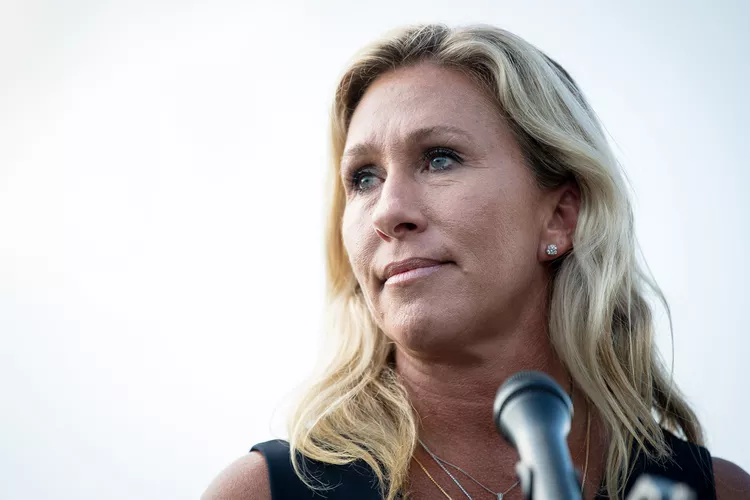
Rep. Marjorie Taylor Greene of Georgia took to X on June 3 to acknowledge she was unaware of a section in the bill that would prevent individual states from passing or regulating laws related to artificial intelligence for the next decade.
“Full transparency, I did not know about this section on pages 278-279 of the OBBB that strips states of the right to make laws or regulate AI for 10 years,” Greene wrote. “I am adamantly OPPOSED to this and it is a violation of state rights and I would have voted NO if I had known this was in there.”
Greene added: “We have no idea what AI will be capable of in the next 10 years, and giving it free rein while tying states’ hands is potentially dangerous. This needs to be stripped out in the Senate.”
Despite championing the bill just days earlier and urging fellow Republicans to support it, Greene now says she’ll vote against the final version if it returns from the Senate with the AI language intact.
“I may not like everything in the bill,” she had posted on May 21, “but there are many things I love in the bill… and most importantly it passes my President’s agenda.”
The legislation narrowly passed the House by a 215–214 vote — meaning Greene’s opposition at the time could have prevented it from advancing to the Senate.
Greene Not Alone in Missing Major Clause
Greene isn’t the only lawmaker caught off guard by provisions in the more-than-1,000-page bill. At a recent town hall, Rep. Mike Flood of Nebraska admitted he hadn’t noticed a section that significantly curtails judges’ ability to hold individuals in contempt for disobeying court orders.
The clause, tucked away on page 562 and titled “Restriction on Enforcement,” sparked alarm among legal scholars who say it could be used to shield executive officials from consequences when they defy judicial rulings — a recurring concern under Trump’s administration.
“I am not going to hide the truth,” Flood said during the meeting. “This provision was unknown to me when I voted for that bill, and when I found out, I immediately contacted my Senate counterparts to raise concerns.”
Bill Faces Scrutiny in the Senate
Now in the hands of the Senate, the “Big, Beautiful Bill” faces continued pushback from both sides of the aisle. While Republicans control 53 seats, some senators have voiced concerns over deep cuts to Medicaid and food assistance programs, as well as the bill’s projected $3.8 trillion increase to the national debt.
Still, because it was introduced as a budget reconciliation bill, the legislation could be passed with a simple majority of 51 votes — allowing Republicans to pass it without any Democratic support.
Growing Backlash
The admissions from Greene and Flood have fueled criticism from voters and watchdog groups who argue that lawmakers rushed to pass a massive bill without full understanding of its contents.
“This is what happens when politicians put party loyalty over policy,” said one constituent during Flood’s town hall. “They’re not doing their jobs.”
Even former Trump adviser Elon Musk blasted the bill as a “disgusting abomination” in a post days after resigning from his White House advisory role. “I can’t stand it anymore,” he wrote.
Despite the backlash, Trump has doubled down on his support for the bill, calling it “a historic win for the American people.”
The final version of the legislation will return to the House after the Senate votes, and its fate — as well as how much of it lawmakers will actually read — remains to be seen.