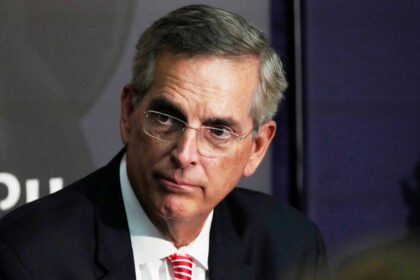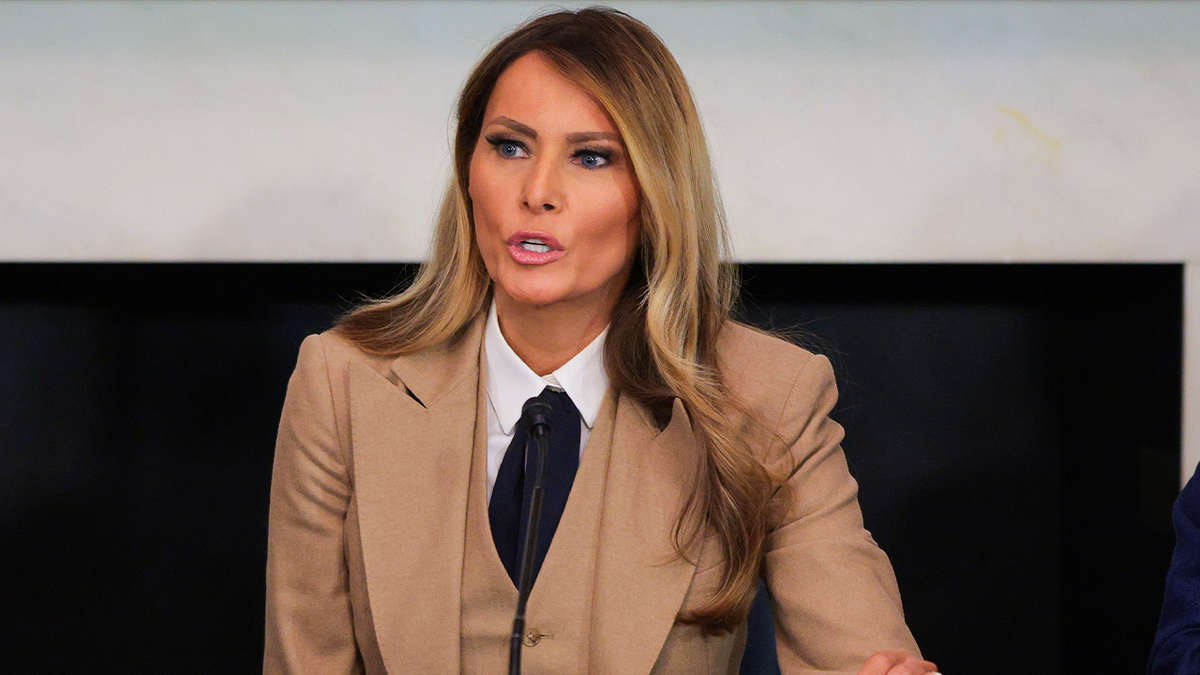

A new proposal from Republican Senator Bernie Moreno of Ohio would bar Americans from holding dual citizenship, a shift that could directly impact First Lady Melania Trump and her son, Barron, based on public records and biographical accounts.
Why It Matters
Senator Bernie Moreno’s plan to end dual citizenship goes far beyond a symbolic statement about national loyalty. It could require Melania Trump and her son Barron—who both hold U.S. and Slovenian citizenship—to choose between their American and Slovenian nationalities.
The bill would compel dual nationals to renounce any foreign citizenship if they wish to remain American citizens, raising constitutional issues, potential political friction for the Trump administration, and serious practical challenges for millions of Americans with legal ties to other countries.
If enacted, it would be one of the most far-reaching efforts in recent history to redefine what it means—legally and politically—to be a U.S. citizen.
What the Bill Would Do
The legislation, called the Exclusive Citizenship Act of 2025, declares that “citizens of the United States shall owe sole and exclusive allegiance to the United States.”
It further specifies that “an individual may not be a citizen or national of the United States while simultaneously possessing any foreign citizenship.”
Under the proposal, any U.S. citizen who also holds another nationality would have one year from the law’s enactment to either renounce their foreign citizenship or give up their U.S. citizenship.
Anyone who fails to comply would “be deemed to have voluntarily relinquished United States citizenship.”
Moreno, who immigrated from Colombia and became a U.S. citizen at 18, said in a statement that “being an American citizen is an honor and a privilege—and if you want to be an American, it’s all or nothing.”
He added: “It was an honor to pledge an Oath of Allegiance to the United States of America and ONLY to the United States of America. It’s time to end dual citizenship for good.”
Currently, U.S. law allows dual citizenship, and the federal government does not keep a centralized list of dual nationals.
Estimates of how many people could be affected vary widely, from several hundred thousand to several million Americans.
Impact on the First Family
If passed, the bill could have consequences for the president’s own household.
Melania Trump, who became a naturalized U.S. citizen in 2006, “remains a dual citizen of the U.S. and Slovenia, as does her son Barron,” according to Mary Jordan’s 2020 biography The Art of Her Deal.
Jordan reaffirmed this in a 2024 interview, saying that both Melania and Barron “continue to have joint citizenship.”
She explained that Slovenian citizenship gives Barron practical advantages, including the ability “to work freely in all of Europe much more easily.”
Jordan also said that Melania wanted her son to have “more options” and noted that he has a Slovenian passport and speaks Slovenian.
Legal and Constitutional Hurdles
If the proposal moves forward in Congress, it will likely face serious constitutional challenges. The Fourteenth Amendment guarantees that U.S. citizens cannot be stripped of citizenship unless they voluntarily give it up.
Court decisions have long recognized dual citizenship as a legitimate status, beginning with the 1939 case Perkins v. Elg and later affirmed in The Kawakita v. United States (1952).
The landmark 1967 ruling in Afroyim v. Rusk held that Americans cannot lose their citizenship involuntarily, undermining the idea that simply holding another nationality could automatically void U.S. citizenship.
As Newsweek has previously reported, legal experts say any effort to force Americans to renounce foreign citizenship would invite intense judicial scrutiny.
The bill also lays out a complex bureaucratic structure for enforcing the new rules.
Within 180 days of enactment, the Secretary of State would be required to issue regulations on “declaration, verification, and recordkeeping” related to citizenship status.
The Secretary of Homeland Security would need to publish a public notice explaining the renunciation requirement.
Anyone deemed to have relinquished citizenship under the law would be entered as a non-citizen in federal records.
Moreno’s bill arrives amid broader immigration and citizenship initiatives by the Trump administration, including lower refugee caps and proposed changes to birthright citizenship. Those efforts have already prompted lawsuits and pushback from advocacy groups, while Moreno’s legislation specifically targets the legal concept of national allegiance.
Melania Trump is the only first lady in U.S. history to be a naturalized citizen, arriving in the United States in 1996.
Her Slovenian roots have been widely documented, including her efforts to keep her son connected to her home country through language and dual citizenship.
Wildes Challenges the Bill’s Premise
Englewood, New Jersey, Mayor Michael Wildes—who is also managing partner at the immigration law firm Wildes & Weinberg and an adjunct professor at the Benjamin N. Cardozo School of Law—clarified Melania Trump’s immigration status during the 2016 campaign.
In an exclusive interview with Newsweek, Wildes said: “A bill without the force of law is simply a piece of paper. The United States is one of many countries that permits its citizens to hold dual nationality, whether acquired by the wonderful choice to naturalize or by virtue of birth.
“Our founding parents and many of our first presidents were dual nationals of both the United States and other countries—including our then‐enemy, Great Britain.
“To claim that our military personnel are not loyal simply because they are not U.S. citizens, or that dual nationals cannot devote their full service to this country, is preposterous.”
Wildes continued, “Mr. Moreno’s bill does not address the large population of Americans who are born dual citizens or multinationals, and how they are somehow different from those who acquire U.S. citizenship through naturalization.
“America’s military presence abroad results in American citizens born overseas who are eligible for both U.S. and foreign citizenships.
“Some of this country’s great traitors were born here, and some of its great patriots have been dual citizens or multinationals. Sen. Moreno’s bill is simply the latest point in a 200‐year conversation about what it means to be an American.
“Many have noted the prevalence of dual‐national or mixed‐status families in this country,” he said.
“I will not comment on the First Family’s citizenship status for privacy reasons, but many of our clients come to us as dual nationals or as foreign nationals who wish to retain their current nationality after becoming American.
“There is great pride in retaining ties to one’s hometown or home country. Senator Moreno was born a citizen of Colombia and made the wonderful choice to become an American at the first opportunity.
“Our country is better for his presence as an immigrant, and I hope he sees himself as part of this nation’s rich tapestry.”
What People Are Saying
First lady Melania Trump said: “I believe in the policies that my husband put together. Because I believe that we need to be very vigilant who is coming to the country,” adding, “My personal experience of traversing the challenges of the immigration process opened my eyes to the harsh realities people face, including you, who try to become U.S. citizens.”
What Happens Next
Moreno’s bill now heads into the Senate committee process. It is uncertain whether Republican leaders will prioritize it, and even if they do, the proposal is almost certain to encounter constitutional challenges, given that courts have repeatedly held that U.S. citizenship cannot be revoked without a voluntary act.
The legislation would also require the State Department and the Department of Homeland Security to create an unprecedented system to identify and track all dual citizens—a massive logistical undertaking that adds another layer of doubt about the bill’s future.