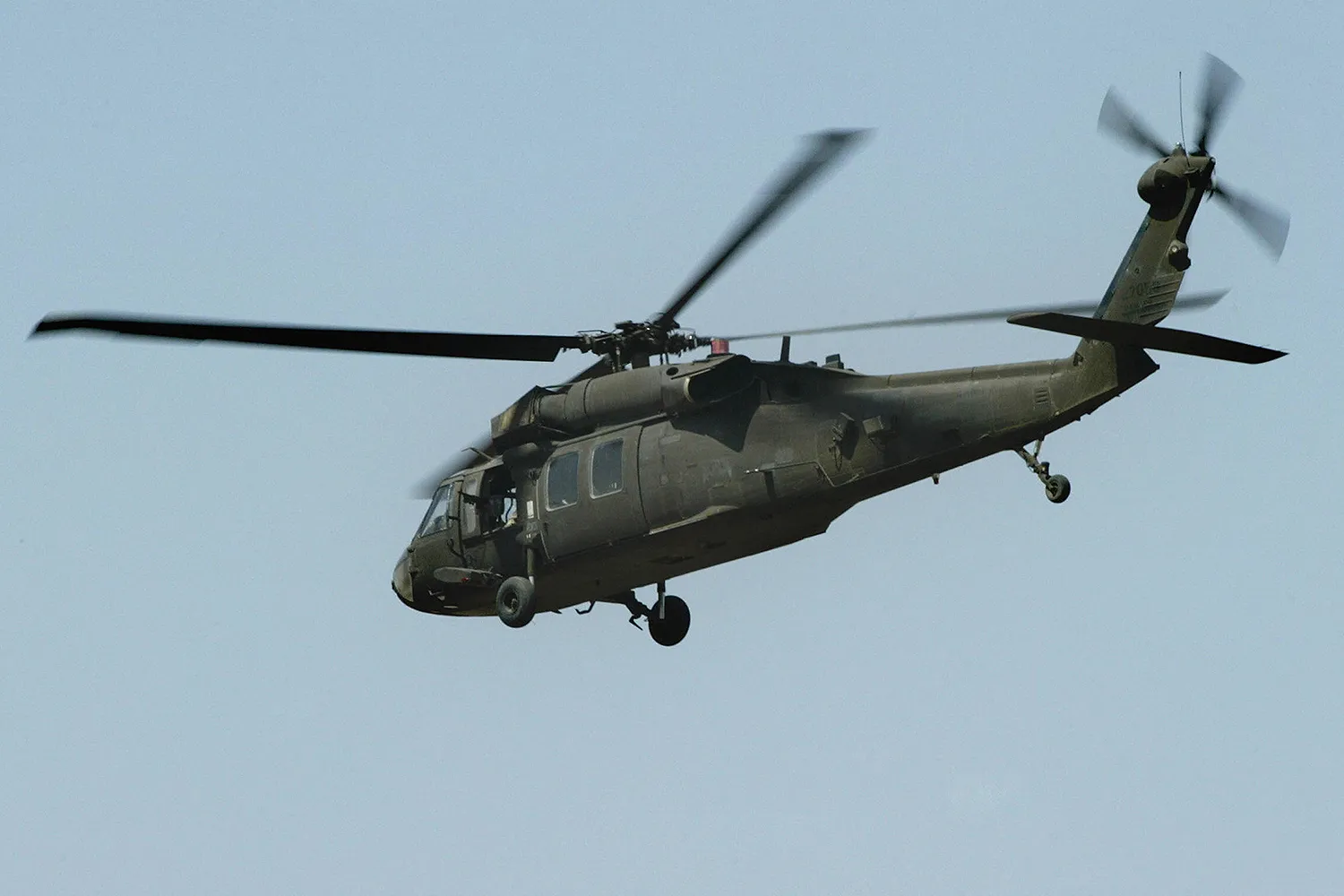

Federal authorities have launched an investigation into a harrowing near-miss involving a United Airlines passenger jet and a military Black Hawk helicopter during a final approach into John Wayne Airport (SNA) Tuesday night.
The Federal Aviation Administration (FAA) confirmed that United Flight 589, a Boeing 737-800 arriving from San Francisco, encountered the U.S. Army National Guard helicopter at approximately 8:40 p.m. local time. Preliminary flight data indicates the two aircraft came within 1,422 feet laterally and just 525 feet vertically of one another.
Air traffic control (ATC) recordings capture the gravity of the encounter. As the Sikorsky helicopter crossed into the jet’s flight path, controllers advised the United pilots to immediately adjust their altitude.
“We’re going to be addressing that, because that was not good,” an air traffic controller stated in the recordings, responding to the pilot’s report of the evasive maneuver.
:max_bytes(150000):strip_icc():focal(749x0:751x2):format(webp)/United-Airlines-plane-takes-off-from-San-Francisco-International-Airport-032726-d69c26557a2c4c2cac9fe1c355596f6e.jpg)
United Airlines confirmed that 162 passengers and six crew members were on board. Pilots reportedly leveled the aircraft after receiving a cockpit traffic alert and seeing the helicopter nearby. The flight landed safely shortly after the incident.
The California National Guard identified the aircraft as an Army National Guard helicopter returning from a “routine training mission.” Military officials stated the helicopter was following an established Visual Flight Rules (VFR) route toward Joint Forces Training Base Los Alamitos.
While the military maintains the crew was in communication with ATC, the California National Guard has committed to a “thorough review” alongside federal agencies to determine how the flight paths intersected so closely.
The incident comes at a time of heightened sensitivity regarding “visual separation” protocols—a practice where pilots manually navigate to maintain distance. The FAA recently restricted the use of visual separation following a catastrophic 2025 collision near Washington, D.C., involving a Black Hawk and a commercial flight that resulted in 67 fatalities.
Investigators are now focusing on whether a breakdown in communication or a failure in technical separation standards led to Tuesday’s close call.