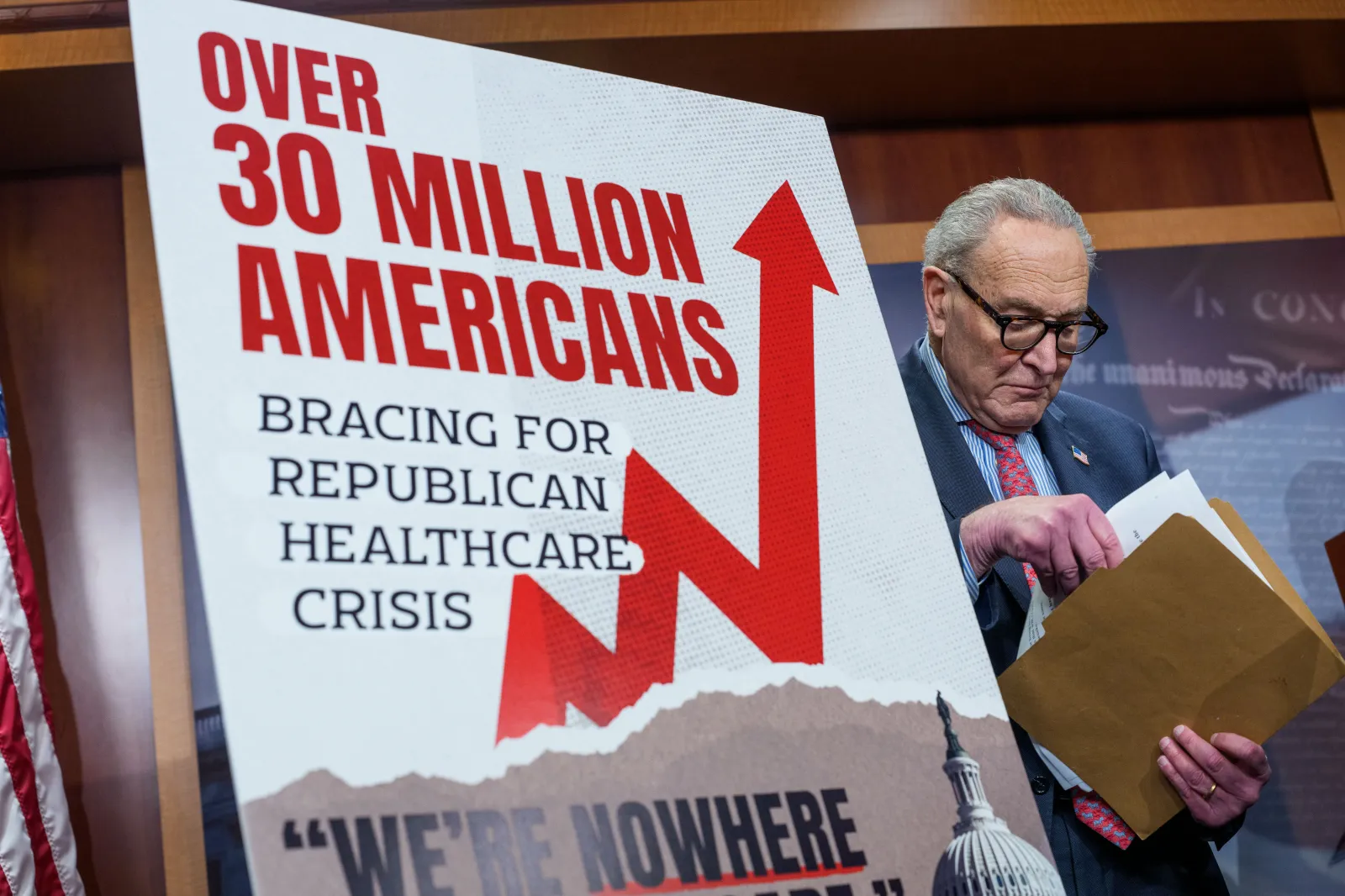

Millions of Americans could see their health insurance premiums surge in the new year as Congress remains divided over whether to extend enhanced Affordable Care Act (ACA) tax credits.
On Wednesday, House Republicans approved a GOP health care package that lays out an alternative approach to lowering costs—without extending the enhanced subsidies tied to the ACA. Supporters of the measure argue the bill relies on policy changes and market reforms they say will bring down premiums for more people than the current subsidy expansion.
The bill has cleared the House, but its prospects in the Senate are uncertain. If lawmakers do not pass legislation to extend the enhanced tax credits before the end of the year, many Marketplace enrollees could face steep premium increases in January.
Why It Matters
The enhanced tax credits expanded access to ACA-compliant Marketplace plans for millions of Americans and have become a major sticking point on Capitol Hill.
They were central to broader funding negotiations during the shutdown fight and continue to be a high-stakes issue as lawmakers weigh competing approaches to affordability and coverage.
If the subsidies expire at the end of the year—as they will without new legislation—premiums for ACA plans are expected to rise by an average of 75 percent, according to an analysis by the Peterson Center on Healthcare and KFF.
What To Know
The GOP measure, titled the Lower Health Care Premiums for All Americans Act, includes several proposals aimed at lowering premiums and reshaping coverage options.
Key provisions include expanding association health plans, which allow small businesses in the same industry to band together to offer large-group coverage. The bill also proposes funding cost-sharing reductions, an ACA provision that lowers out-of-pocket costs for Silver plan enrollees with household incomes up to 250 percent of the federal poverty level. That change is expected to reduce ACA premium costs by 11 percent.
The bill would also expand access to “stop-loss” policies for employers—coverage designed to protect against catastrophic claims such as transplants, major surgeries, or cancer treatment—at a time when high-cost claims are becoming more common amid rising chronic health conditions, according to the consulting firm Mercer.
The Congressional Budget Office (CBO) projects the bill would increase the uninsured population by 100,000 while saving the federal government $35.6 billion over 10 years. The largest savings would come from allowing the enhanced ACA subsidies to lapse while implementing cost-sharing reductions.
In the December 17 vote, the bill passed 216–211. Rep. Thomas Massie of Kentucky was the only Republican to vote against it. His office directed questions to his post on X, where he described the bill as a “placebo” and argued it maintains key ACA rules that he believes limit price competition, adding that @SenRandPaul has a better alternative.
If the enhanced subsidies expire, the CBO has projected that up to 4 million Americans could lose coverage. The impact would be especially sharp for people earning between $50,000 and $75,000 annually, who could face significantly higher premiums, according to the American Journal of Managed Care.
The decision not to include a subsidy extension has also created tension within the GOP. Some Republicans signed a Democratic discharge petition to force a vote on extending the enhanced tax credits for three years. House Speaker Mike Johnson has said that petition will receive a vote in the first week of January.
What People Are Saying
House Speaker Mike Johnson wrote in a post on X: “15 years ago, Democrats broke our health care system—and their solution today is to simply throw BILLIONS more taxpayer dollars to big health insurance companies to hide the cost of their failures. Republicans are delivering lower costs with the Lower Health Care Premiums for All Americans Act—by addressing many of the ROOT CAUSES of rising premiums under Democrat policies. Lower costs. More choice. Better care. That’s what our bill delivers.”
Republican Representative Eli Crane for Arizona wrote in a post on X: “Every single democrat just voted against lowering your health care costs. All because it keeps them from pumping billions to their donors in the health care industrial complex. They don’t want to help you. They want to control you.”
Republican Representative Mike Lawler for New York wrote in a post on X: “My colleagues and I have worked in good faith to extend ACA subsidies for the American people who truly need them. These premium tax credits are set to expire, and we have a responsibility to govern, not delay. This is about doing the job we were elected to do and delivering real results for working families.”
What Happens Next
The bill must still pass the Senate to become law, but reports suggest it is unlikely to advance there.
Without new legislation, the enhanced tax credits are set to expire on December 31—leaving Marketplace consumers facing the possibility of sharply higher premiums when the new year begins.