
GENEVA — The United Nations Human Rights Office called for a “prompt, impartial, and thorough” investigation Tuesday following a devastating strike on a girls’ school in Minab, Iran, that left nearly 200 people dead. The incident occurred on Feb. 28, coinciding with the commencement of a coordinated military offensive by the United States and Israel against Iranian targets.
Ravina Shamdasani, spokesperson for U.N. High Commissioner for Human Rights Volker Türk, addressed the tragedy during a press briefing in Switzerland, placing the burden of transparency directly on the intervening military powers.
“The onus is on the forces that carried out the attack to investigate it,” Shamdasani stated. “We call on them to make public the findings and ensure accountability and redress for victims.”
A Growing Human Rights Crisis in Minab
The strike decimated nearly half of the Shajarah Tayyebeh school in Minab, a coastal city in southern Iran. Initial reports from The New York Times confirmed at least 175 fatalities, marking the deadliest single event since the U.S. and Israeli operations began.
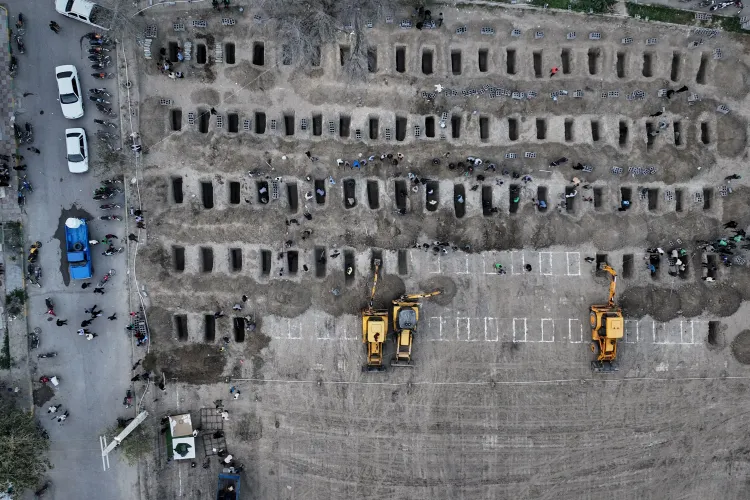
Emergency responders and local families spent the weekend navigating mangled rebar and concrete to recover bodies. While the specific intent behind the strike remains under review, the school’s proximity to a targeted Iranian naval base has been cited as a primary factor in the destruction.
U.N. officials characterized the aftermath as a stark representation of the “senselessness and cruelty” of the escalating conflict. “This is absolutely horrific,” Shamdasani added, noting that photographic evidence from the site captures the “essence of the destruction.”
:max_bytes(150000):strip_icc():focal(749x0:751x2):format(webp)/iran-school-strike-aftermath-2-030326-306f519e4ed54a5d875b23defc56e3cd.jpg)
U.S. Officials Address Civilian Harm
In Washington, the Biden administration and military leaders have moved to address the fallout from the Minab strike. Secretary of State Marco Rubio told reporters that while the situation is being monitored, U.S. forces “would not deliberately target a school.”
U.S. Central Command (CENTCOM) confirmed it is currently reviewing the operational data from Feb. 28.
“We are aware of reports concerning civilian harm resulting from ongoing military operations,” said Capt. Tim Hawkins, a CENTCOM spokesperson. “We take these reports seriously and are looking into them.”
Despite these statements, neither the Pentagon nor the Israeli Defense Forces (IDF) have provided a formal timeline for when an internal investigation might be completed or made public.
Diplomatic Contrast: The First Lady at the U.N.
The call for an investigation follows a notable diplomatic appearance by First Lady Melania Trump, who presided over a United Nations Security Council meeting in New York on Monday. The session focused on the role of education in fostering “world peace.”
During her address, the First Lady offered condolences to the families of American service members killed in the conflict but did not specifically address the strike on the Minab school or the decision to launch the offensive.
“The U.S. stands with all of the children throughout the world,” she said during the session. “I hope soon, peace will be yours.”
Escalating Toll and the Laws of War
The humanitarian situation in the region continues to deteriorate rapidly. The Iranian Red Crescent Society reports that nearly 800 people have been killed since the start of the joint offensive. The conflict has further complicated as Hezbollah enters the fray, prompting a stern reminder from High Commissioner Türk regarding international law.
“The laws of war are crystal clear,” the U.S. Human Rights Office reiterated. “Civilians and civilian objects are protected. All States and armed groups must abide by these laws.”
What’s Next
The international community is now looking toward the next session of the U.N. Security Council to see if formal sanctions or independent oversight committees will be established. As the U.S. and Israel continue their operations, the pressure for a transparent account of the Feb. 28 strikes remains a focal point for global human rights advocates.