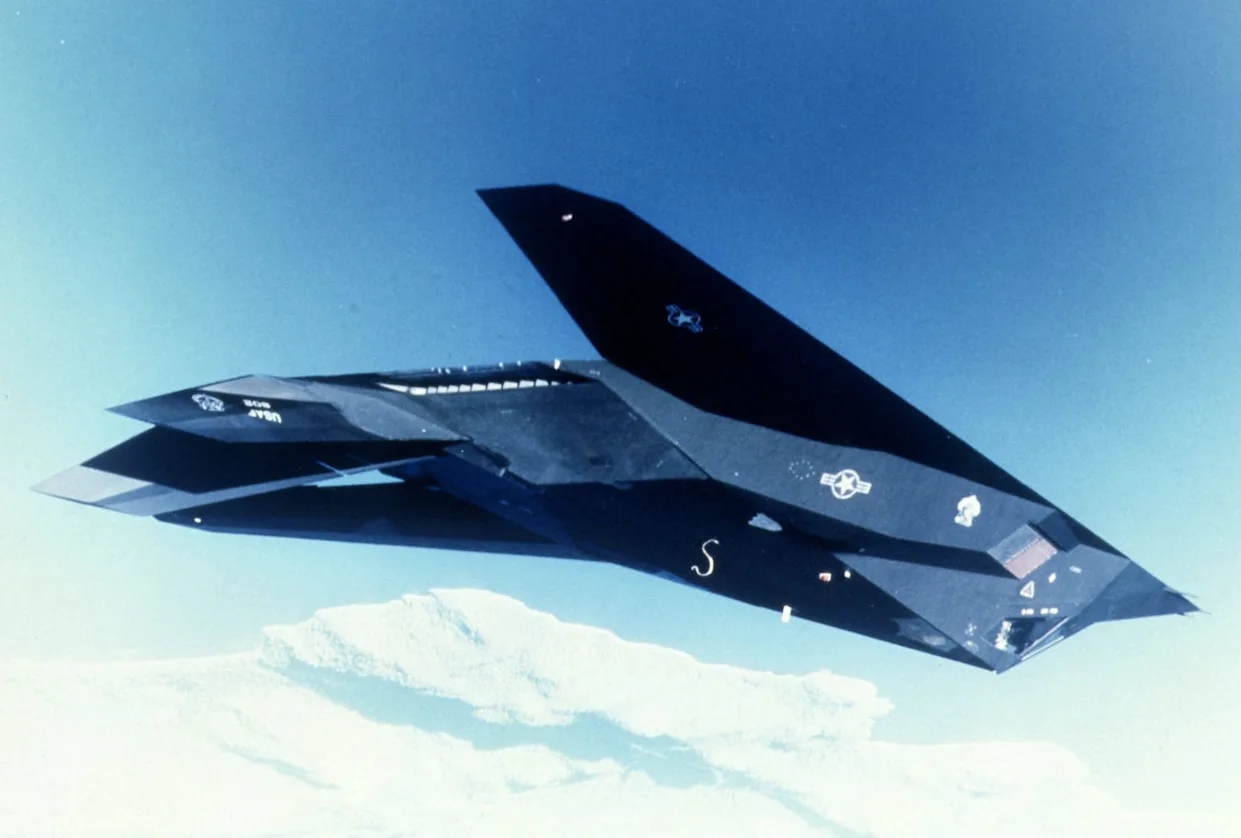

On October 18, 2002, a routine overflight request by the United States Air Force triggered an unusual mid-air interception over Austria—one that exposed two secretive F-117 Nighthawk stealth fighters operating without authorization.
According to reports from Austrian Air Force sources and aviation journal Airpower.at, U.S. officials had requested clearance for a single DC-10 transport aircraft to pass through Austrian airspace. Such requests are routine in a country that handles hundreds of thousands of overflights annually.
But Austrian authorities quickly flagged inconsistencies. The aircraft identification number provided in the flight plan corresponded not to a civilian DC-10, but to a military refueling aircraft. Additional discrepancies—including multiple aircraft registrations tied to a single approved flight and last-minute changes to flight data—raised further suspicion.
In response, Austria deployed two Saab 35 Draken fighter jets to visually inspect the aircraft.
What they found confirmed their concerns.

The intercepted aircraft was not a standard transport plane, but a KC-10 Extender—a U.S. aerial refueling tanker. More significantly, two F-117 stealth fighters were flying in close formation alongside it, despite not being declared in the overflight request.
The presence of the stealth jets violated Austria’s airspace approval terms. As Airpower.at later noted, the inclusion of the F-117s was “neither requested, nor would have been approved.”
The American formation reportedly altered its flight path upon detecting the approaching Austrian fighters, further fueling concerns about intent.
Strategic Context
At the time of the incident, the U.S. military was intensifying preparations in the Middle East following operations in Afghanistan. By late 2002, a broader buildup was underway ahead of the eventual 2003 invasion of Iraq.
The F-117, designed for precision strikes and radar evasion, had limited range and relied heavily on aerial refueling—making coordination with tanker aircraft like the KC-10 essential for long-distance deployments.
Analysts believe the stealth jets intercepted over Austria were likely en route to staging areas in the Persian Gulf. Filing a simplified or misleading flight plan may have been an attempt to expedite transit through tightly regulated European airspace.
Lingering Questions
While F-117 aircraft were later used in the Iraq invasion, it remains unclear whether the jets involved in the Austrian incident participated in subsequent combat operations.
The episode highlights the tension between operational secrecy and international airspace regulations—particularly when advanced military assets are involved. For Austria, it was a rare instance where routine monitoring uncovered a covert movement by one of the world’s most secretive aircraft.