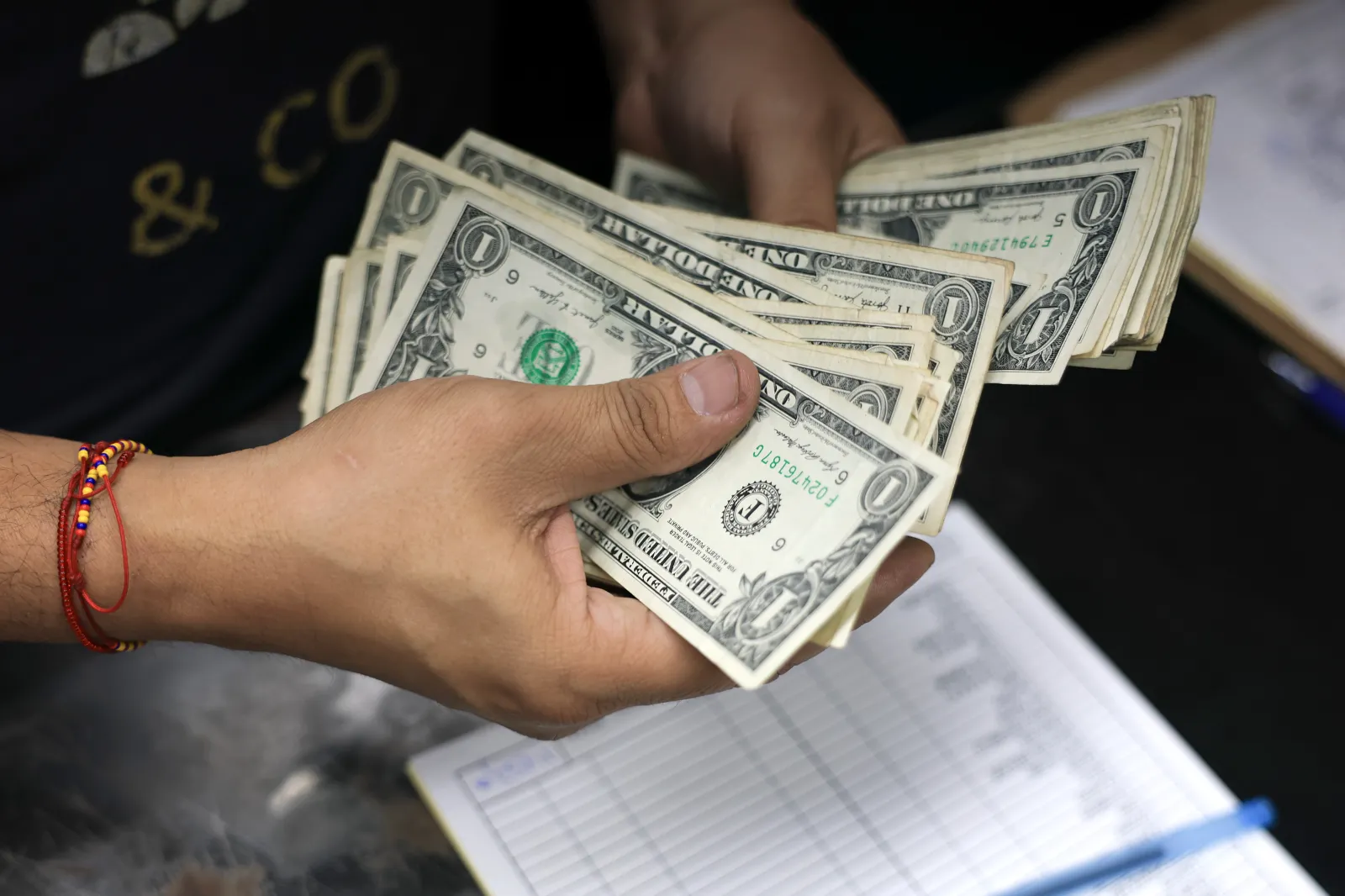

A new proposal in Ohio could change how many businesses handle payments and offer extra protection for shoppers who still rely on cash.
The CASH (Currency Access to Spend Here) Act, now before lawmakers in the Buckeye State, would require businesses to provide at least one point of sale that accepts cash for transactions under $500.
The bill was introduced by Republican State Representative David Thomas after residents reported difficulties using cash at certain businesses.
Why It Matters
Even as the U.S. moves further toward digital payments, many people still depend on physical money. In 2022, 14 percent of Americans said they used cash for almost all or most of their transactions, while 41 percent said they never used cash, according to the Pew Research Center.
The CASH Act fits into a broader national trend of efforts to protect consumers’ ability to pay with cash as more retailers transition to cashless systems. It follows the bipartisan Payment Choice Act, introduced in July by Senators Kevin Cramer of North Dakota and John Fetterman of Pennsylvania.
If the CASH Act becomes law, major grocery chains and retailers in Ohio would have to ensure they maintain at least one checkout option that accepts cash.
What To Know
Under the bill, any business or government entity operating in Ohio would need to have at least one point-of-sale location that accepts cash for transactions of $500 or less.
The proposal would also ban price discrimination against cash users, meaning businesses could not charge higher prices to customers who pay with cash than to those using cards or digital payments.
The requirement would apply to both staffed registers and automated systems, giving retailers flexibility in how they comply, including through self-checkout machines.
Which U.S. States Already Have Cash Laws?
Several states already have laws requiring businesses to accept cash, though enforcing those rules has at times been challenging.
According to the Payments Journal, Colorado and New Jersey are among the states that have passed such legislation, while efforts in Idaho, Mississippi and North Dakota have failed.
When Colorado Governor Jared Polis signed a cash-acceptance law in 2021 that allowed for $250 fines for businesses refusing cash, he warned the measure could be “practically unenforceable” due to ambiguity over who would be held responsible, the Denver Post reported at the time.
Other states with cash–acceptance laws include Massachusetts, Rhode Island, Oregon, Tennessee, Montana and Delaware.
What People Are Saying
Ohio State Representative David Thomas said in an October 30 press release:
“It’s simple, cash is the basis for business in America. Our taxpayers should always have the ability to use cash in their daily lives.
He added that he regularly hears from residents who “may not trust virtual payment options or just prefer to use physical cash,” and argued that the bill “balances the needs of government and business to be efficient with the ability to still rely on physical currency.”
According to Ohio news outlet NBC4i, Thomas also told the House General Government Committee at the bill’s first hearing:
“Cash is more than king; it is the basis on which our economy moves.”
What Happens Next
House Bill 554 is currently awaiting further hearings in the Ohio House General Government Committee, where it will be debated and potentially revised before any full vote is taken.