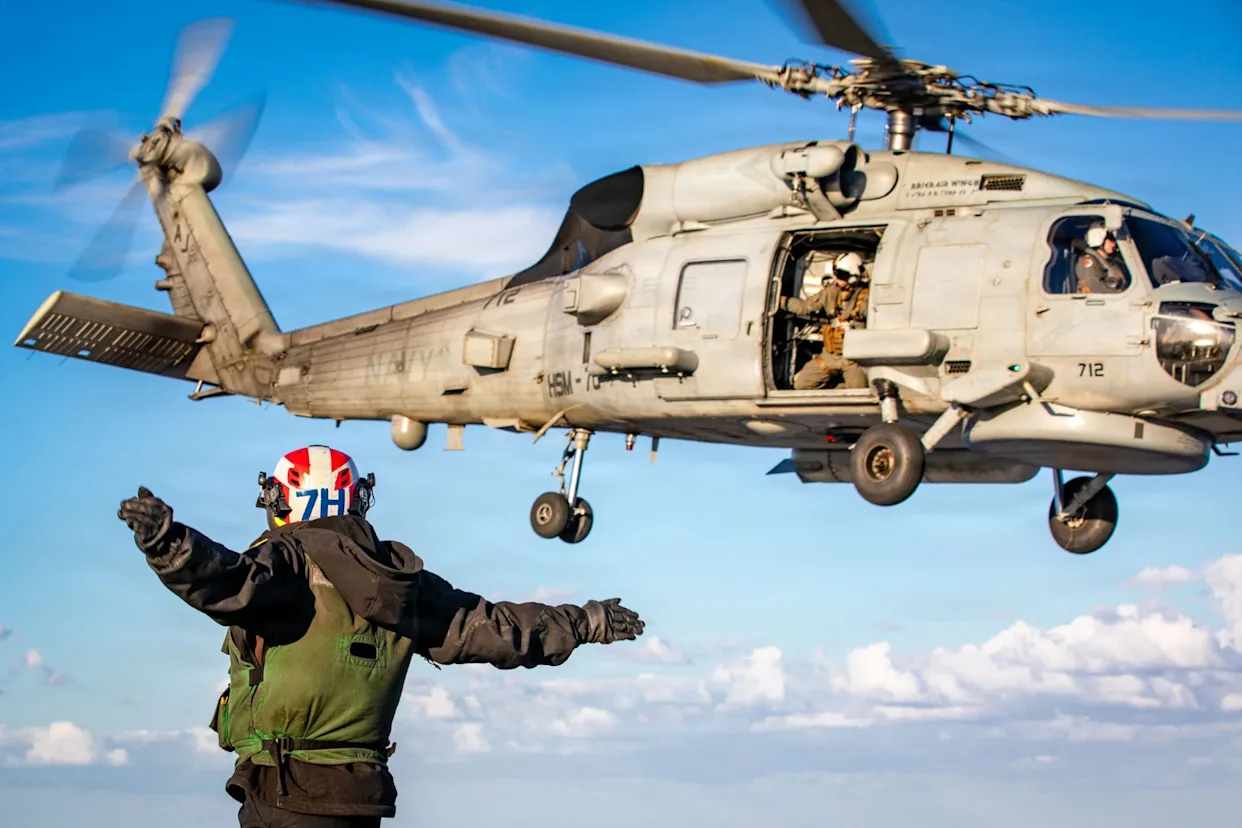

The Pentagon is mobilizing thousands of U.S. Marines to the Middle East as President Trump issues a high-stakes ultimatum to Tehran, signaling a potential shift from a targeted aerial campaign to a decisive surface confrontation over the Strait of Hormuz.
The deployment follows a weekend of escalating rhetoric. President Trump vowed to destroy Iranian power plants unless the strategic waterway—currently crippled by Islamic Revolutionary Guard Corps (IRGC) attacks—is fully reopened by Monday. Iran retaliated with threats to strike regional desalination plants, a move that would jeopardize the fresh water supply for millions across the Gulf.
From Air Strikes to Boots on the Ground
While U.S. A-10 Thunderbolts and Apache helicopters currently target Iranian fast-attack boats and missile stockpiles, military planners are reportedly weighing a ground offensive. Under this strategy, Marines would clear IRGC threats along the coastline to establish a “secure corridor” for global shipping.
A more aggressive “leverage” play involves Kharg Island, the terminal responsible for 90% of Iran’s oil exports. Seizing the island would grant Washington total control over Tehran’s primary revenue stream, though analysts warn that holding such territory remains risky. Iranian “swarm” tactics and projectile volleys have already tested U.S. air defenses at regional bases.
The “Open for All or Closed to All” Strategy
As the ground war remains a volatile option, influential national security experts are urging a shift toward a total naval blockade. Richard Haass, former president of the Council on Foreign Relations, proposed an “Open for All or Closed to All” policy.
“Under such a policy, the United States and its partners would announce that no tanker from Iran would be permitted to reach its destination… until Iran backed off its threats,” Haass noted.
This approach would utilize a 200-mile defensive line across the Gulf of Oman, employing drones and warships to choke off Iranian exports without the “kill box” risks associated with entering the Strait itself.
Economic Warfare
Robin Brooks, senior fellow at the Brookings Institution, argues that a blockade could “implode” Iran’s economy faster than kinetic strikes. By depriving the regime of hard currency, the U.S. could force China—Iran’s largest oil customer—to pressure Tehran into a ceasefire.
Despite fears of a price surge, Brooks suggests global markets might actually stabilize if a blockade is perceived as a shortcut to ending the conflict. For now, the IRGC continues to exploit its control, reportedly extorting up to $2 million per vessel for safe passage through alternate routes.
With the Monday deadline looming, the arrival of the Marine expeditionary units places the ball firmly in Tehran’s court.