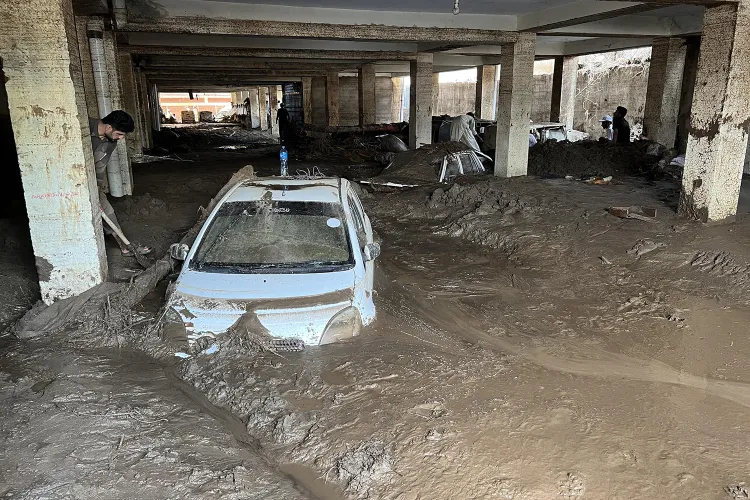

About 360 people have lost their lives in just four days across Pakistan as the country continues to endure catastrophic monsoon flooding, officials confirmed.
According to the National Disaster Management Authority, a total of 660 people have died between June 26 and Monday, Aug. 18, as the annual monsoon season—which typically runs from June to September—continues to batter the region, Al Jazeera reported.
Beyond drowning, authorities say fatalities have also resulted from lightning strikes and housing collapses.
“Everybody is scared. Children are scared. They cannot sleep,” said 24-year-old Sahil Khan, who rushed to a rooftop for safety as floodwaters surged on Monday, speaking with Reuters.
Khan described the situation in Buner, one of the hardest-hit regions, as “a doomsday scenario.” Local officials there reported that around 209 people were still missing as of Sunday, Aug. 17, according to the BBC.
Prime Minister Shehbaz Sharif announced on X that he has directed the chairman of the National Disaster Management Authority to accelerate rescue operations in severely affected districts, including Swat, Buner, Bajaur, Torghar, Mansehra, Shangla, and Battagram.
“I am deeply anguished by the devastation caused by cloudbursts and flash floods in KP and northern Pakistan,” Sharif wrote on Saturday, Aug. 16. “My heartfelt condolences go out to the bereaved families. We stand in solidarity with our brothers and sisters in this hour of grief. The Government is mobilizing all resources for rescue and relief operations.”
He added that emergency measures are underway: “Immediate relief is being provided to stranded residents, medical aid to the injured, and heavy machinery has been deployed to clear roads and restore connectivity.”
“It all happened before my eyes,” said Buner resident Asrar Khan in an interview with the BBC. “The water was so strong, it had no mercy on anyone.”