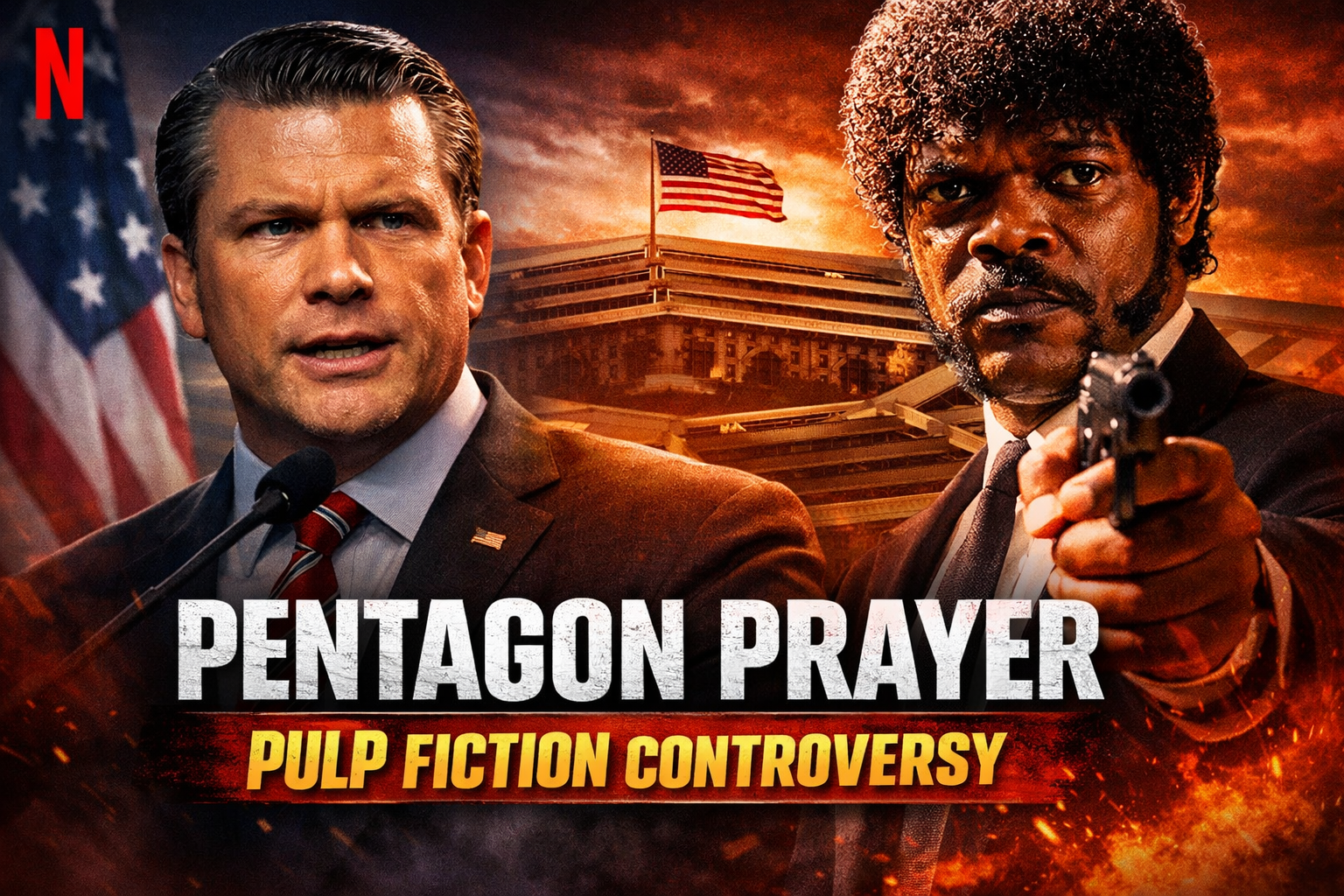

Defense Secretary Pete Hegseth is facing scrutiny after reciting a prayer during a Pentagon service that closely resembled a famous monologue from the 1994 film Pulp Fiction.
Speaking at a Pentagon prayer gathering on April 15, Hegseth described what he called a “CSAR 25:17” prayer—referencing Combat Search and Rescue operations—before delivering lines that mirrored the speech made by Jules Winnfield, portrayed by Samuel L. Jackson in the film.
The prayer included phrases such as “the path of the downed aviator is beset on all sides” and concluded with a militarized adaptation referencing a call sign, diverging from the original biblical passage in Book of Ezekiel. Analysts note that only the final line loosely aligns with Ezekiel 25:17, while most of the text reflects Hollywood dialogue rather than scripture.
The cinematic monologue itself was not originally biblical. Director Quentin Tarantino adapted it from a 1973 Japanese martial arts film, Karate Kiba, further distancing it from the actual verse.
Pentagon spokesperson Sean Parnell defended Hegseth, stating the prayer was a “custom” used by military personnel involved in a recent rescue mission. He argued that both the film dialogue and the military prayer were “reflections” of Ezekiel 25:17 and dismissed criticism as misinformation.
The controversy intensified a day later when Hegseth, during a press briefing, compared segments of the media to the Pharisees—figures from the New Testament often depicted as adversaries of Jesus—accusing journalists of bias and bad faith.
The remarks come amid growing legal challenges over religious activity within federal agencies. The advocacy group Americans United for Separation of Church and State recently filed lawsuits against the Departments of Defense and Labor, alleging that government-sponsored prayer services violate constitutional boundaries.
Rachel Laser, the group’s president, said in a statement that such events risk pressuring federal employees to participate and blur the line between personal faith and public duty.
The episode underscores a broader cultural flashpoint: the role of religion in government under the current administration. Critics argue that blending faith-based messaging with official duties risks alienating a diverse federal workforce, while supporters maintain that voluntary expressions of faith remain protected.
As scrutiny mounts, the Pentagon has not indicated whether it will alter or suspend its ongoing prayer services.