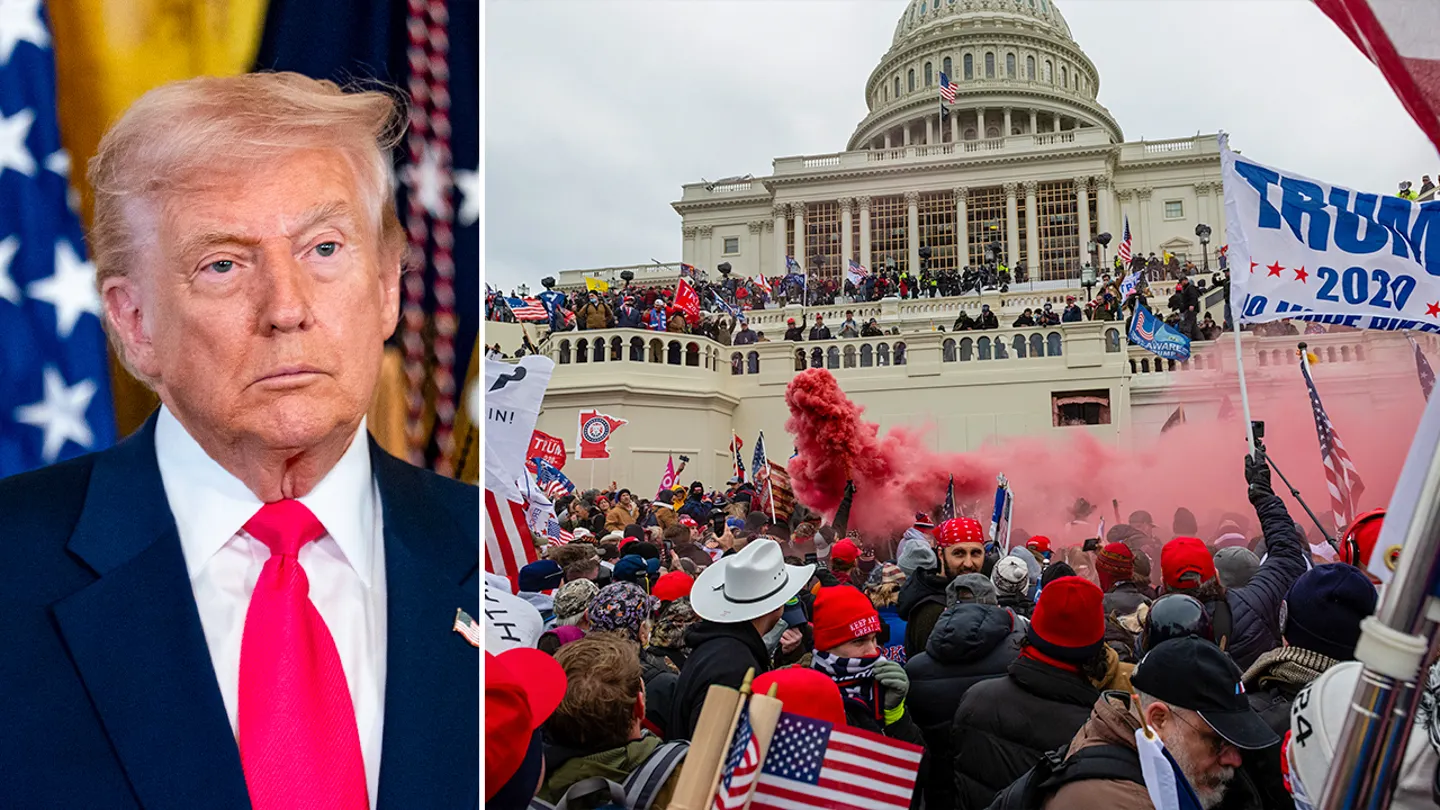

Police officers who defended the U.S. Capitol during the Jan. 6, 2021 attack are urging a federal judge to order the architect of the Capitol to comply with a long-standing law requiring the installation of a memorial plaque honoring law enforcement.
Former U.S. Capitol Police officer Harry Dunn and Metropolitan Police Officer Daniel Hodges filed suit in June against Architect of the Capitol Thomas Austin, seeking to force the placement of the plaque mandated by Congress in 2022. The law required the memorial to be installed by March 15, 2023—a deadline that passed years ago without action.
Austin, who was appointed by Congress in June 2024, has asked the court to dismiss the lawsuit. Dunn and Hodges are now pushing back, arguing that the continued delay violates the law and compounds the harm they and other officers have suffered.
The case follows efforts by convicted and pardoned Jan. 6 rioters to intervene, arguing that any memorial should be “inclusive” and reflect the perspectives of those who stormed the Capitol in support of Donald Trump. Dunn and Hodges have rejected those arguments and say the memorial is about honoring officers who defended Congress, not reframing the attack.
In their latest filing, the officers emphasize that Congress explicitly required the plaque to be installed to recognize law enforcement’s actions on Jan. 6.
“Harry Dunn and Daniel Hodges were among the officers who protected the Capitol from rioters on January 6, 2021,” their motion states. “For their bravery, they and their fellow officers were to be honored with a plaque at the Capitol. Years after the deadline passed, the plaque is still not installed, and the officers seek to have the law enforced so that history is not forgotten.”
Austin’s motion to dismiss argues that the officers lack standing and that the law does not give them a private right to sue. According to the architect, Congress directed certain committees to compile a list of names for the plaque, but did not impose a legal duty owed directly to the officers themselves.
“The Act does not confer any private right of action to any individual who may be included on the list of names or impose any duty on the Architect to them,” the motion to dismiss argues.
Dunn and Hodges strongly disagree. They contend that the failure to install the plaque has caused concrete harm—separate from the trauma of Jan. 6 itself—by denying official recognition of their service.
“The office of the Architect has failed to follow the law,” their opposition filing states. “That failure has injured plaintiffs, and those injuries are ongoing.”
Austin has argued that any injuries the officers claim stem from the riot itself and are not traceable to the absence of the memorial. The officers counter that the government’s refusal to comply with the law has worsened those injuries.
“If the government finally acknowledges plaintiffs’ sacrifice, the psychic injuries caused by the government’s failure to follow the law will be lessened,” the filing argues. They also say official recognition would reduce reputational harm and threats fueled by efforts to downplay or distort what happened on Jan. 6.
The officers further argue that the architect has not offered a credible explanation for the delay. While the government has suggested that producing a plaque listing approximately 3,648 names may be complex, Dunn and Hodges say that rationale has never been formally or convincingly established.
According to their filing, the government is attempting to rely on a deferential “rational basis” standard without articulating an actual, lawful reason for ignoring Congress’s mandate.
“There is no rational explanation for defendants’ failure to follow the law,” the officers argue, asserting that the delay reflects a political effort to recast the events of Jan. 6 rather than a legitimate logistical obstacle.
The motion concludes with a direct appeal to the court to enforce the statute as written.
“This case is about making sure that history is not rewritten, and that the horror—and heroism—of that day is not forgotten,” the officers argue. “It is also about ensuring that the women and men who protected the Capitol are afforded the recognition they deserve.”
They are asking the judge to deny the architect’s motion to dismiss and order compliance with the law requiring the memorial’s installation.