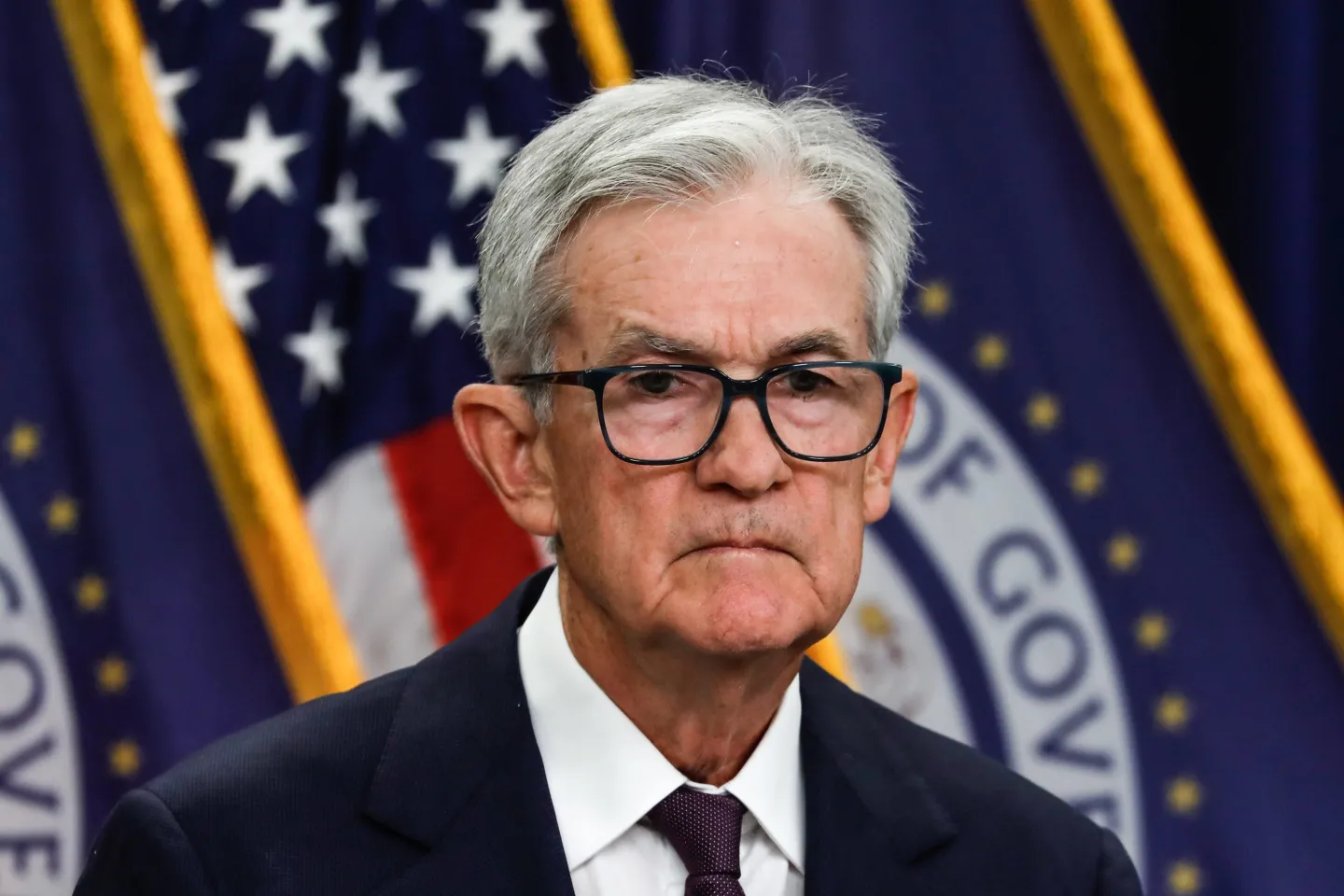

Federal Reserve Chair Jerome Powell said on Wednesday that the cooling job market is closely linked to President Donald Trump’s strict immigration policies. This is a rare time the Fed chief has directly pointed to White House decisions as a cause of economic problems.
When reporters asked why hiring has slowed, Powell said, “That’s much more about the change in immigration.” He explained, “The supply of workers has obviously come way down. There’s very little growth, if any, in the supply of workers. And at the same time, demand for workers has also come down quite sharply, and to the point where we see what I’ve called a curious balance.”
Normally, a balance between job openings and job seekers would be good news. But Powell said this balance is unhealthy now because both the supply and demand for workers are falling, with demand dropping faster.
“Now demand [is] coming down a little more sharply, because we see, we now see the unemployment rate edging up,” he added.
The Fed cut interest rates by a quarter percentage point on Wednesday. Powell described it as a “risk management cut,” meant to protect the economy from more job losses. He also said policy is moving “toward a more neutral policy stance” and is “not on a preset course.”
How Immigration Policies Are Affecting the Labor Market
Trump’s immigration policies are affecting the workforce in several ways:
- Deportations: The administration says it is deporting about 750 immigrants. The CBO estimates that 290,000 immigrants will be removed between 2026 and 2029. Economists warn that this will slow GDP growth and reduce the labor force.
- Fewer New Immigrants: Deportations and stricter rules are discouraging both legal and illegal immigration. Moody’s Chief Economist Mark Zandi estimated that the number of new immigrants has dropped from about 4 million in 2023 to just 300,000–350,000 now. He also said that this decline in immigration could raise inflation to about 4% by early next year, making Powell’s job harder.
- Tighter Legal Pathways: The administration is ending humanitarian protections for migrants from Cuba, Haiti, Nicaragua, and Venezuela and is making asylum and family visa processes stricter. This is reducing the number of workers available in the future.
All of this together is creating a labor shortage, which Powell highlighted. Even small drops in demand can raise unemployment if fewer workers are available.
By pointing to immigration as the main problem rather than tariffs, Powell acknowledged that this is a supply-side issue. Rate cuts alone cannot fix it. Unless immigration levels stabilize, lowering interest rates may not be enough to increase hiring, especially in sectors that rely on immigrant labor, like manufacturing and agriculture, and in areas already facing worker shortages.
Economic Risks Are Mixed
Powell said the economy faces unusual risks. Inflation is going up because of tariffs, while employment is weakening. This makes it hard for the Fed to avoid stagflation (slow growth with rising prices). The Fed’s median rate path is now 3.6% by the end of the year, with gradual declines later, but Powell stressed that decisions will depend on the data.
For households, the effects are uneven. “Kids coming out of college and younger people, minorities are having a hard time finding jobs. The overall job finding rate is very, very low,” Powell said. This matches slower hiring when businesses are uncertain and the labor supply is tight.
“It’s quite a difficult situation for policymakers,” Powell said.