
Amazon leadership convened an emergency “deep dive” session this week following a series of high-impact outages that internal documents link to generative AI deployment, prompting a public warning from Tesla CEO Elon Musk.
The mandatory meeting, held Tuesday, addressed a “trend of incidents” over the past several months characterized by a “high blast radius”—industry shorthand for technical failures that affect a massive segment of the user base. According to internal briefs and emails first reported by the Financial Times, the e-commerce giant is grappling with the unintended consequences of integrating Gen-AI into its core engineering workflows.
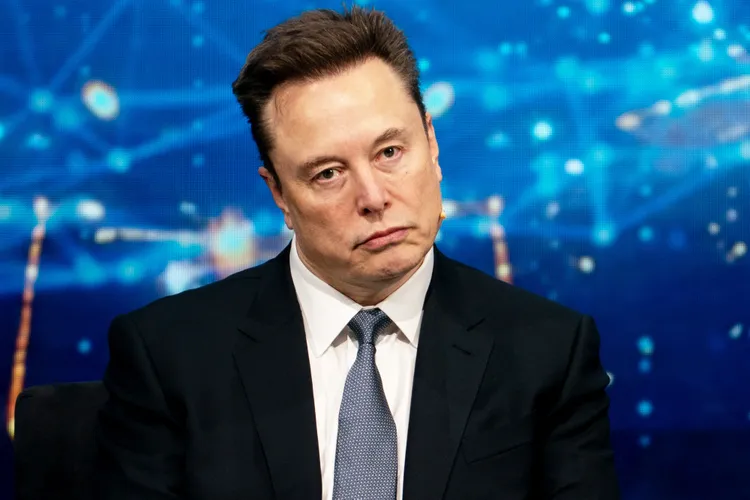
The revelation drew a terse response from Elon Musk, who has frequently oscillated between AI evangelism and doomsday warnings. Responding to reports of the internal crisis on X (formerly Twitter), Musk cautioned: “Proceed with caution.”
The “TWiST” Meeting: Guardrails for Automated Code
The internal summit, part of the weekly “This Week in Stores Tech” (TWiST) series, was spearheaded by Dave Treadwell, Amazon’s Senior Vice President of e-commerce services. In an internal email, Treadwell reportedly admitted that the platform’s recent stability “has not been good,” signaling a departure from Amazon’s historically robust uptime standards.
Key measures discussed in the meeting include:
- Enhanced Oversight: A proposed requirement for senior engineers to manually sign off on AI-assisted changes made by junior and mid-level staff.
- Infrastructure Audits: Investigating how “Gen-AI assisted changes” contributed to recent site-wide crashes.
- Deployment Throttling: Implementing stricter “guardrails” to prevent automated code from reaching production without rigorous human verification.
While Amazon confirmed the meeting took place, a spokesperson downplayed the severity, telling Fortune that TWiST is a “regular weekly operations meeting.” The company further clarified that Amazon Web Services (AWS) was not involved in the incidents and disputed claims that junior engineers require senior sign-off for all AI-assisted tasks.
The High Cost of Speed
The technical friction comes as Amazon undergoes a massive structural shift. The company has laid off more than 30,000 employees since late 2023 in a bid to “align culturally” and increase efficiency. Simultaneously, capital expenditure is projected to skyrocket to $200 billion in 2026, up from $131 billion in 2025, with the vast majority of that capital earmarked for AI infrastructure.
Cybersecurity experts warn that the rush to automate may be outpacing safety protocols. Lukasz Olejnik, a visiting senior research fellow at King’s College London, noted that while tools like Amazon’s AI assistant “Q” can accelerate coding, they risk “blowing up” businesses if deployed without friction.
“It’s an argument against speed for its own sake,” Olejnik told Fortune. “AI brings a lot of opportunities, but there’s a middle ground between obsolescence and ill-judged deployments.”
Timeline of Recent Amazon Instability
| Date | Event | Impact |
| Early March 2024 | Major Site Outage | 22,000+ users unable to checkout or view prices. |
| Mid-March 2024 | Internal Memo Leak | Treadwell notes site infrastructure “has not been good.” |
| Tuesday | Mandatory “Deep Dive” | Leaders review “high blast radius” AI incidents. |
The Road to 2026
The internal strife at Amazon highlights a growing divide in Silicon Valley. While Musk has predicted that AI will “bypass coding completely” by the end of 2026, the current reality for the world’s largest retailer suggests a messy transition period.
As Amazon doubles down on its $200 billion AI bet, the tension between rapid innovation and platform stability remains the primary challenge for the e-commerce titan. For now, the “caution” urged by Musk appears to be the prevailing sentiment within Amazon’s own engineering trenches.