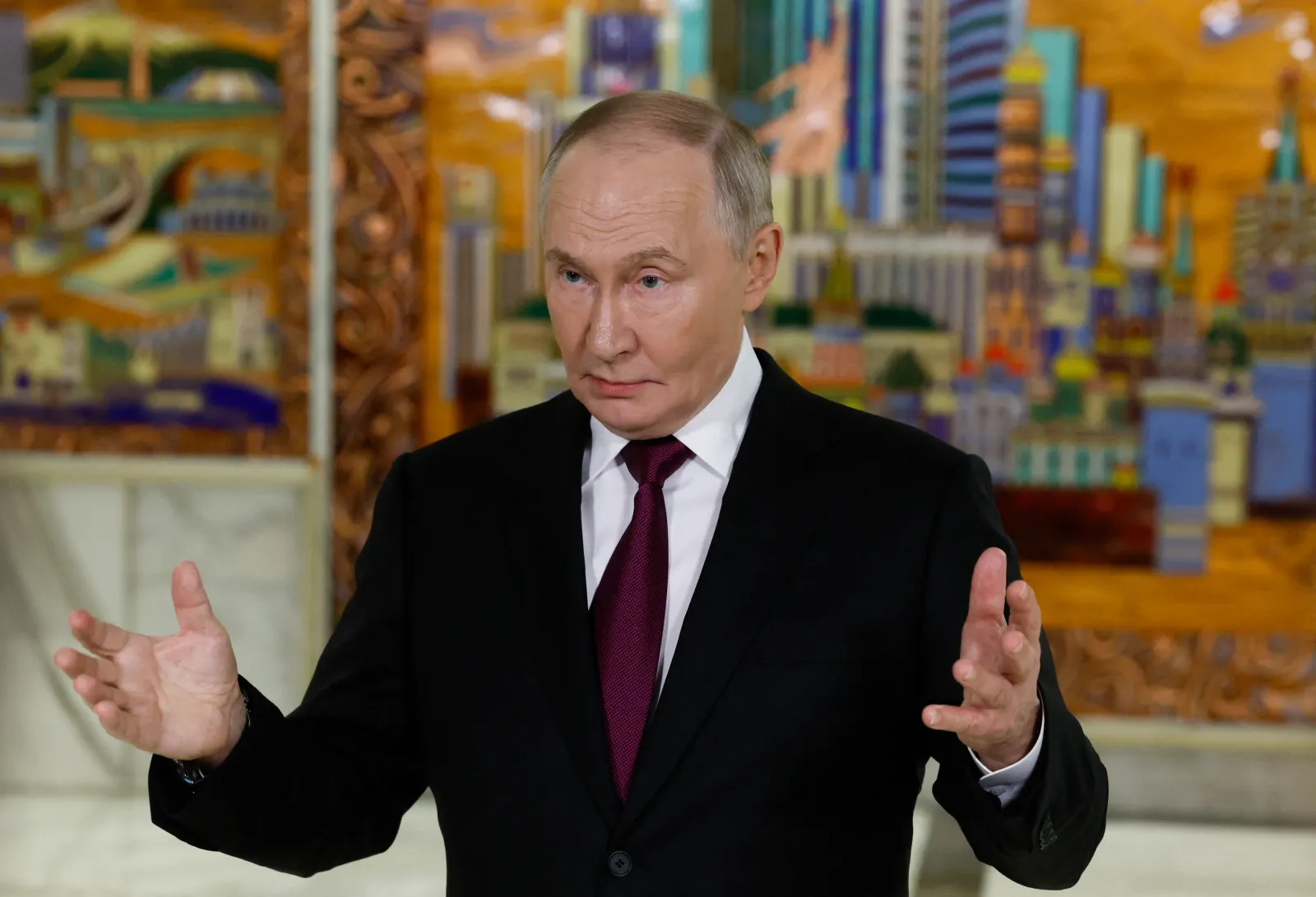

Russian President Vladimir Putin said on Tuesday that Russia is prepared to confront European countries—including those in the North Atlantic Treaty Organization (NATO)—if they decide to go to war with Moscow.
“We are not going to fight Europe; I’ve said this a hundred times. But if Europe suddenly decides to fight and starts, we are ready right now,” Putin told reporters, according to Russia’s Interfax news agency.
Why It Matters
Putin’s comments land at a moment of heightened strain between Russia and NATO members as the war in Ukraine grinds on. While U.S. President Donald Trump has pressed for a negotiated peace, many European leaders and foreign policy experts warn that Putin’s goals could extend far beyond holding parts of Ukrainian territory.
Trump’s special envoy, Steve Witkoff, and his son-in-law, Jared Kushner, are currently in Moscow to meet with Putin and discuss the evolving peace framework for Ukraine. Key questions—such as how territory might be divided and how Ukraine’s future security architecture would function—remain unresolved, even as negotiators point to significant movement over the past two weeks.
What To Know
Earlier on Tuesday, Kremlin spokesperson Dmitry Peskov told reporters ahead of the Russia-India summit in New Delhi that Russia effectively has no relationship with Europe at the moment.
“We do not communicate with the Europeans. We have no dialogue, not a single word. How can you find out your colleagues’ position on such a complex issue if you don’t communicate with each other? This is our biggest problem,” Peskov said.
His remarks came shortly after Admiral Giuseppe Cavo Dragone, chair of NATO’s military committee, told the Financial Times that the alliance is considering “being more aggressive or being proactive instead of reactive.”
A “pre-emptive” move by NATO could still be framed as defensive, he said, but it would mark a notable shift from the alliance’s traditional posture.
Those comments drew a sharp rebuke from Moscow. Maria Zakharova, a spokesperson for Russia’s Foreign Ministry, called Dragone’s position “an extremely irresponsible step, indicating the readiness of the alliance to continue to move toward escalation,” according to Russian state media reports.
NATO officials say the alliance faces daily cyberattacks, some of which can be linked back to Russia. Cyber operations are a component of so-called hybrid warfare—tactics that stop short of direct military confrontation and can include disinformation campaigns, weaponizing migration flows, or sabotaging critical infrastructure.
In January, NATO announced it would strengthen its presence in the Baltic region, including deploying additional frigates and maritime patrol aircraft. The move followed a series of suspected sabotage incidents blamed on Russia’s “shadow fleet” of oil tankers used to skirt sanctions. Several undersea cables were cut or damaged in November and December 2024, including four data cables and a major power link on December 25.
Meanwhile, the Trump administration in Washington is publicly pushing for a ceasefire in Ukraine in hopes of easing tensions. Many European leaders remain wary, fearing that a pause in fighting could simply give Russia time to regroup and prepare for future offensives.
If a direct war were to break out between Russia and NATO allies in Europe, the United States would, in principle, be obligated to join the conflict under Article 5 of the NATO treaty.
NATO explains that Article 5 “states that an armed attack against one NATO member shall be considered an attack against all members, and triggers an obligation for each member to come to its assistance.”
Late last month, The Wall Street Journal reported on a classified 1,200-page document, Operation Plan Germany (OPLAN DEU), drawn up by senior German military officers. The plan details how up to 800,000 NATO troops could be moved across Europe in the event of a Russian assault.
What People Are Saying
U.S. Secretary of State Marco Rubio, after recent discussions with Ukrainian officials, said: “We continue to be realistic about how difficult this is, but optimistic, particularly given the fact that as we’ve made progress, I think there is a shared vision here that this is not just about ending the war. It is about securing Ukraine’s future, a future that we hope will be more prosperous than it’s ever been.”
German Foreign Minister Johann Wadephul wrote on X, in a post shared by the German Foreign Office: “Putin eyes the EU and NATO. Our intelligence services are issuing urgent warnings: at the very least, Russia is creating the option for itself to wage war against NATO by 2029. We have to deter further Russian aggression, together with our partners and allies.”
What Happens Next
The trajectory of peace talks involving the U.S., Russia and Ukraine is still uncertain. A credible agreement could significantly cool tensions and offer a path out of the war. However, many European officials and security analysts worry that any ceasefire could be used by Russia to rearm, reorganize and prepare for a broader confrontation with NATO in the years ahead.