
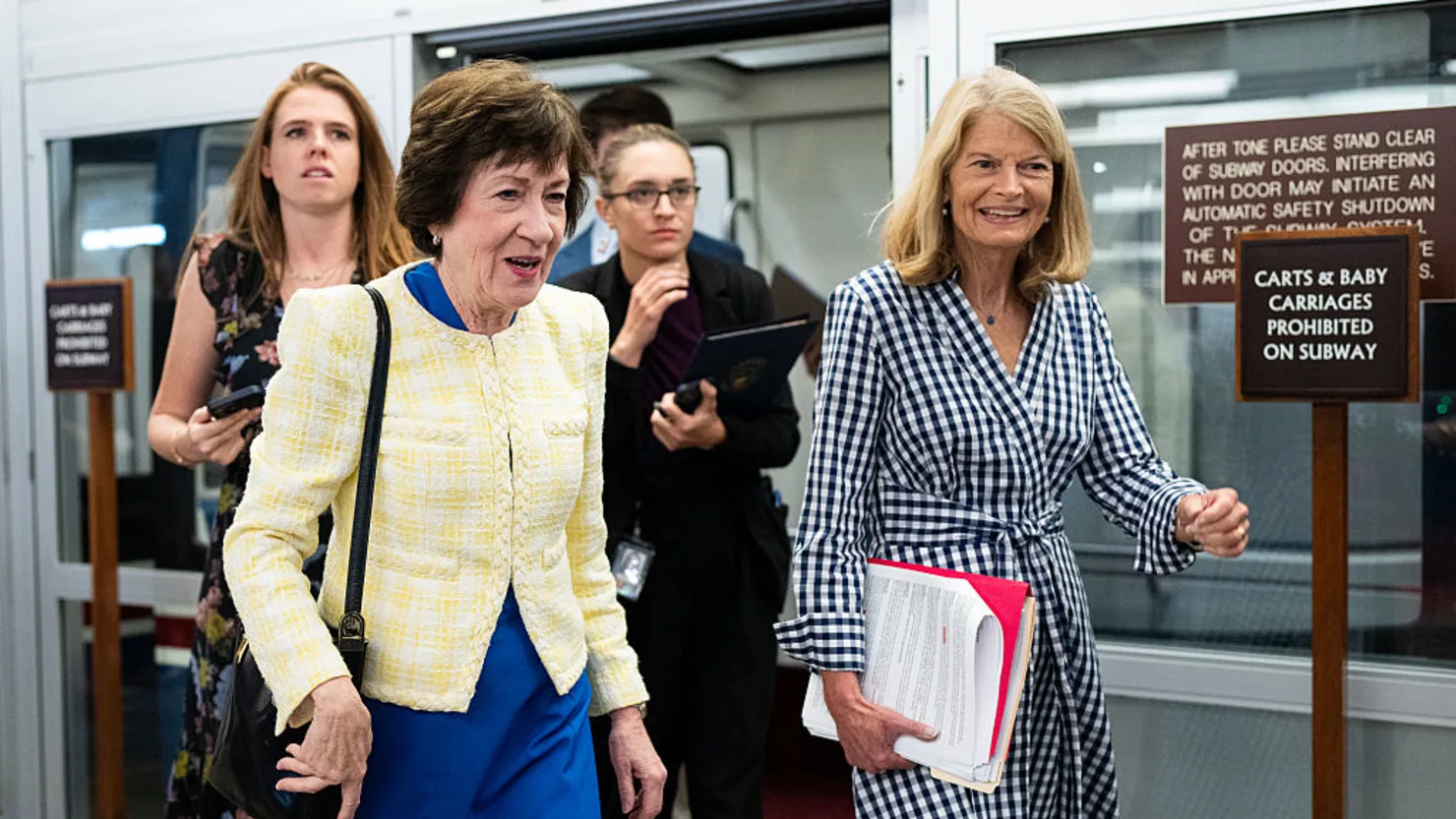

Republican Senators Susan Collins of Maine and Lisa Murkowski of Alaska are joining Democrats to support new legislation that would exempt small U.S. businesses from President Donald Trump’s sweeping tariffs on Canadian imports.
Introduced by Sen. Peter Welch, D-Vt., the two-page bill — dubbed the CANADA Act (Creating Access to Necessary American-Canadian Duty Adjustments) — aims to shield small businesses from the economic fallout of Trump’s trade moves, which include a 25% duty on Canadian goods and a 10% tariff on Canadian energy imports announced in February.
The bipartisan effort comes as Trump threatens an even steeper 35% blanket tariff on all Canadian imports starting August 1, intensifying tensions with one of America’s closest allies and top trading partners.
“Imposing tariffs on Canada, Maine’s largest trading partner, threatens jobs, drives up costs, and hurts small businesses that rely on strong cross-border relationships,” said Collins. Murkowski added that Alaskan businesses are feeling the strain: “Tariffs are raising prices and making long-term planning nearly impossible.”
The CANADA Act would exempt goods imported by or on behalf of small businesses, as defined under federal law, from the Trump-imposed tariffs. While the White House has not responded to inquiries about the bill, its growing bipartisan support signals mounting frustration in Congress with the president’s aggressive trade posture.
Welch said the tariffs have caused more than just price increases — they’ve harmed deeply rooted business and cultural ties. “Vermonters value their Canadian neighbors and are deeply disturbed by the deterioration of those long-standing relationships,” he told CNBC.
The legislation is co-sponsored by five other Senate Democrats, including Senate Minority Leader Chuck Schumer and Sen. Ron Wyden of Oregon, the top Democrat on the Senate Finance Committee.
Trump initially imposed the tariffs on February 1, citing Canada’s alleged failure to stop the flow of drugs and criminal activity across the northern border. Although the administration briefly paused the tariffs after assurances from former Canadian Prime Minister Justin Trudeau, most of them went into effect on March 4.
Canada responded with its own retaliatory measures the next day.
While Trump later issued temporary tariff exemptions for some U.S. automakers and USMCA-compliant imports from Canada and Mexico, roughly 60% of Canadian goods remain subject to the duties. Ottawa continues to face U.S. tariffs on steel, aluminum, and automobiles — even after being spared from Trump’s sweeping April 2 global “liberation day” tariffs.
Canadian travel to the U.S. — especially to states like Vermont — has also declined significantly this year, according to local officials.
Though Welch acknowledged the CANADA Act doesn’t yet address Trump’s threatened 35% tariff, he said “everything’s on the table” as small businesses nationwide plead for relief.


