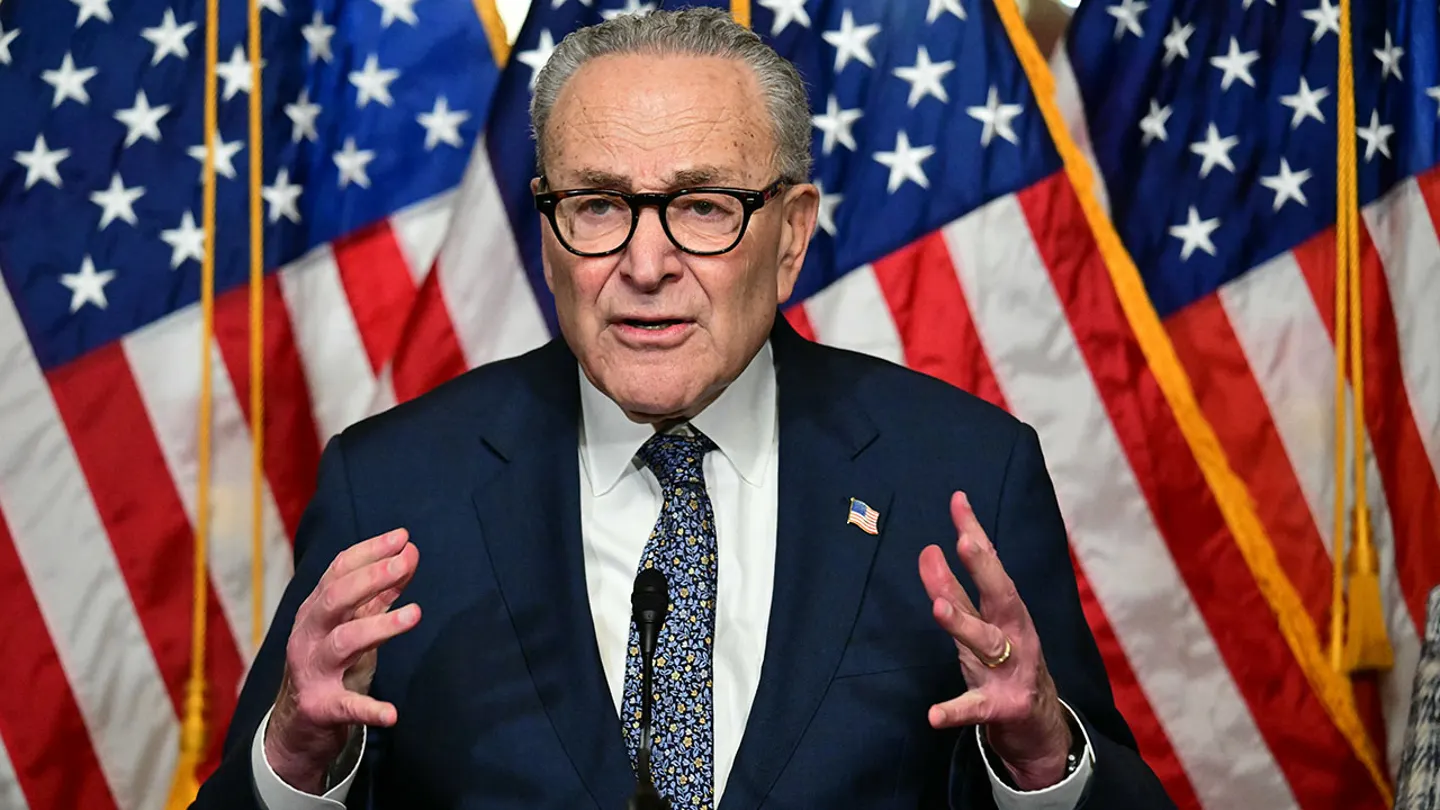

Senate Minority Leader Chuck Schumer announced plans to introduce federal legislation that would grant the Pride flag the same official standing as symbols already recognized by Congress, such as the U.S. flag and military flags. The proposal follows the recent removal of the Pride flag from the Stonewall National Monument in New York City, a decision that drew sharp criticism from political leaders and LGBTQ+ advocates nationwide. Schumer called Stonewall “sacred ground,” saying the measure is intended to ensure the Pride flag — and the history it represents — cannot be taken down in the future.
Under the proposed bill, the Pride flag would become a congressionally authorized symbol. This designation would provide protections similar to those afforded to U.S. flags, military flags, and the POW/MIA flag. The legislation aims to prevent federal agencies from removing the Pride flag from national monuments, parks, and other government properties. Schumer argued that formal recognition is necessary to safeguard LGBTQ+ visibility at historically significant sites.
The legislative push comes after a Department of the Interior directive requiring the removal of “non-agency” flags from National Park Service properties. While the policy allowed exceptions for certain historically recognized flags, the Pride flag was not included, leading to its removal from Stonewall.
New York City officials strongly condemned the decision. Mayor Zohran Mamdani described the removal as an attempt to diminish an essential part of the city’s heritage. He emphasized that New York remains the birthplace of the modern LGBTQ+ rights movement and stated that efforts to erase that legacy would not succeed. Mamdani also reiterated the city’s commitment to supporting LGBTQ+ representation and recognition.
Schumer, long known for backing LGBTQ+ rights initiatives, framed the bill as a step toward permanently codifying protections for community symbols and spaces. By granting congressional authorization to the Pride flag, the legislation would restrict future administrations from removing it from nationally significant locations without legislative approval.
Although the Pride flag was later reinstalled at Stonewall following public backlash, Schumer said the measure is designed as a long-term safeguard rather than a reactionary move. He stressed that the proposal seeks to protect both the symbol itself and the broader legacy of the LGBTQ+ rights movement.
If enacted, the legislation would represent a notable expansion of federal recognition for LGBTQ+ history, elevating the Pride flag to the same legal status as other nationally protected symbols. Supporters argue the move would help shield LGBTQ+ representation from political shifts, ensuring that historically meaningful sites retain their cultural and historical visibility.