
The U.S. Supreme Court signaled a potential landmark shift in American election law Monday, as conservative justices expressed deep skepticism toward state statutes that allow mail-in ballots to be counted if they arrive after Election Day.
The case, Watson vs. Republican National Committee, centers on a Mississippi law that permits a grace period for ballots postmarked by Election Day but received shortly thereafter. A ruling against the state could dismantle similar voting protections in 13 other states and the District of Columbia, fundamentally altering the administrative landscape for the upcoming 2026 midterm elections.
Judicial Skepticism and Public Confidence
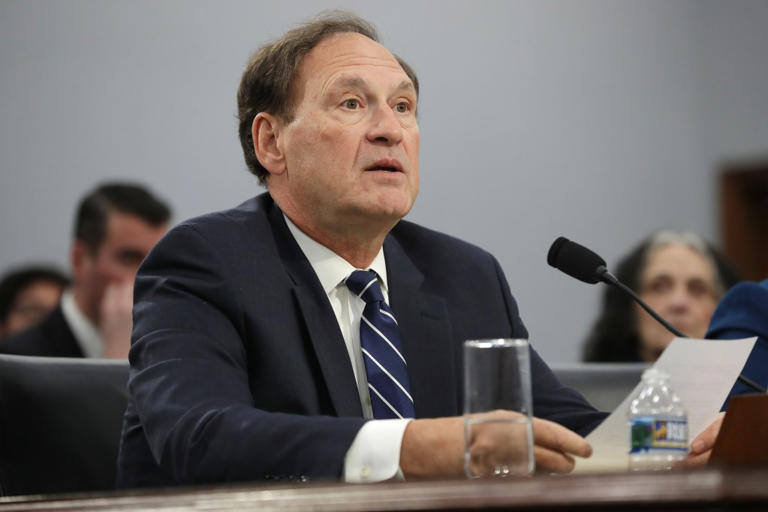
Justice Samuel Alito led the skeptical inquiry, questioning whether late-arriving ballots “seriously undermine” public trust in democratic outcomes. Alito highlighted concerns over the “radically flipped” results that can occur when an initial election-night lead is overtaken by ballots processed days later.
“You’ve got ballots that are delivered by somebody… received a month after the election and they don’t have postmarks,” Alito noted, echoing arguments that protracted counting periods fuel domestic uncertainty.
The Republican National Committee (RNC) maintains that a firm Election Day cutoff is essential for clarity. Ally Triolo, the RNC’s election integrity communications director, told reporters that “83 percent of voters agree ballots should be in by Election Day,” arguing that delays cause unnecessary confusion.
Lack of Fraud Evidence
Despite the focus on “election integrity,” Mississippi Solicitor General Scott Stewart admitted under questioning that the government has “not cited a single example of fraud” specifically linked to ballots received after Election Day.
The Court’s liberal wing appeared poised to defend the status quo. Justice Sonia Sotomayor argued that the judiciary should defer to legislative bodies on such matters. “The people who should decide this issue are not the courts, but Congress and the states,” Sotomayor said.
National Implications
A broad ruling from the high court would create immediate ripple effects across the country. Major states—including California, Texas, New York, and Illinois—currently utilize grace periods to ensure that voters in transit or rural areas are not disenfranchised by postal delays. Furthermore, 15 states with specific deadlines for military and overseas voters could see those protections challenged.
The Supreme Court is expected to issue its final ruling by late June 2026.