
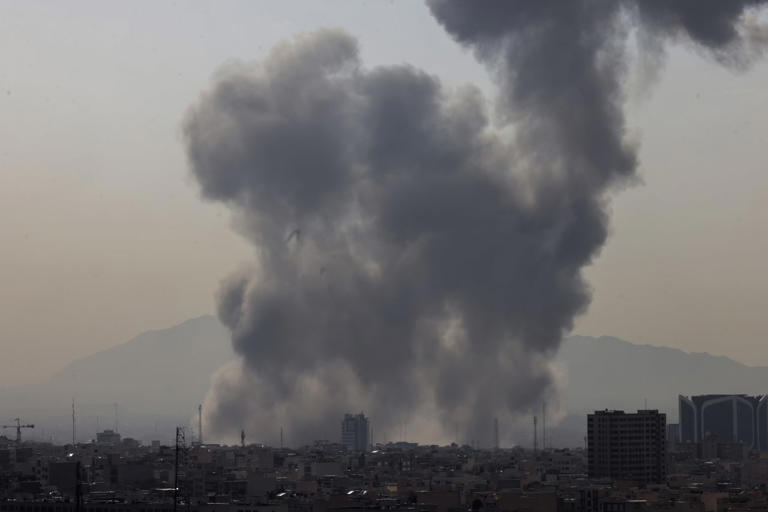

TEHRAN — Iran has officially confirmed the death of Supreme Leader Ayatollah Ali Khamenei, 86, following a massive, coordinated aerial assault by U.S. and Israeli forces on Saturday. The strike, which targeted the heart of Iran’s political and military command in Tehran, has also claimed the life of the Islamic Revolutionary Guard Corps (IRGC) Commander-in-Chief, Mohammad Pakpour, plunging the Islamic Republic into an unprecedented leadership vacuum and pushing the Middle East to the brink of total war.
High-Value Targets Eliminated in ‘Operation Epic Fury’
The operation, characterized by Israeli officials as a “decapitation strike,” began in broad daylight on February 28, 2026. Missiles leveled several buildings in Tehran’s high-security Pasteur district, including the Supreme Leader’s office and residence.
While Iranian officials initially dismissed reports of the Ayatollah’s death as “psychological warfare,” state broadcaster Press TV confirmed the “martyrdom” early Sunday morning. Reports indicate the strike was devastatingly precise:
- Ayatollah Ali Khamenei: Confirmed dead at his office.
- IRGC Leadership: Commander-in-Chief Mohammad Pakpour and Defense Minister Amir Nasirzadeh were among the “senior members of the Iranian fortress of terror” eliminated, according to Israeli Defense Minister Israel Katz.
- Civilian and Family Casualties: Iranian state media IRNA reported that several of Khamenei’s family members, including his daughter and granddaughter, were also killed in the blast.
U.S. President Donald Trump, speaking from Washington, stated that the strikes targeted “imminent threats” and described the result as the “greatest chance” for the Iranian people to “take back their country.”
Retaliation and Regional Chaos
The fallout was immediate and violent. The IRGC has vowed “regret-inducing retaliation,” and within hours of the Tehran strikes, a wave of Iranian ballistic missiles and drones was launched toward Israel and U.S. military bases in the Persian Gulf.
- Gulf State Strikes: Impacts were reported in the UAE, Qatar, and Bahrain. The U.S. Navy headquarters in Bahrain was reportedly targeted.
- Global Travel Paralysis: Massive flight cancellations have stranded thousands in Dubai and Doha as regional airspace remains closed or highly restricted.
- Domestic Unrest: While state-mandated mourning began in Tehran, reports of “rejoicing” and localized celebrations emerged from pockets of the capital, following months of anti-government protests that have gripped the nation since early 2026.
The Path Forward: A Nation Without a Leader
Under the Iranian constitution, the death of the Supreme Leader triggers a transitional phase. Former Vice President Mohammad Mokhber announced that a temporary council—comprising the President, the Head of the Judiciary, and a member of the Guardian Council—will manage state affairs until the Assembly of Experts appoints a successor.
However, the simultaneous loss of the IRGC’s top command leaves the military apparatus fractured at a moment of existential crisis. With President Trump warning of “unprecedented force” if Iran continues its counter-attacks, the international community is bracing for a potential escalation into a broader global conflict.
What’s Next: The UN Security Council is scheduled to hold an emergency session on Monday. We are monitoring satellite imagery of the Strait of Hormuz following reports that the IRGC has moved to block the strategic waterway.


