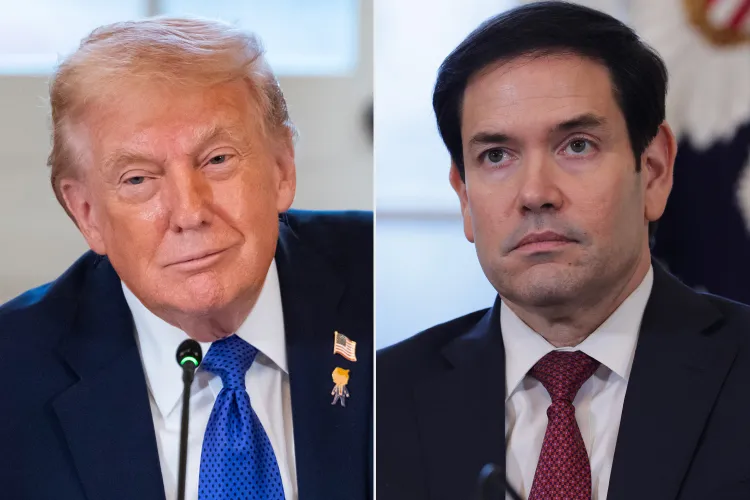

WASHINGTON — Secretary of State Marco Rubio issued a stark warning to Tehran on Monday, declaring that the “hardest hits are yet to come” as the United States enters a fourth day of military operations in the Middle East. Speaking to reporters on Capitol Hill prior to a classified briefing with congressional leaders, Rubio defended the administration’s decision to launch preemptive strikes, characterizing them as a necessary move to protect American service members from an imminent Iranian retaliation triggered by Israeli military action.
The Secretary’s remarks come as Operation Epic Fury—the U.S. component of a massive joint aerial campaign alongside Israel’s Operation Roaring Lion—continues to target Iran’s ballistic missile infrastructure and naval assets.
A Preemptive Doctrine: Preventing the “Blow”
According to Rubio, the administration moved to strike after intelligence indicated that Iran had delegated “automatic” launch orders to field commanders. The orders were reportedly set to trigger against U.S. bases the moment Israel began its own operations against the regime.
“We knew that there was going to be an Israeli action,” Rubio said. “We were not going to sit there and absorb a blow before we responded… Had we not done so, there would have been hearings on Capitol Hill about how we knew this was going to happen and didn’t act.”
The Secretary argued that waiting for an initial Iranian salvo would have resulted in significantly higher American casualties. Despite the preemptive nature of the strikes, U.S. Central Command has already confirmed the deaths of at least six U.S. service members following Iranian retaliatory fire against regional bases.
Goal: Dismantling the “Shield of Immunity”
The primary objective of the current campaign is the total destruction of Iran’s ballistic missile and drone capabilities. Rubio claimed that Iran was producing over 100 missiles per month, a pace that he argued would soon grant the regime a “line of immunity.”
Strategic Objectives of the U.S. Campaign:
Ballistic Missile Denial: Eliminating the stockpiles and manufacturing facilities used for long-range and short-range missiles.
Naval Neutralization: Removing threats to global shipping lanes in the Persian Gulf, where Rubio noted Iran holds leverage over 20% of global energy transit.
Nuclear Prevention: Ensuring the regime cannot use a conventional missile “shield” to hide the development of nuclear weapons.
While Rubio stated that “regime change” is not the formal objective of the mission, he expressed hope that the Iranian people would use the instability to “remove these leaders,” echoing earlier comments from President Trump.
Growing Domestic and International Friction
The administration’s rationale has met with immediate pushback both at home and abroad. Iranian Foreign Minister Abbas Araghchi dismissed the “imminent threat” claim on social media, accusing the U.S. of entering a “war of choice on behalf of Israel.”
On Capitol Hill, the bipartisan “Gang of Eight” was notified within the 48-hour window required by the War Powers Resolution of 1973, but many lawmakers remain skeptical. Sen. Mark Warner (D-VA), Vice Chair of the Senate Intelligence Committee, told reporters there was “no imminent threat to the United States” prior to the strikes, suggesting the danger was primarily to Israel.
As the conflict enters its second week, the White House has prepared for significant economic volatility. Rubio confirmed that “countermeasures” are being discussed with Treasury and energy officials to mitigate expected spikes in global oil prices.
What Follows: A “Month-Long” Conflict
President Trump has indicated the campaign could last between four to five weeks, though Rubio was less definitive on the timeline. “I don’t know how long it’ll take,” Rubio said. “We have objectives… the next phase will be even more punishing.”
With the House and Senate poised to vote on measures to halt further unauthorized military action, the administration faces a race to achieve its strategic goals before political pressure or regional escalation forces a shift in strategy.