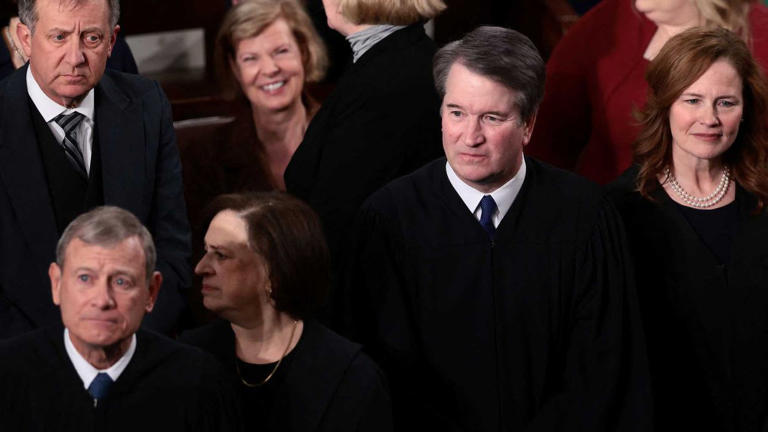

In a move that signals a potential shift in the Supreme Court’s handling of emergency litigation, the conservative-led bench on Monday temporarily blocked the Trump administration’s efforts to deport roughly 356,000 foreign nationals.
The stay prevents the immediate removal of 6,000 Syrians and 350,000 Haitians currently residing in the U.S. under Temporary Protected Status (TPS). The decision halts the administration’s plans to terminate these protections while the underlying legal challenges proceed through the appellate process.
A Departure from the “Shadow Docket” Trend
Legal analysts suggest the ruling marks a departure from the Court’s recent history of granting the executive branch broad latitude on its “shadow docket”—the informal term for the emergency orders issued outside the Court’s traditional merits calendar.
While the administration argued for the immediate authority to rescind designations granted during the Obama and Biden eras, the Court opted to maintain the status quo. Mark Stern, a veteran legal observer, noted that federal statute prohibits the Secretary of Homeland Security from prematurely ending a TPS designation before its scheduled expiration.
“The Court may finally be conceding to the arguments long championed by Justice Ketanji Brown Jackson,” Stern said, referencing Jackson’s past dissents regarding “irreparable harm.” Jackson has consistently argued that the court must weigh the life-altering injury to individuals—such as deportation—against the government’s administrative preferences.
Confrontation and Conciliation
The ruling follows a rare, public exchange between Justice Jackson and Justice Brett Kavanaugh during a judicial event on Monday. Jackson pointedly criticized the “uptick” in the Court’s intervention in emergency dockets, calling it an “unfortunate problem” that disrupts the standard legal process.
While Kavanaugh initially defended the Court’s actions as a necessary response to a gridlocked Congress and executive overreach, he notably shifted his tone after Jackson reminded him of the Court’s more restrained protocols from 20 years ago.
“Ketanji states it well,” Kavanaugh told the audience, adding that judicial standards must remain consistent regardless of which party occupies the White House.
Respecting the Lower Courts
The decision is also seen as a victory for the integrity of the federal judiciary. Critics have frequently accused the Supreme Court of “disrespecting” lower court judges by routinely vacating their stays without full deliberation.
By allowing the TPS protections to remain in place for now, the Supreme Court is ensuring the case undergoes proper deliberation rather than a summary dismissal. For the hundreds of thousands of TPS recipients currently in limbo, the ruling provides a critical, if temporary, reprieve as the high court prepares for formal arguments.