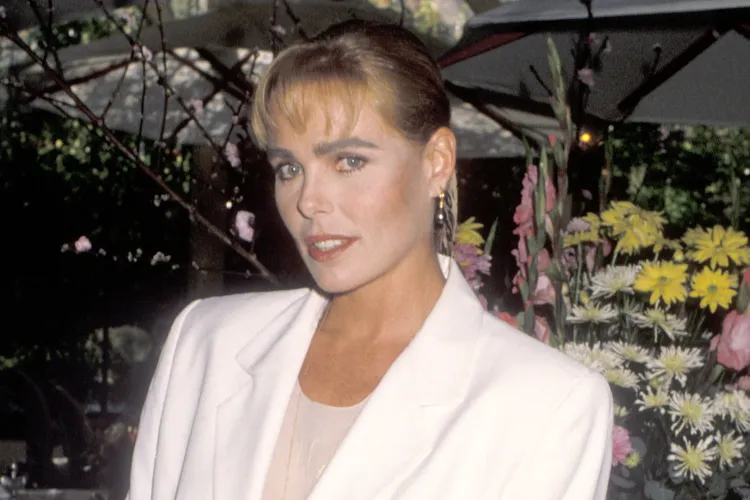

She was once considered the face of a generation, but on July 2, 1996, supermodel Margaux Hemingway — the granddaughter of legendary writer Ernest Hemingway — was found dead in her Southern California apartment.
The model and actress, who graced countless magazine covers during the 1970s, died from a “massive overdose of barbiturate,” according to the Los Angeles Times. A spokesman for the Los Angeles County coroner later confirmed the official cause of death as “acute barbiturate intoxication.” The amount of the substance in her system — which her body hadn’t yet digested, per The New York Times — was consistent with an intentional overdose.
Standing six feet tall with striking eyes, Margaux became a star before turning 21. Early in her career, she signed a $1 million contract with Fabergé’s Babe perfume — an unprecedented sum for a model at that time. In 1975, Time magazine dubbed her “New York’s Supermodel.” Yet despite her rising fame in the city, Margaux often felt out of place, having grown up in the small town of Ketchum, Idaho.
“It sounds glamorous, and it was. I was having a lot of fun. But I was also very naive when I came on the scene,” she said in a 1988 interview. “I genuinely thought that people liked me for myself — for my humor and good qualities. I never expected to meet so many professional leeches.”
Though she embraced the high life, Margaux also faced its darker side. She later described herself as an alcoholic and checked into the Betty Ford Center at age 32. “For a time, I was living the life of Ernest Hemingway,” she reflected. “I think alcohol drove my grandfather to suicide, but I’m still alive because I did something about it.”
:max_bytes(150000):strip_icc():focal(799x0:801x2):format(webp)/margaux-hemingway-071725-3dc44c47f9e74d07875337f38887c213.jpg)
Born Margot Hemingway, she changed her name to “Margaux” after learning she had been named for the Château Margaux wine from France. Her name — and her two-and-a-half-year marriage to film producer Errol Wetson — opened many doors. “For me, becoming a celebrity was like being in the eye of a hurricane,” she said. “Suddenly, I was an international cover girl. Everybody was lapping up my Hemingway-ness. They wanted to rub elbows with me or brush up against me.”
Before long, the Lipstick actress was a fixture at New York’s famed Studio 54. “I drank to loosen up,” she recalled. “I never thought then that alcohol would become a problem. In my grandfather’s time, it was a virtue to be able to drink a lot and never show it. And like him, I wanted to live my life to the fullest, with gusto. I always thought alcohol would give me the strength and courage to do whatever I wanted to do. In fact, it made me less able to think clearly.”
:max_bytes(150000):strip_icc():focal(999x0:1001x2):format(webp)/ava-gardener-ernest-hemingway-31240ed2f2a4485eb3fd1afbb3c9e68e.jpg)
Margaux also struggled with mental health issues, particularly after the end of her marriage to Wetson and later to Bernard Foucher, whom she was married to for six years. “I grew very depressed over the failure