
The Committee for a Responsible Federal Budget (CRFB), a nonpartisan fiscal watchdog that tracks how much Congress is adding to the nation’s $38 trillion debt, is warning against a new Senate proposal to extend enhanced Affordable Care Act (ACA) subsidies.
With the boosted ACA subsidies set to expire within days, some Senate Democrats are racing to shield millions of Americans from a holiday shock of higher health insurance premiums. But CRFB says there’s a major flaw in the plan: it adds to the debt instead of paying for itself.
“With the national debt as large as the economy and interest payments costing $1 trillion annually, it is absurd to suggest adding hundreds of billions more to the debt,” CRFB President Maya MacGuineas said in a Friday statement.
The proposal, backed by members of the Senate Democratic caucus, would fully extend the enhanced subsidies for three more years, from 2026 through 2028, without adding new income limits on who can qualify. Those subsidies—originally boosted during the pandemic and later renewed—were intended to lower premiums and prevent coverage losses for middle- and lower-income consumers buying insurance on the ACA exchanges.
According to CRFB, even a three-year extension would add around $300 billion to federal deficits over the next decade. The federal government would keep picking up a larger share of premium costs while both enrollment and subsidy amounts remain elevated. If Congress ultimately made the enhancements permanent, as many advocates want, the group estimates the price tag could rise to nearly $550 billion in additional borrowing over ten years.
Undoing recent guardrails
MacGuineas argued that the Senate bill is “far worse than even a debt-financed extension” because it unwinds several “program integrity” measures enacted in a 2025 reconciliation law that were meant to tighten oversight of ACA subsidies—while still relying on more borrowing. “This is a bad idea made worse,” she said.
CRFB’s core complaint is that the plan doesn’t try to offset its costs through spending cuts or new revenues and, in their view, does more than simply extend current policy by expanding how the subsidy structure works.
The bill would permanently repeal restrictions that had cut off subsidies for certain groups enrolling during special enrollment periods. It would also scrap rules that required full repayment of excess advance subsidies and stricter verification of eligibility and tax reconciliation. In addition, it would override portions of a 2025 federal regulation that loosened limits on the actuarial value of exchange plans and changed how subsidies are calculated—effectively reshaping how generous plans can be and how federal support is determined. CRFB warns that these reversals would drive costs higher while weakening safeguards meant to curb misuse and errors in the subsidy system.
MacGuineas said any extension of enhanced subsidies should be tied to broader reforms that tackle health care spending and reduce overall borrowing. She argues lawmakers are passing up an opportunity to redesign ACA support in a way that both lowers premiums and improves the long-term budget outlook.
The dispute over ACA subsidies recently helped trigger a government funding showdown, and CRFB contends the new Senate bill is a political compromise that favors short-term relief at the expense of long-term fiscal responsibility.
“After a pointless government shutdown over this issue, it is beyond disappointing that this is the preferred solution to such an important issue,” MacGuineas wrote.
High-stakes politics on affordability
The off-year elections reframed the shutdown and cost-of-living fight. Democrats made surprising gains and nearly flipped a solidly Republican district in Tennessee, as politicians from both the left and the center rallied around the message of “affordability.”
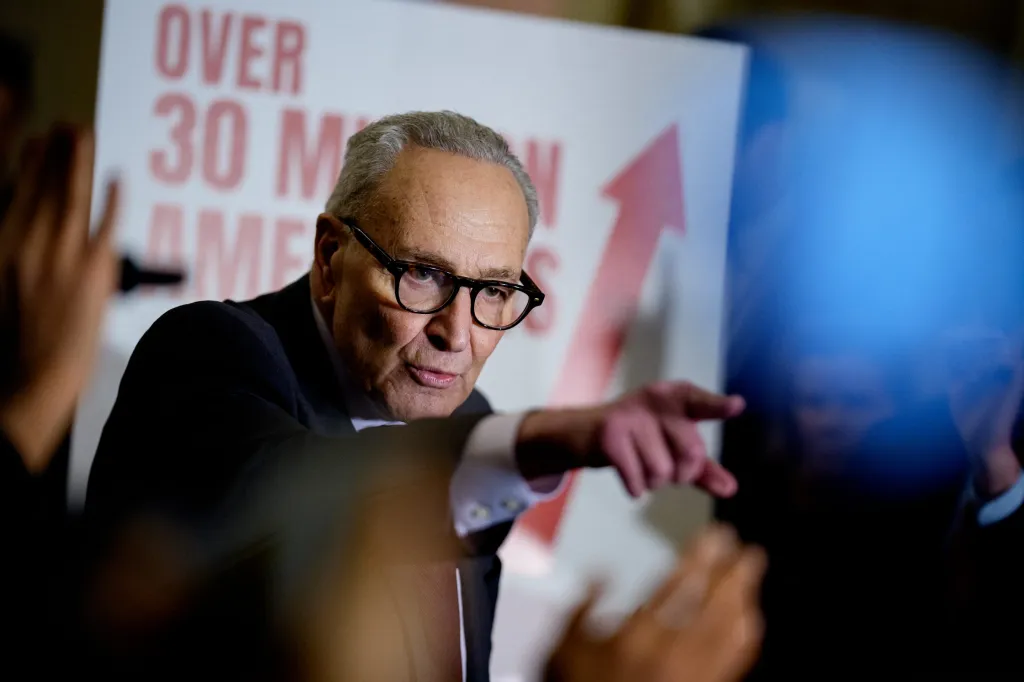
Senate Minority Leader Chuck Schumer is reportedly seizing on that momentum and doubling down on affordability heading into the crucial 2026 midterm elections. President Donald Trump is preparing to visit Pennsylvania to talk about kitchen-table economic worries. Yet he is echoing predecessor Joe Biden’s earlier tendency to brush off inflation concerns, despite broad evidence that many families are still feeling squeezed.
“We fixed inflation, and we fixed almost everything,” Trump said during a Tuesday cabinet meeting, where he also dismissed affordability as a Democratic “hoax.”
Lawmakers in both parties now face a politically perilous choice: let ACA premiums rise sharply—including in pivotal swing states like Pennsylvania, where enrollees are staring at double-digit increases—or approve a costly subsidy extension that, according to CRFB, would blow up the deficit without tackling the deeper drivers of health care costs.