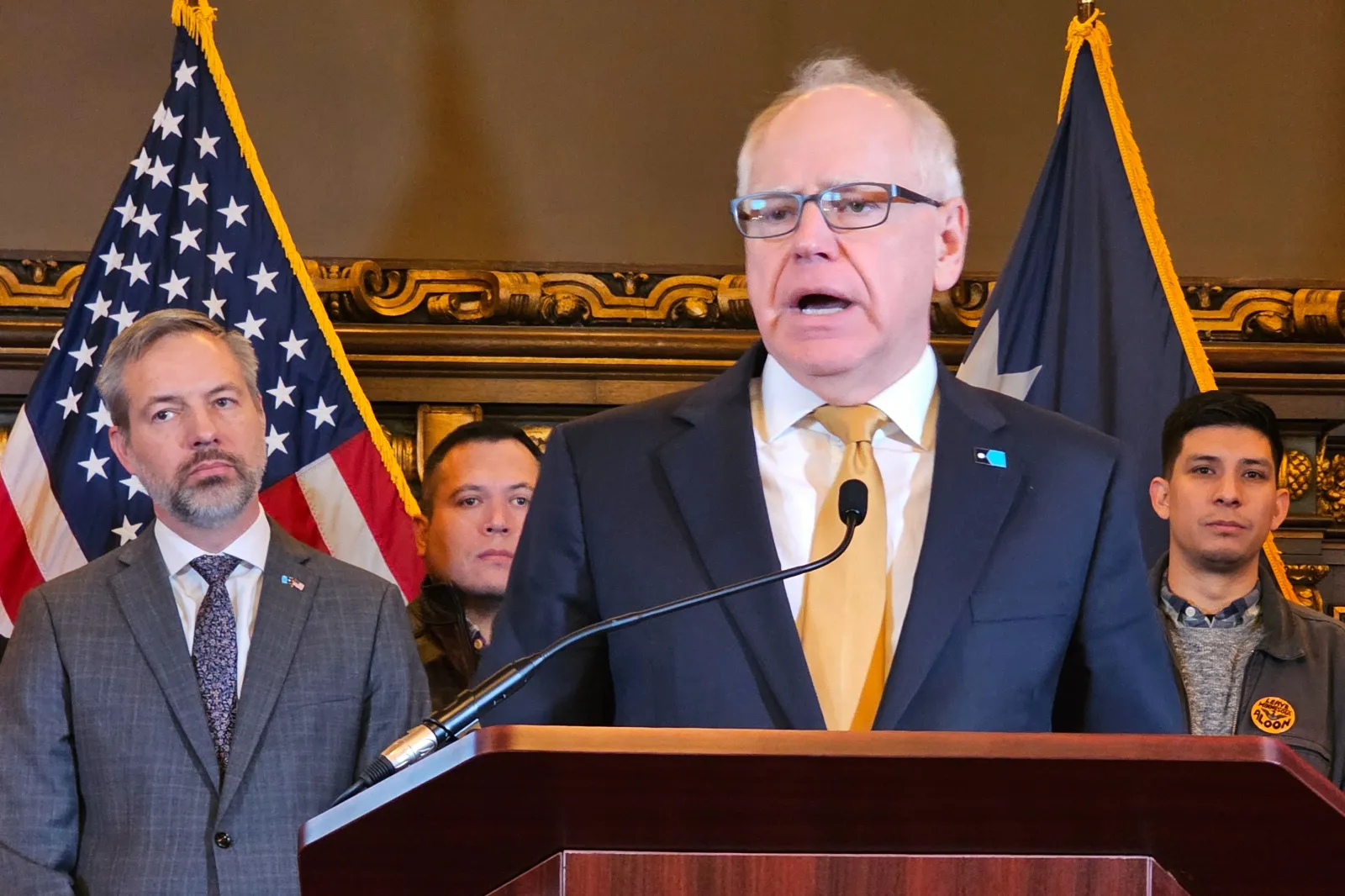

Minnesota Governor Tim Walz says the federal government should cover the costs and damage left behind after Operation Metro Surge, an immigration enforcement deployment that federal officials say is now winding down.
Speaking after Border Czar Tom Homan announced Thursday that the operation had concluded and the federal presence in Minnesota would be reduced, Walz argued Washington “needs to pay for what they broke.” He said residents and local institutions absorbed “incredible and immense costs” during the operation and insisted the federal government should not “break things, and then just leave without doing something about it.”
Walz added he does not expect the federal government to voluntarily take responsibility, and said Minnesota will move ahead with its own recovery plans.
Why it matters
Operation Metro Surge was described by officials as one of the largest modern immigration enforcement deployments focused on a single state. Local leaders said the surge strained courts, fueled major protests, and escalated disputes over constitutional rights and how federal and local authorities should work together.
Public anger intensified after two U.S. citizens, Renee Good and Alex Pretti, were fatally shot by federal agents. The deaths sparked national protests, congressional scrutiny, and legal challenges, as well as criticism from leaders across the political spectrum—highlighting the political and legal risks of aggressive enforcement tactics.
What to know
Walz said earlier this week that he expected the raids to end within days after conversations with Homan and President Donald Trump. On Thursday, Homan confirmed the decision, telling reporters he had proposed ending the surge and the president agreed.
“Operation Metro Surge is ending,” Homan said, adding that federal agents would continue routine efforts to arrest and remove undocumented immigrants who pose public safety risks.
After Homan’s announcement, Walz said the drawdown does not end Minnesota’s dispute with the federal government. He described the operation as leaving “deep damage” and “generational trauma,” along with economic harm for some residents and businesses and unresolved questions about what occurred during the surge.
Walz said the state is considering measures to help small businesses recover, including a possible relief fund that lawmakers are expected to debate in the coming days.
The operation involved roughly 3,000 ICE agents deployed in Minnesota to carry out deportations despite opposition from Walz and Minneapolis Mayor Jacob Frey. After the fatal shootings of Good and Pretti, tensions rose sharply, and the administration sent Homan to oversee the response. Homan removed Gregory Bovino from his duties and shifted to what officials described as a more measured approach, before announcing the operation would end about two weeks later.
What people are saying
A White House spokesperson said the surge removed “thousands of dangerous, criminal illegal aliens” and that the administration hopes to move forward with greater local cooperation.
Mayor Jacob Frey said Minneapolis residents “outlast[ed] an occupation,” calling the operation “catastrophic” for neighbors and businesses and urging support for a recovery effort.
Sen. Amy Klobuchar praised Minnesotans for standing together during the enforcement campaign.
Far-right activist Laura Loomer criticized the decision to end the operation and posted inflammatory remarks targeting Somali Muslims in Minnesota.
Homan defended the strategy of arresting people in custody settings and criticized sanctuary jurisdictions, saying Congress should address the issue.
What happens next
Federal officials say a smaller ICE footprint will remain in Minnesota as the bulk of the surge deployment is withdrawn.