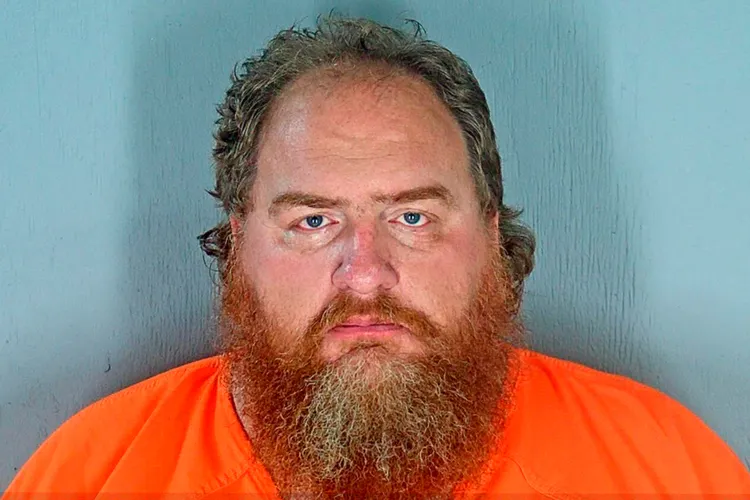

In November 2025, Dateline aired a Friday-night special examining a chilling double homicide that has haunted a small Wisconsin community for more than three decades — and a recent trial that ended in a stunning not-guilty verdict.
A brutal crime in rural Wisconsin
The case traces back to March 1992, when authorities discovered 23-year-old Tanna Togstad and her 35-year-old boyfriend, Timothy Mumbrue, stabbed to death inside Togstad’s farmhouse in Royalton, Wis., The Post-Crescent reported. Investigators said Togstad had been sexually assaulted and killed by a stab wound to the chest. Mumbrue suffered multiple stab wounds, some suggesting he fought back. The couple’s dog, Scruffy, was also stabbed and killed.
According to The Post-Crescent, Togstad had returned home on March 20, 1992, after a night of dancing at a tavern with Mumbrue, whom she had been dating for less than a year. The pair were last seen alive between 11:30 p.m. and midnight. Their bodies were found two days later.
:max_bytes(150000):strip_icc():focal(773x376:775x378):format(webp)/tony-haase-trial-112025-ca32c1d794054a3d85317d1181ce5807.jpg)
A suspect emerges decades later
For years, the murders remained unsolved. Then, more than 30 years after the killings, investigators identified Tony Haase as a possible suspect. In 2022, police staged a traffic stop and collected a DNA sample from a pen he had handled. That DNA matched swabs taken from Togstad’s body in 1992, per The Post-Crescent. Haase was arrested in August 2022.
During questioning, Haase — who was 21 at the time of the murders — told police he recalled only “snippets” of entering Togstad’s home and getting into a “scuffle” with Mumbrue. He said he feared he might have been involved after seeing news reports about the crime, a criminal complaint stated. Investigators also said Haase’s handprint matched a print found on a door at the farmhouse. He was charged with two counts of first-degree murder.
A long-buried connection
The interrogation uncovered a painful tie between Haase and Togstad’s family. Haase told police their fathers had once been friends, but that relationship ended after Haase’s father died in a 1977 snowmobile accident in which Togstad’s father was involved, The Post-Crescent reported. Haase was around 7 years old at the time.
Haase also reportedly said that on the night of the murders, he had been drinking and thinking about his father’s death as he drove toward Togstad’s home. Prosecutors argued he likely expected Togstad to be alone because her truck was the only vehicle in the driveway. Assistant Attorney General Amy Ohtani told the court that Haase’s anger over the accident may have fueled his decision to go inside, and that he wasn’t prepared to encounter Mumbrue.
:max_bytes(150000):strip_icc():focal(506x134:508x136):format(webp)/tony-haase-interview-112025-dbb22c28cf83480292ae74aebaac315d.jpg)
The defense points elsewhere
At trial, Haase’s attorneys attacked both the confession and the DNA evidence. They said investigators used deceptive tactics that pressured Haase into admitting guilt. They also argued the DNA was unreliable because of what they described as a murky chain of custody over the decades.
Instead, the defense claimed the real killer was Haase’s uncle, Jeff Thiel, who died in 1995, WLUK reported. According to The Post-Crescent, they portrayed Thiel as violent, citing allegations that he had killed animals and threatened previous spouses. The outlet also noted that some people had raised Thiel’s name during the investigation years earlier.
:max_bytes(150000):strip_icc():focal(1085x472:1087x474):format(webp)/tony-haase-murder-trial-112025-521a4b4e666e49d79037f58d6efd54d3.jpg)
Haase’s lawyers further suggested Thiel might not have acted alone, pointing to two other possible assailants — including Glendon Gouker, a convicted murderer who at one point confessed to the Royalton killings. Police labeled Gouker a person of interest in 2013 after DNA linked him to the scene, The Post-Crescent reported. Prosecutors countered that Gouker had a history of false confessions and said he was trying to avoid the death penalty in Oklahoma, where he was convicted of another murder and rape.
Not guilty — and a new chapter of conflict
On Aug. 11, 2025, a jury found Haase not guilty on both counts of first-degree intentional homicide, per The Post-Crescent. The verdict stunned Togstad’s family. In August 2025, her brother Richard Togstad told WBAY that after waiting more than three decades for answers, the outcome felt unreal. He said he believed the evidence was there to convict someone — but that the case still slipped away.
Days after the acquittal, Richard Togstad filed a $17 million wrongful death lawsuit against Haase, arguing that Haase killed his sister because he blamed their father for the snowmobile accident that took Haase’s father’s life. Haase has denied the allegations and asked the court to dismiss the suit, The Post-Crescent reported.
Where the case stands now
With Haase legally cleared in criminal court but still facing a civil lawsuit, the Royalton murders remain a point of deep division and lingering grief. Dateline’s investigation underscores what many in the community already feel: even after a trial, the answers they’ve waited for since 1992 are still out of reach.