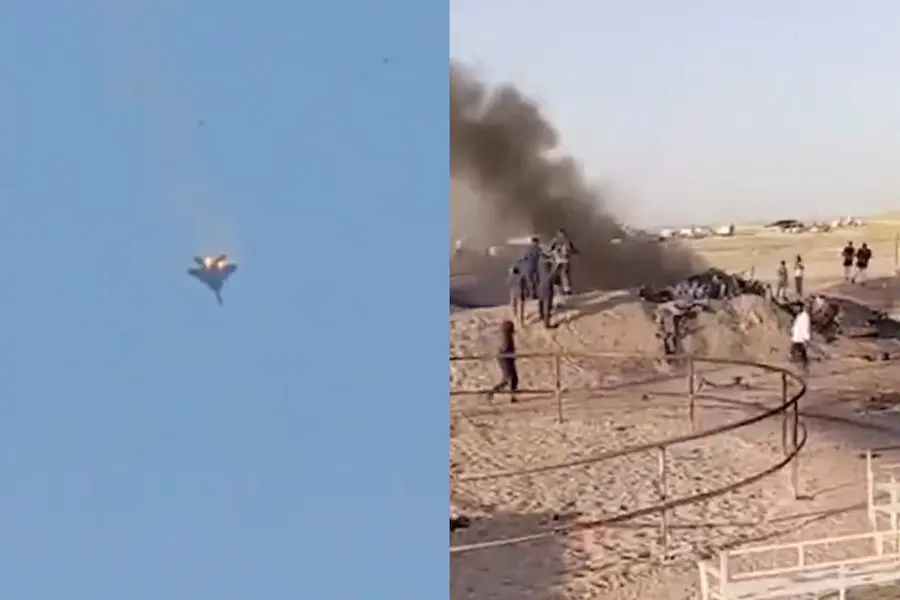

KUWAIT CITY — A chaotic “friendly fire” incident over Kuwaiti airspace resulted in the downing of three U.S. F-15E Strike Eagle fighter jets early Monday morning. All six crew members successfully ejected and are in stable condition, according to U.S. Central Command.
The incident occurred at approximately 11:03 p.m. ET Sunday (early Monday local time) as regional tensions spiral into open conflict following the weekend’s launch of Operation Epic Fury—the U.S.-led air campaign against Iran.
Technical Failure and Survival: The “Friendly Fire” Breakdown
According to an official statement from CENTCOM, the U.S. Air Force jets were engaged in a combat mission when they were targeted by Kuwaiti air defenses. The misidentification occurred during a period of intense aerial activity that included incoming Iranian ballistic missiles, drones, and fixed-wing aircraft.
Key Incident Details:
- Aircraft Involved: Three F-15E Strike Eagles (Dual-role air-to-air and air-to-ground fighters)
- Location: Al Jahra region, Kuwait (Verified by Reuters via social media geolocating)
- Casualties: Zero fatalities; six crew members recovered and in stable condition
- Attributing Agency: Kuwaiti Air Defense forces
Verified video footage from the Al Jahra area captured at least one aircraft descending in flames, with parachutes visible against the night sky. Local reports and social media clips also showed one pilot being transported by Kuwaiti civilians for medical treatment.
Geopolitical Fallout: Investigations and Embassy Security
The Kuwaiti government has officially acknowledged the incident and launched a high-level military investigation to determine why its defense systems failed to distinguish between allied aircraft and Iranian threats.
This internal crisis coincides with reports of a potential security breach at the U.S. Embassy in Kuwait City. Witnesses reported smoke rising from the compound on Monday, with emergency vehicles on the scene. AFP correspondents and Reuters witnesses saw black smoke rising from the area where the U.S. Embassy is located. It remains unclear if the embassy incident is linked to Iranian drone strikes or civil unrest.
Earlier Monday, prior to the jet downing, Kuwaiti officials issued a scathing condemnation of Tehran, labeling recent Iranian missile strikes as “indiscriminate and reckless attacks” that violate state sovereignty.
Conflict Context: Day Three of Operation Epic Fury
The downing of the F-15s underscores the extreme volatility of a multi-front war. The conflict began Saturday when President Donald Trump ordered strikes on Iranian targets without congressional approval.
The regional repercussions are expanding rapidly:
- Aviation Shutdown: The Turkish Transport Ministry has suspended all flights to Qatar, Kuwait, Bahrain, and the UAE
- Escalating Casualties: CENTCOM confirmed the U.S. death toll has risen to four service members since the start of operations
- Iranian Retaliation: Tehran has claimed responsibility for several strikes, with state media (IRGC) initially attempting to take credit for the downed U.S. planes in Kuwait before the friendly fire reports surfaced
- British Involvement: Iranian drones have reportedly targeted RAF Akrotiri, a critical British airbase in Cyprus
Strategic Outlook: The Risk of Overlapping Defenses
Military analysts suggest that the density of the regional missile shield—comprised of U.S., Israeli, and Gulf State batteries—creates a high-risk environment for electronic “noise” and misidentification. The F-15E, a fourth-generation workhorse designed for air supremacy, remains vulnerable in theater environments where “friend-or-foe” (IFF) protocols are stressed by swarms of low-cost drones and high-speed missiles.
As the U.S. and its allies brace for further Iranian retaliation, the focus remains on synchronizing the disparate air defense systems of the “Epic Fury” coalition to prevent further fratricide. President Trump stated the operation will continue “until all of our objectives are achieved,” which could take up to four weeks.