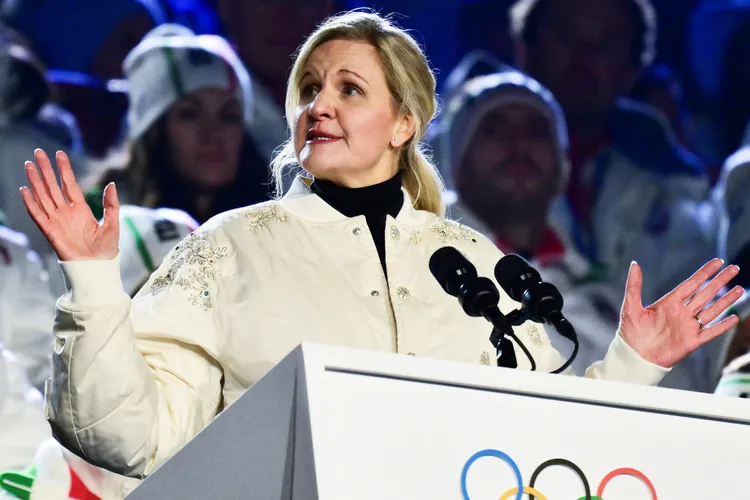

In a historic shift that upends decades of Olympic eligibility standards, the International Olympic Committee (IOC) announced Thursday that transgender women will be barred from competing in female categories starting with the 2028 Los Angeles Summer Games.
The new “Protection of the Female Category” policy, unveiled by IOC President Kirsty Coventry, establishes a universal mandate that limits female events to “biological females.” To enforce this, the IOC will require every female athlete to undergo a mandatory, one-time genetic screening for the SRY gene—a DNA segment typically found on the Y chromosome that triggers male sex development.
The decision marks a definitive end to the IOC’s 2021 framework, which previously allowed individual sports federations to set their own inclusion criteria. Coventry, a two-time Olympic gold medalist and the first woman to lead the IOC, framed the move as a necessity for competitive integrity.
“The policy we have announced is based on science and has been led by medical experts,” Coventry said. “At the Olympic Games, even the smallest margins can be the difference between victory and defeat. It is absolutely clear that it would not be fair for biological males to compete in the female category. In some sports, it would simply not be safe.”
The screening process—utilizing saliva, cheek swabs, or blood samples—is already a standard in track and field. Athletes will only be required to test once in their lifetime.
The timing of the announcement aligns the IOC with current U.S. policy. In early 2025, President Donald Trump signed an executive order titled “Keeping Men Out of Women’s Sports,” which pressured international bodies to adopt sex-based eligibility. The IOC’s new guidelines ensure the LA 2028 Games will comply with these domestic legal standards, avoiding potential visa or funding conflicts.
The policy has ignited immediate pushback from advocacy groups and athletes. Nikki Hiltz, a nonbinary American middle-distance runner, criticized the move as a solution to a “non-existent problem,” noting that zero transgender women competed in the 2024 Paris Olympics.
Two-time gold medalist Caster Semenya, who is currently barred from competition due to naturally high testosterone levels, called the reintroduction of genetic screening “walking backward.”
“This is just exclusion with a new name,” Semenya told The New York Times.
The IOC clarified that the regulations are not retroactive and will not affect previous medal standings. Furthermore, the restrictions apply strictly to elite IOC-sanctioned events, excluding grassroots and recreational programs. For athletes who test positive for the SRY gene, the IOC stated they remain eligible for “open” or male categories.