
The Trump administration is seeking to overturn a federal judge’s restraining order that sharply limits how U.S. Immigration and Customs Enforcement (ICE) can operate in Los Angeles, calling the ruling a “straight-jacket injunction” that undermines lawful immigration enforcement.
On Monday, government lawyers filed a motion asking for an immediate stay of the temporary restraining order (TRO) issued last Friday by U.S. District Judge Maame Ewusi-Mensah Frimpong, a Biden appointee. The TRO bans ICE from making stops in the Central District of California without “reasonable suspicion” that a person is unlawfully present in the U.S., and prohibits relying on factors like race, language, accent, or location as the basis for suspicion.
Legal Clash Over ICE Authority
The case began in June as a detention challenge from three individuals but quickly expanded after attorneys added a broader coalition of plaintiffs and organizations, aiming to challenge ICE’s enforcement practices across the Los Angeles area.
The Trump administration accused the plaintiffs of manipulating the process to rush a sweeping injunction through the courts. They argue the administration was given only two business days to respond to hundreds of pages of evidence ahead of the judge’s decision.
“This order threatens to paralyze lawful immigration enforcement,” the administration wrote in its appeal, adding that the ruling hangs a “Damocles sword of contempt” over every ICE stop.
Trump DOJ Cites Separation of Powers
Justice Department lawyers argued that Judge Frimpong overstepped her authority, ignoring a recent Supreme Court ruling that discourages broad judicial overreach. Although the order is not nationwide, it applies district-wide and imposes what the administration calls a de facto restructuring of federal immigration operations.
“It is untenable for a single district judge to reshape how a federal law enforcement agency operates—particularly one under the direct authority of the executive branch,” the filing stated.
The administration is now seeking both an emergency stay and an eventual appeal.
Backlash from Local Officials and Advocates
Los Angeles Mayor Karen Bass praised the court’s decision on Friday, calling ICE’s recent operations “unconstitutional and reckless.” She emphasized the city’s commitment to protecting immigrant communities and preventing “harmful, aggressive tactics” under Trump’s renewed enforcement push.
Immigrant rights groups and officials from Los Angeles, West Hollywood, Santa Monica, and Culver City have also joined the legal challenge, supported by Democratic-led states through an amicus brief.
Allegations of Racial Profiling and Quotas
Plaintiffs in the case allege that ICE agents have been detaining individuals based on skin color and ethnic background, often without legal justification. Arrests allegedly occurred at car washes, construction sites, and retail stores, with some U.S. citizens reportedly detained by mistake.
Attorneys claim the administration pressured ICE agents to meet an “arbitrary quota” of 3,000 arrests per day, contributing to violations of Fourth Amendment protections.
One protester compared the enforcement tactics to racial profiling “on steroids,” while others called the quota a recipe for abuse and mistaken identity.
ICE Arrests Surge as Legal Fight Unfolds
Since early June, ICE has conducted nearly 3,000 arrests across California, according to government data. The administration insists those arrests were lawful and disputes the allegations of misconduct.
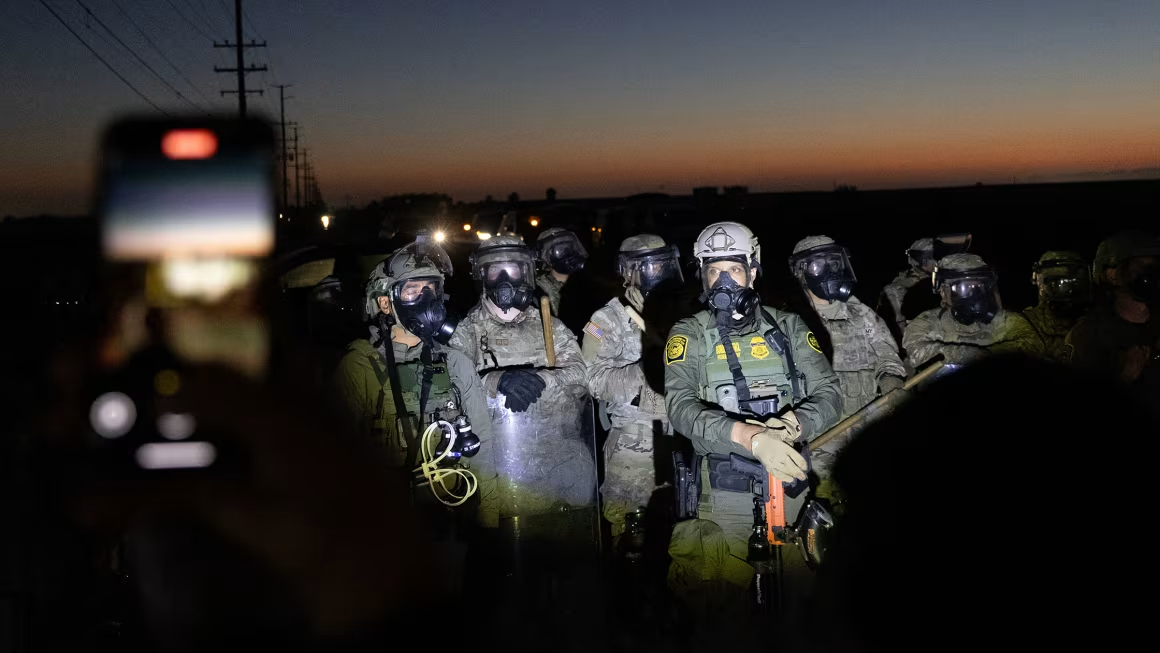
Meanwhile, protests and demonstrations have erupted throughout Los Angeles in response to the ramped-up enforcement, including freeway shutdowns and street clashes with police.
The case marks another flashpoint in the ongoing legal war between the Trump administration and Democratic-led states, particularly over immigration enforcement in sanctuary jurisdictions like California.
The court battle is expected to continue, with major implications for how—and where—ICE can operate in the months ahead.