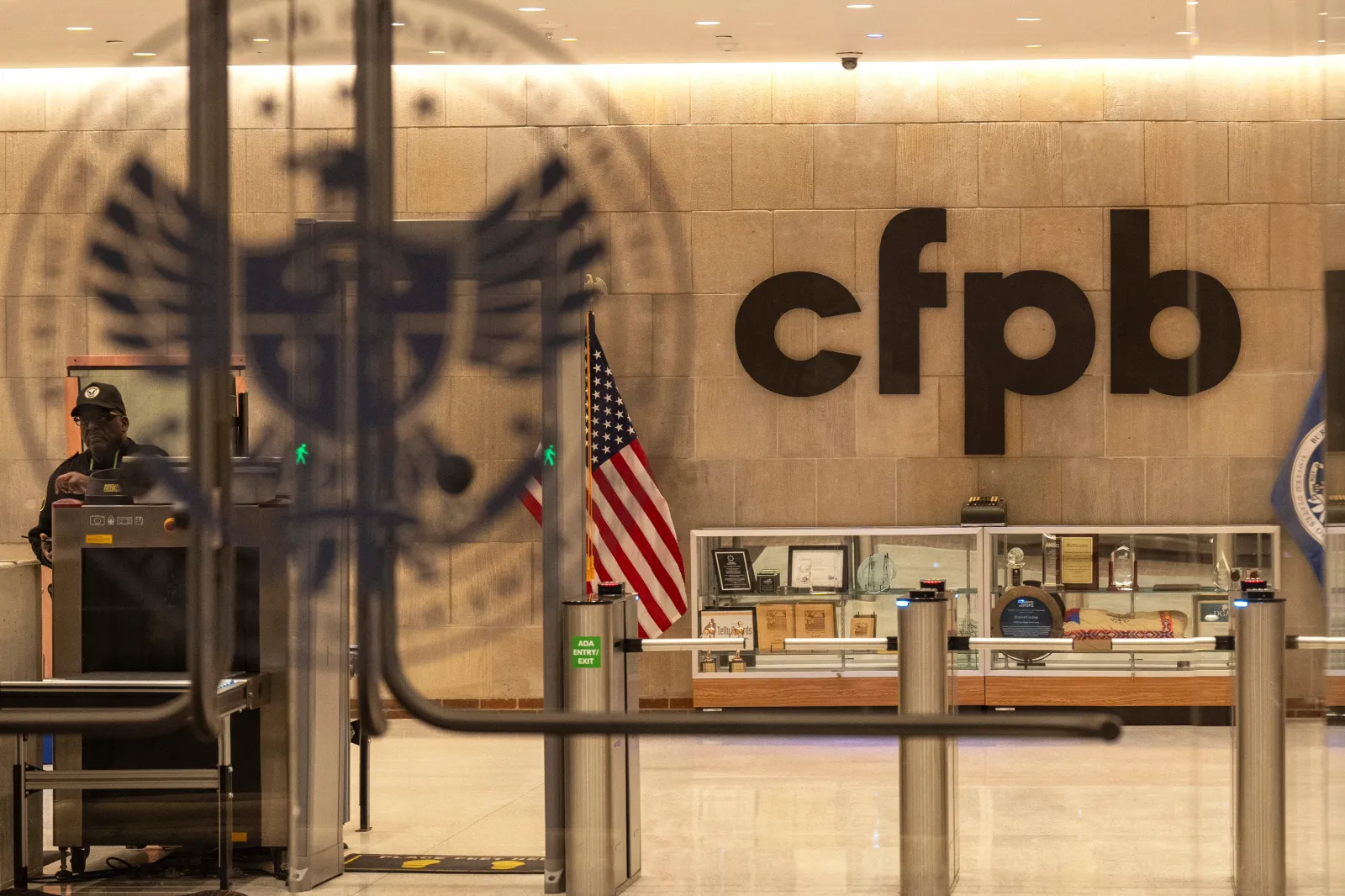

A federal court on Tuesday upheld an injunction requiring the Trump administration to continue funding salary payments for employees of the Consumer Financial Protection Bureau (CFPB).
The ruling mandates that the White House maintain CFPB funding through the Federal Reserve, just days before a potential lapse that could have left the agency unable to pay its workforce.
Since President Donald Trump took office, CFPB employees have reportedly been instructed not to perform work as part of an effort to wind down the agency, according to the Associated Press.
Why It Matters
Created in the aftermath of the 2008 financial crisis, the CFPB has played a key role in protecting consumers in the financial marketplace.
The dispute over its funding has attracted national attention because of the agency’s unusual structure, which allows it to receive funding outside the annual congressional appropriations process, and because the Trump administration has openly sought to shut it down.
What to Know
U.S. District Judge Amy Berman Jackson issued the decision just days before the CFPB was expected to run out of money and potentially lay off remaining staff. In her ruling, she rejected an argument advanced by Trump budget director Russell Vought that the Federal Reserve’s recent losses eliminated any obligation to fund the CFPB.
“It appears that defendants’ new understanding of ‘combined earnings’ is an unsupported and transparent attempt to starve the CFPB of funding and yet another effort to achieve the very outcome the Court’s injunction was meant to prevent,” Jackson wrote, according to the Associated Press.
The administration argued that because the Federal Reserve is operating at a paper loss, it has no earnings available to transfer. Officials pointed to higher interest payments on bank reserves now exceeding income from bonds purchased during the COVID-19 era. This interpretation, outlined in a November memo from the Office of Legal Counsel, had not previously been tested in court.
Jennifer Bennett, an attorney with Gupta Wessler LLP representing CFPB staff, welcomed the decision, saying the court clarified what should have been obvious: that the administration could not evade its obligations or defy a court order by claiming a manufactured funding shortfall.
The ruling comes amid continued legal battles over the CFPB’s future. Earlier this year, the U.S. Supreme Court upheld the agency’s funding structure, rejecting a challenge from payday lenders who argued it was unconstitutional because the CFPB draws funds from the Federal Reserve rather than Congress.
In that 7–2 decision, Justice Clarence Thomas wrote that the funding mechanism met the constitutional definition of an appropriation because Congress clearly identified both the source and purpose of the funds.
Although that decision closed one path for opponents of the CFPB, the Trump administration’s latest strategy reflected a renewed effort to weaken the agency internally. Judge Jackson explicitly rejected Vought’s claim that the CFPB could not legally request funds due to the Federal Reserve’s lack of profits.
Separately, Michigan Attorney General Dana Nessel is leading a coalition of 21 states in a lawsuit challenging the administration’s attempt to defund the CFPB. Nessel described the move as disastrous for the millions of working families the agency protects.
What People Are Saying
Michigan Attorney General Dana Nessel said in a December statement: “The Trump administration does not have the authority to illegally and unilaterally defund it by simply refusing to do its job.”
The White House said in a statement sent to reporters in November that the CFPB had granted itself sweeping new powers late in the Biden administration. The statement described the move as “government overreach,” arguing that the agency sought authority to regulate checking accounts through price controls and to address billions of dollars in medical debt.
What Happens Next
The court’s order preserves an agency that has secured more than $21 billion in consumer relief. Legal experts say the ruling stabilizes the CFPB’s short-term future, but ongoing political and legal challenges to its structure and authority are likely to continue.