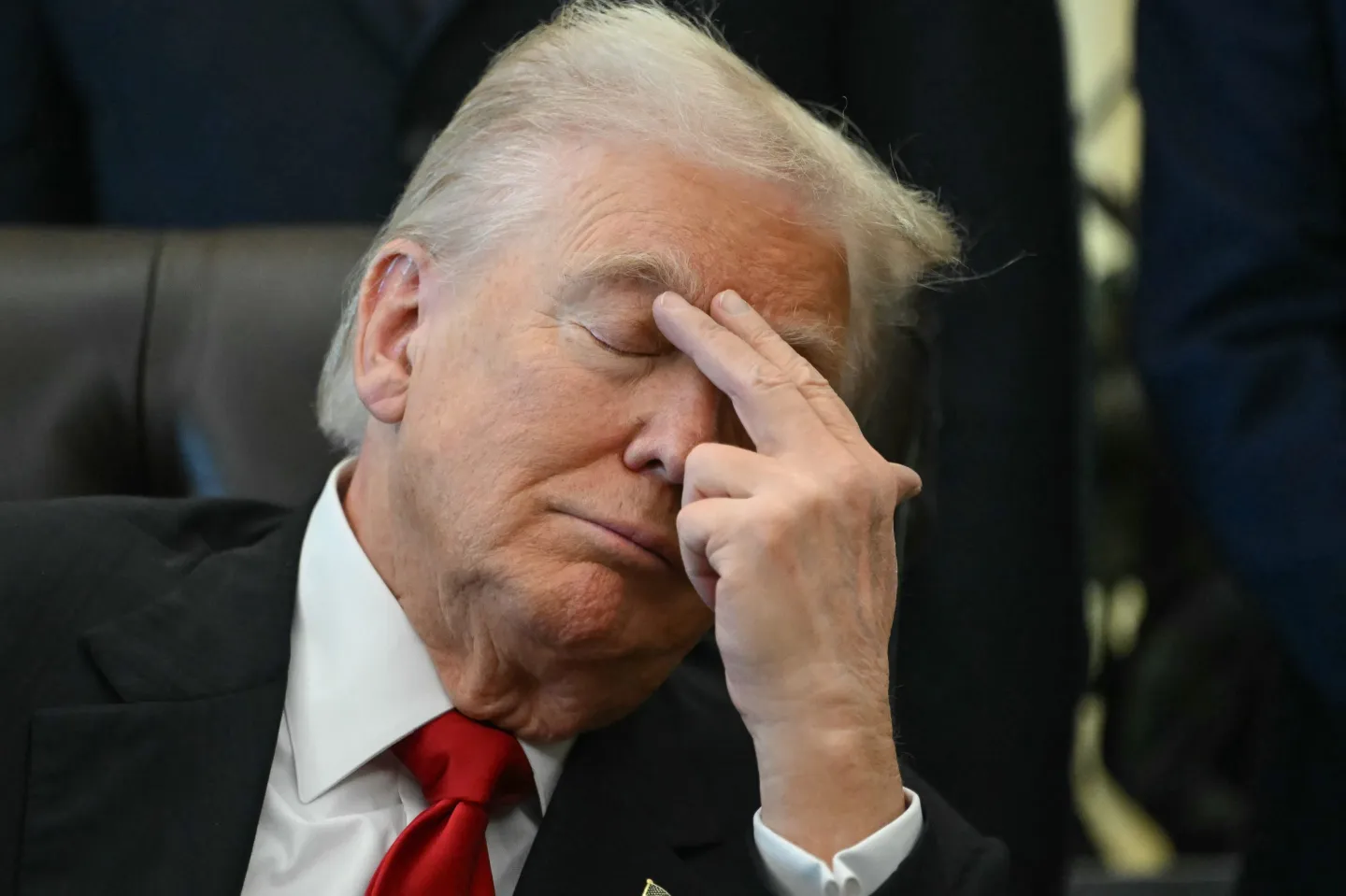

President Donald Trump has signaled a shift in his stance on high-skilled immigration, offering supportive comments about H-1B visas after previously enacting measures designed to significantly reduce their use.
In a newly released interview with Fox News’ Laura Ingraham, Trump reiterated his belief that importing too many workers from abroad could hinder wage growth for U.S. employees. However, he also acknowledged that the American labor market lacks certain key expertise needed for major investments.
“You don’t have certain talents, and people have to learn,” Trump said. “You can’t just say a country is coming in, going to invest $10 billion to build a plant and take people off an unemployment line who haven’t worked in five years and they’re going to start making their missiles. It doesn’t work that way.”
Only two months earlier, the White House introduced a one-time $100,000 fee on H-1B visas. These visas typically support highly skilled workers in fields like technology. Critics—including Y Combinator CEO Gary Tan—argued that the policy would undermine startups and smaller companies lacking the resources to absorb such costs. A 2020 National Bureau of Economic Research study found that startups employing more H-1B workers were more likely to achieve major milestones such as acquisitions, IPOs, patents, and high-level investment.
Nearly 400,000 H-1B visas were approved in fiscal year 2024—twice as many as in 2020. Major tech figures such as Elon Musk have praised the program as a pipeline for top global talent when not burdened by steep financial barriers.
Commerce Secretary Howard Lutnick defended the new fee when Trump signed the proclamation, arguing that the U.S. should prioritize developing domestic workers.
“If you’re going to train people, you’re going to train Americans,” Lutnick told reporters. “If you have a very sophisticated engineer and you want to bring them in…then you can pay $100,000 a year for your H-1B visa.”
Economists have cautioned that aggressive restrictions on legal immigration could trigger negative net migration—shrinking the labor force and lowering consumer spending, which could ultimately suppress U.S. GDP growth. A recent National Foundation for American Policy analysis projected that Trump’s approach could reduce the workforce by more than 15 million people and decrease GDP growth by one-third over the next decade.
Hyundai Plant Raid Sparks Further Concerns
Trump also addressed a controversial Immigration and Customs Enforcement operation at a Hyundai factory in Georgia, carried out around the same time the visa fee was implemented. The raid detained 475 workers—most from South Korea—after ICE agents alleged visa overstays or improper work authorizations.
The increased enforcement capacity came from Trump’s “One Big Beautiful Bill,” which allocated an additional $30 billion to immigration arrests and deportations.
Hyundai CEO José Muñoz later stated the operation delayed the plant’s opening by two to three months. The company has committed $26 billion to U.S. manufacturing investments.
In the interview, Trump suggested that removing experienced battery specialists may have been counterproductive. He emphasized the complexity of manufacturing electric-vehicle batteries and the importance of knowledge transfer from skilled workers.
“You know, making batteries is very complicated,” Trump said. “Very dangerous, a lot of explosions, a lot of problems. They had like 500 or 600 people, early stages, to make batteries and to teach people how to do it. Well, they wanted them to get out of the country. You’re going to need that, Laura.”