
President Donald Trump is expected to host the first meeting of his newly formed Board of Peace in Washington, D.C., later this month, the Associated Press reported.
Why It Matters
Trump’s Board of Peace is drawing increased attention as more countries sign onto an initiative that was initially framed as part of a plan to help resolve the war in Gaza between Israel and Hamas. The project has since widened in scope and is now expected to pursue a broader mandate as its geographic and geopolitical focus expands.
Several European allies have declined to join, with some viewing the board as a potential rival to the United Nations. While Trump has frequently criticized the U.N., he has also said the board would work “in conjunction with the United Nations.” About 25 countries have reportedly joined, with Trump serving as chairman.
What To Know
The upcoming gathering is expected to include world leaders who accepted invitations to participate, along with members of the Gaza executive committee, according to the Associated Press, which cited two Trump administration officials.
Invitations were reportedly sent late Friday night. While the agenda and full guest list are still being finalized, the venue is expected to be the U.S. Institute of Peace—an organization the president has sought to rename after himself, according to the report.
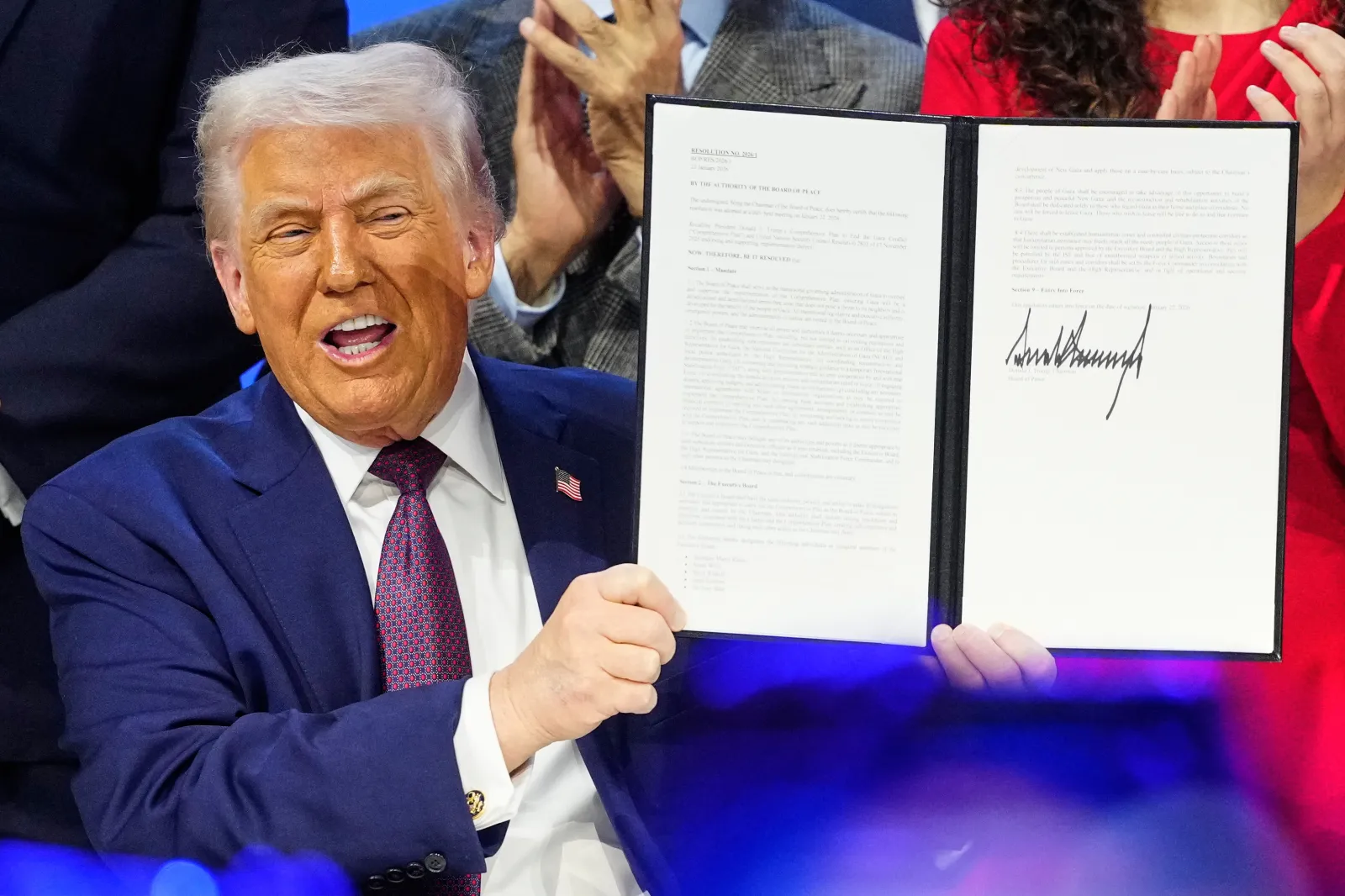
The Board of Peace grew out of Trump’s 20-point plan to end the Gaza conflict. In late January, he officially signed the board’s charter at the World Economic Forum in Davos, Switzerland. But its membership reportedly includes countries beyond those directly involved in Gaza, reflecting an expanding mission.
A founding executive group reportedly includes Secretary of State Marco Rubio, U.S. special envoy Steve Witkoff, Trump’s son-in-law Jared Kushner, former U.K. Prime Minister Tony Blair, Apollo Global Management CEO Marc Rowan, World Bank Group President Ajay Banga, and deputy national security advisor Robert Gabriel Jr.
Some of the same figures are said to be involved in the Gaza Executive Board, alongside others including: Turkish Foreign Minister Hakan Fidan; Qatari diplomat Ali Al-Thawadi; Egyptian intelligence director General Hassan Rashad; UAE Minister Reem Al-Hashimy; Israeli businessman Yakir Gabay; Bulgarian politician Nickolay Mladenov; and Sigrid Kaag, the United Nations coordinator for humanitarian aid to Gaza.
The Gaza-focused group is expected to oversee implementation of the second phase of Trump’s plan, which centers on disarming Hamas and rebuilding Gaza.
What People Are Saying
Trump wrote in a Truth Social post on January 15: “It is my Great Honor to announce that THE BOARD OF PEACE has been formed. The Members of the Board will be announced shortly, but I can say with certainty that it is the Greatest and Most Prestigious Board ever assembled at any time, any place. Thank you for your attention to this matter!”
Special envoy Steve Witkoff wrote in an X post on January 14: “Today, on behalf of President Trump, we are announcing the launch of Phase Two of the President’s 20-Point Plan to End the Gaza Conflict, moving from ceasefire to demilitarization, technocratic governance, and reconstruction. Phase Two establishes a transitional technocratic Palestinian administration in Gaza, the National Committee for the Administration of Gaza (NCAG), and begins the full demilitarization and reconstruction of Gaza, primarily the disarmament of all unauthorized personnel. The US expects Hamas to comply fully with its obligations, including the immediate return of the final deceased hostage. Failure to do so will bring serious consequences.”
U.K. Foreign Secretary Yvette Cooper told the BBC in January that Britain would not sign on, saying the proposal raises broader legal and political concerns—including objections to Russia’s involvement. Cooper said: “We won’t be one of the signatories today… Because this is about a legal treaty that raises much broader issues, and we do also have concerns about President Putin being part of something which is talking about peace, when we have still not seen any signs from Putin that there will be a commitment to peace in Ukraine.”
Norway’s State Secretary Kristoffer Thoner said ahead of Davos: “The American proposal raises a number of questions that requires further dialogue with the United States. Norway will therefore not join the proposed arrangements for the Board of Peace, and will therefore not attend a signing ceremony in Davos.”
French Foreign Minister Jean-Noel Barrot said in January: “Yes to implementing the peace plan presented by the president of the United States, which we wholeheartedly support, but no to creating an organization as it has been presented, which would replace the United Nations.”
What Happens Next
Officials are expected to release more details about the first meeting’s agenda soon.
Israeli Prime Minister Benjamin Netanyahu is also set to meet with Trump at the White House this Wednesday to discuss recent U.S. talks with Iran. Netanyahu has agreed to join the Board of Peace despite earlier criticisms.