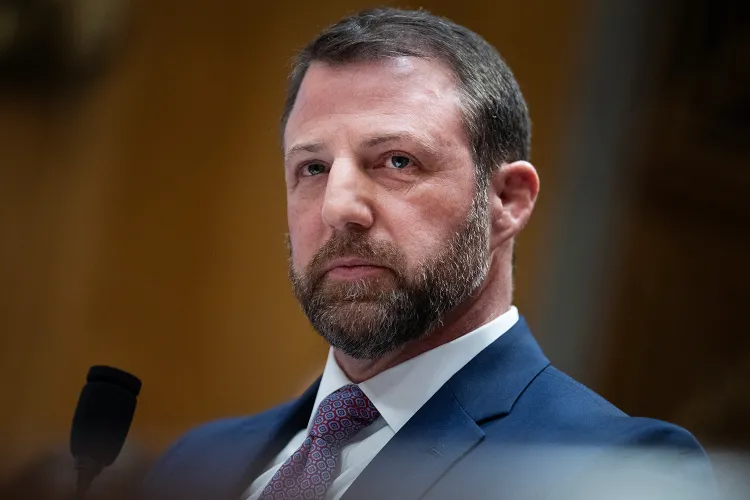

Sen. Markwayne Mullin (R-OK), President Donald Trump’s nominee to lead the Department of Homeland Security (DHS), told lawmakers Wednesday that he would deploy federal law enforcement officers to polling stations in response to “specific threats.”
The testimony, delivered during a high-stakes confirmation hearing before the Senate Homeland Security and Governmental Affairs Committee, marks a significant shift in federal election posture. It comes as the Trump administration continues its aggressive “border-to-interior” immigration crackdown, which has already seen an increased presence of federal agents in major American cities.
“Not for Intimidation”
During questioning from Sen. Elissa Slotkin (D-MI), Mullin—tapped to replace outgoing Secretary Kristi Noem—defended the potential use of agents from agencies like Immigration and Customs Enforcement (ICE) or Customs and Border Protection (CBP) at voting sites.
“The only reason they would be there is that there was a specific threat for them to be there, not for intimidation,” Mullin testified. “I can’t sit there and guarantee hypothetically what threat would be there or not.”
The exchange follows a February statement from White House Press Secretary Karoline Leavitt, who declined to rule out the presence of ICE agents near polling locations this November. The ambiguity has sparked a firestorm among civil rights groups and state election officials who argue that a federal police presence could suppress turnout, particularly in immigrant communities.
Federal Oversight vs. State Sovereignty
While the U.S. Constitution grants state governments the primary authority to conduct elections, the Trump administration has signaled an interest in “nationalizing” election security.
The push for federal involvement follows a series of controversial domestic operations:
- Minneapolis Escalation: In January, a federal operation resulted in the fatal shooting of two U.S. citizens, fueling local distrust of federal surges.
- Fulton County Raid: In a separate hearing Wednesday, Director of National Intelligence Tulsi Gabbard declined to provide details regarding her presence at a January FBI raid of election offices in Georgia—an event local officials labeled a “full-frontal attack on democracy.”
A Climate of “Zero Trust”
The prospect of armed federal agents at the ballot box is being viewed by critics through the lens of the 2020 election aftermath. President Trump remains under federal and state scrutiny for his efforts to overturn those results, though legal proceedings were largely sidelined upon his return to the White House.
Sen. Slotkin expressed the growing alarm among Congressional Democrats regarding the potential for executive overreach.
“If we ever get to the point where you are asked to put armed ICE officers at polling locations, we have lost the plot as a country,” Slotkin told Mullin. “Until I hear someone tell me that President Trump will actually allow us to have a free and fair election, there is zero trust here.”
As the November midterm elections approach, Mullin’s stance suggests the DHS may take a more interventionist role in local voting precincts than any of its predecessors, citing national security concerns as the primary catalyst.