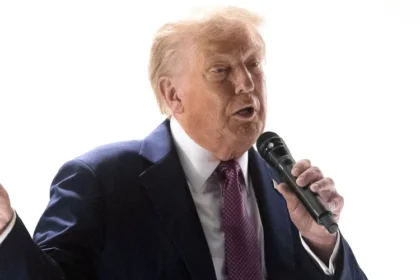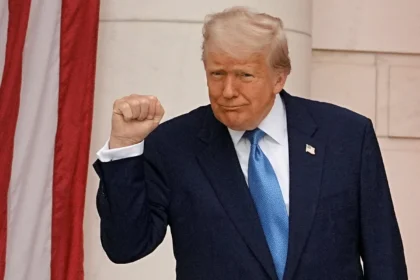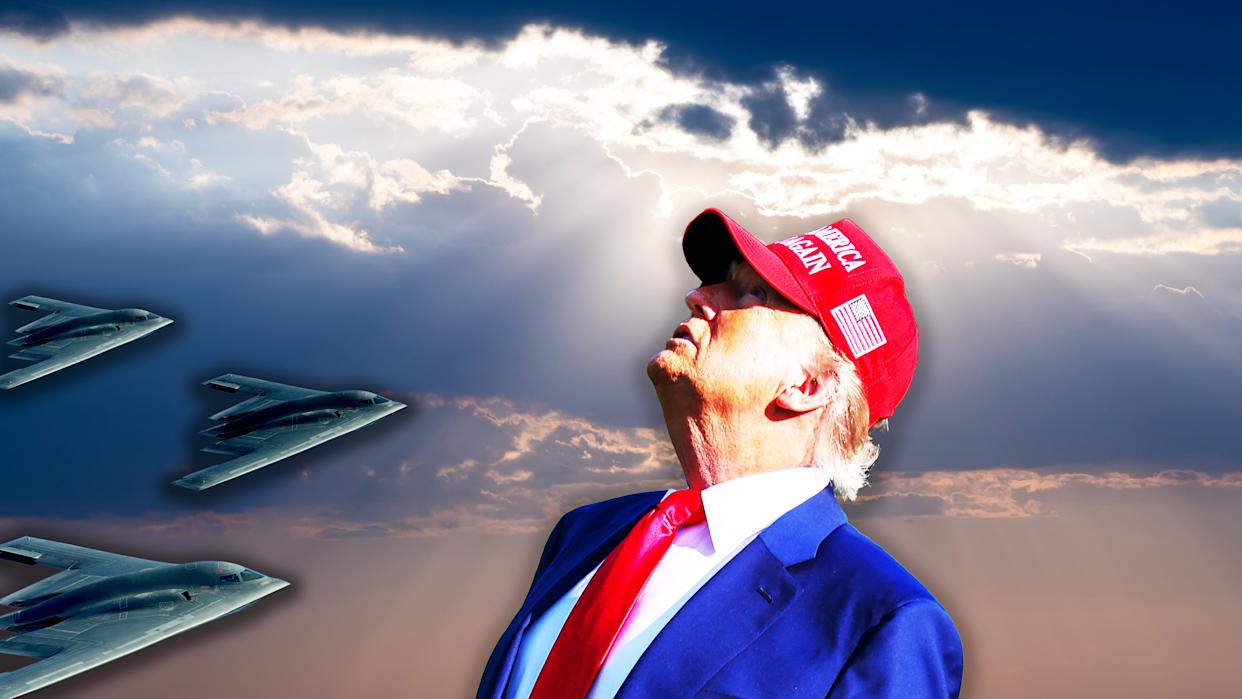

During a national address Saturday evening, President Donald Trump confirmed that the U.S. had carried out airstrikes on three Iranian nuclear sites. But beyond the gravity of the announcement, it was his sudden and repeated invocation of “God” that drew sharp reactions across the political spectrum.
Wrapping up the brief four-minute speech, Trump declared,
“I want to just thank everybody, in particular, God. I want to just say we love you God, and we love our great military, protect them. God bless the Middle East, God bless Israel, and God bless America.”
The remarks sparked concern and criticism online, especially among those who questioned the sincerity of Trump’s religious tone.
Critics Question Trump’s Intentions
Social media quickly lit up with skepticism. Many critics cited Trump’s historically tenuous connection to religion. According to a Pew Research Center poll during his first term, just 7% of Americans viewed him as “very religious.”
Progressive Gen Z streamer Dean Withers was among the first to respond, tweeting:
“No Trump, God doesn’t want another war in the Middle East, you delusional f—. Resign.”
Another user took issue with the order of Trump’s blessings:
“Trump said ‘God bless Israel’ before ‘God bless America.’ That should tell you everything you need to know.”
Memes and GIFs soon followed, with some imagining “God’s” reaction to Trump’s message. One popular post included a GIF of Denzel Washington slamming a door shut. Others likened the speech to hollow political theater or even invoked darker interpretations, labeling Trump’s use of religion as manipulative or dangerous.
“This man started a new war and is already invoking religion to manipulate his base into it,” one user wrote. “This man is an insane sociopath.”
Echoes of Bush-Era Religious Rhetoric
Some observers compared Trump’s religious language to that of former President George W. Bush, who famously said he was guided by a “mission from God” during the wars in Afghanistan and Iraq. In 2003, Bush reportedly told Palestinian officials:
“God would tell me, ‘George, go and fight these terrorists in Afghanistan.’ And I did.”
Critics now suggest Trump may be borrowing similar rhetoric to frame military action in moral or divine terms.
Trump’s Complicated History with Religion
Though raised in a Presbyterian household and exposed to the teachings of motivational minister Norman Vincent Peale, Trump’s adult relationship with religion has been ambiguous.
He spent two years at Fordham, a Catholic university, before transferring to the University of Pennsylvania. He has since described himself as a “non-denominational Christian,” though his church attendance has been infrequent. On Easter Sunday 2024, for example, he was seen golfing rather than attending services.
Trump has also drawn criticism for symbolic missteps—most notably in 2020, when he posed holding a Bible upside down after dispersing peaceful protesters near the White House. Despite this, he has maintained strong ties with evangelical leaders, hosting prayer events and using faith-based rhetoric to appeal to religious voters.
Following the 2024 assassination attempt in Butler, Pennsylvania, Trump again framed his survival in spiritual terms, saying:
“I was saved by God to make America great again. I believe that.”
Faith or Political Theater?
Whether Trump’s recent invocations of God reflect genuine belief or political strategy remains a matter of debate. But with tensions rising in the Middle East, his sudden emphasis on divine endorsement has left many questioning both his motives and the message he’s sending.