
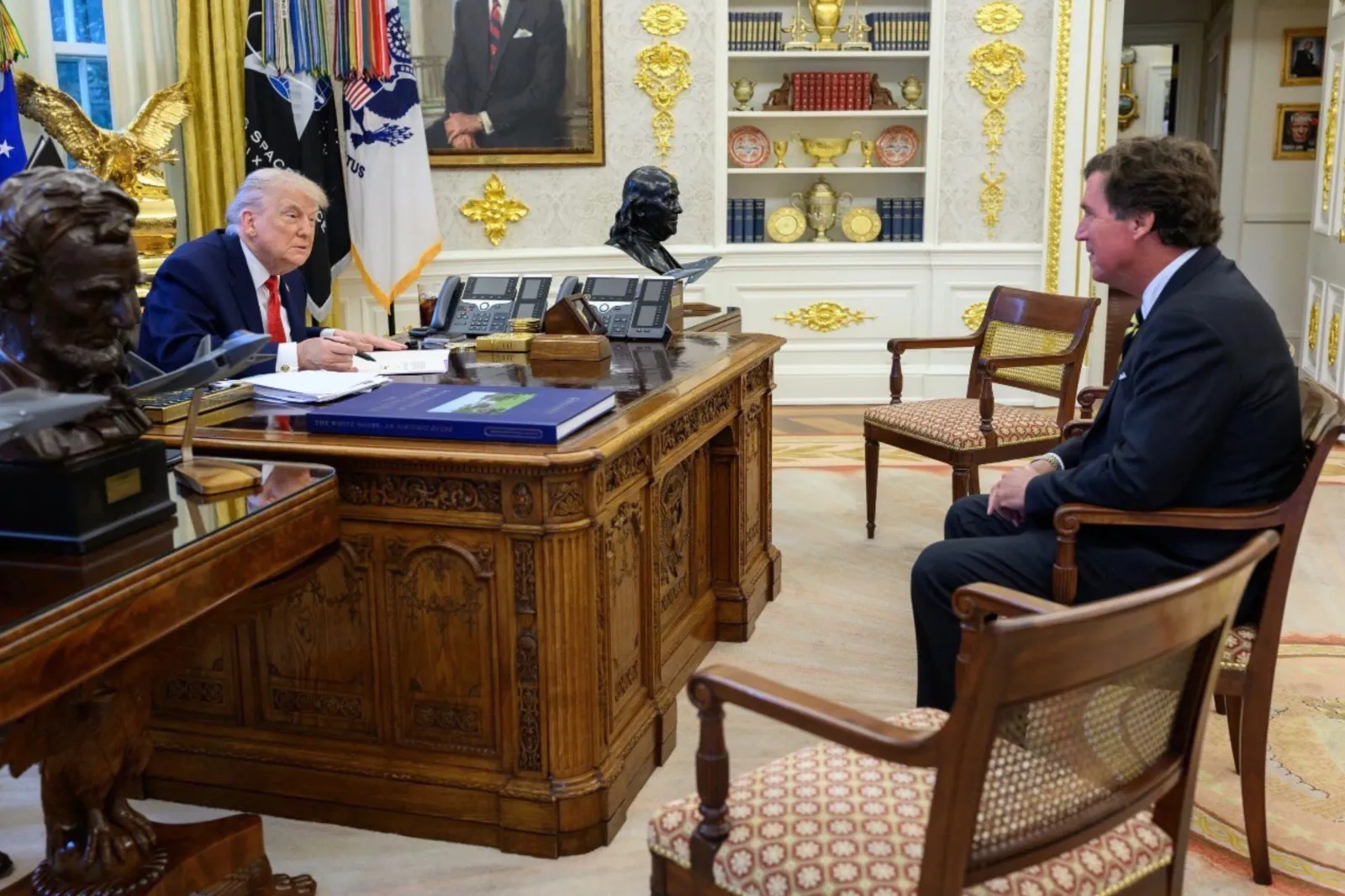
A Friday meeting between media figure Tucker Carlson and President Donald Trump at the White House drew criticism from some conservatives, reigniting ongoing tensions inside the MAGA movement.
Why It Matters
The visit lands at a time when MAGA–aligned voices are divided over U.S. foreign policy related to Israel and the Middle East. Those fractures could make it harder for Trump to keep both traditional Republicans and the Trump-aligned base moving in the same direction as the midterm elections approach.
What To Know
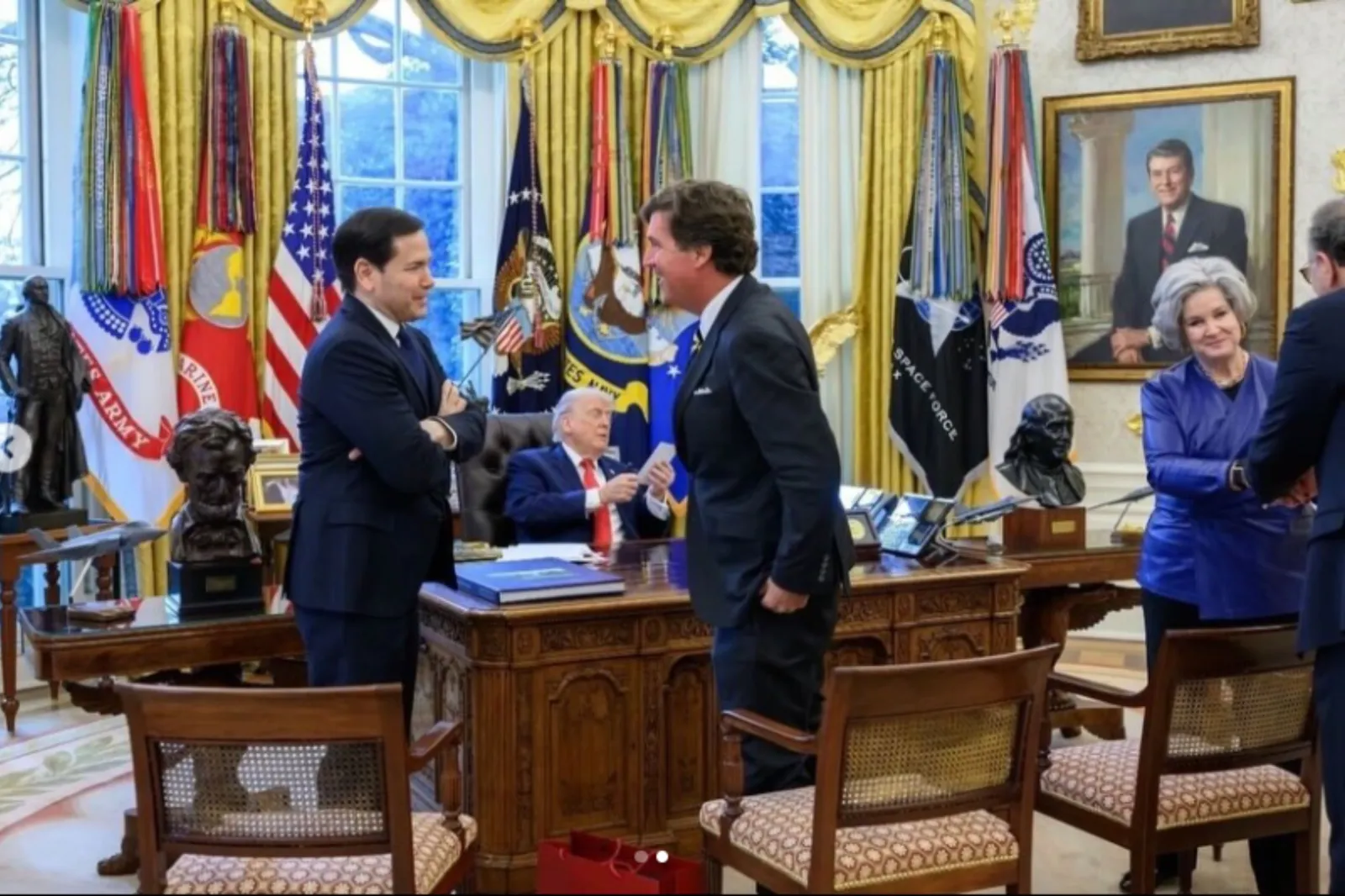
Photos circulated on social media by the Tucker Carlson Network showed Carlson at the White House, including images in which he appears to be speaking with Secretary of State Marco Rubio. White House Chief of Staff Susie Wiles was also visible in the images.
The visit drew condemnation from groups such as the Anti-Defamation League (ADL), which said Carlson “should have no place in the White House,” arguing that he has amplified antisemitic narratives in the past.
The backlash is largely tied to Carlson’s outspoken views on U.S. policy in Israel and the Middle East. He has criticized interventionist approaches, putting him at odds with other prominent conservatives.
Last spring, Fox News host Mark Levin called Carlson a “Nazi promoter” for hosting far-right commentator and supremacist Nick Fuentes, per The Daily Mail—an example often cited by critics as evidence of deep divisions within conservative circles.
The disputes extend beyond Carlson and Levin. Conservative figures—including Ben Shapiro—have used major right-leaning events such as Turning Point USA’s AmericaFest to criticize Carlson, Candace Owens, and others. The broader tension also follows a public split between Trump and his former ally, Georgia Republican Marjorie Taylor Greene, who left office in January.
What Happens Next
If the internal disputes continue to sharpen, they could weaken MAGA’s cohesion—and, with it, the movement’s political leverage—heading into both the midterms and the early maneuvering around 2028.