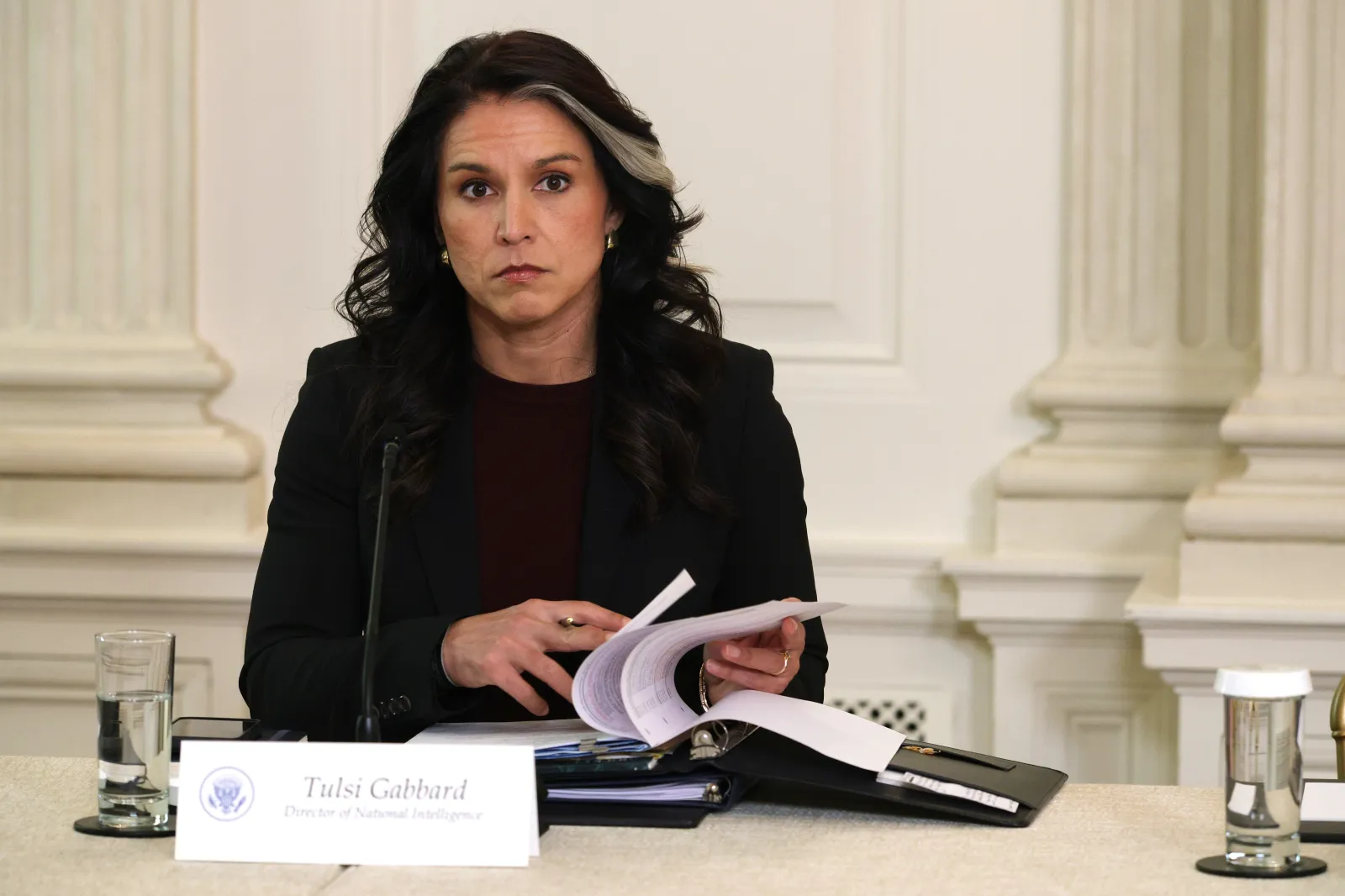

A whistleblower has accused U.S. Director of National Intelligence (DNI) Tulsi Gabbard of wrongdoing, but the complaint is so highly classified that it has not been shared with Congress, The Wall Street Journal reported Monday.
Officials familiar with the matter told the outlet that disagreements have played out behind the scenes over how to handle the complaint. They also claimed Gabbard has blocked the document’s movement through normal channels. One official said releasing the complaint—filed last May—could cause “grave damage to national security.”
When asked for comment, the DNI’s press secretary referred X to an earlier post disputing the reporting.
“There was absolutely NO wrongdoing by DNI Gabbard, a fact that [The Wall Street Journal] conveniently buried 13 paragraphs down,” Olivia Coleman posted Monday. “Even the Biden-era Intelligence Community Inspector General came to this conclusion, determining that the Whistleblower’s allegations against DNI Gabbard ‘did not appear credible’.”
Even with that denial, the report prompted renewed calls for scrutiny of how the complaint has been handled.
“After nearly eight months of taking illegal actions to protect herself, the time has come for Tulsi Gabbard to comply with the law and fully release the disclosure to Congress,” Andrew P. Bakaj, chief legal counsel at WhistleblowerAid.org, said.
Why It Matters
As the official who oversees U.S. intelligence agencies, Gabbard routinely deals with highly sensitive national security matters. But the reported existence of a classified whistleblower complaint involving the DNI has put her at the center of a dispute over transparency and oversight—particularly because Congress is typically informed about serious complaints involving senior officials within weeks.
What To Know
According to The Wall Street Journal, the Office of the Inspector General received written answers from Gabbard about the allegations. The Inspector General concluded the allegations were not credible, but the complaint also referenced another, unidentified federal agency.
The complaint has reportedly remained locked in a safe as officials debate how to proceed. Some of its contents could be subject to executive privilege, which could allow the president to withhold information from Congress.
Bakaj, identified as the whistleblower’s attorney, has argued that Gabbard delayed the process and is breaking the law. An official from the Office of the Director of National Intelligence (ODNI) told Newsweek that The Wall Street Journal’s reporting was “completely false,” adding that because the complaint was deemed not credible, there was no requirement to rapidly notify Congress. The official also highlighted Gabbard’s efforts to cut bureaucratic red tape.
Gabbard was appointed DNI by Donald Trump in February 2025. In recent months, she has been investigating the 2020 election and Trump’s claims that it was stolen—claims that have repeatedly been debunked.
Last year, reports said she installed a top adviser in a role within the Inspector General’s office for intelligence services, raising concerns among critics about the office’s independence.
What People Are Saying
Bakaj, in a press release Monday: “The Inspector General’s independence and neutrality is non-existent when the Director of National Intelligence illegally inserts herself into the process…Such a grave dereliction jeopardizes the ability of Congress to exercise its legally mandated oversight of the U.S. Intelligence Community, including agency covert operations.”
Coleman, on X: “Director Gabbard has always and will continue to support Whistleblower’s and their right, under the law, to submit complaints to Congress, even if they are completely baseless like this one.”
What Happens Next
Coleman said on X that the whistleblower’s claim is politically motivated and that the complaint is with the Congressional Intelligence Committees for review.